SOC 1 vs SOC 2 Report: Key Differences & Compliance
This guide breaks down the key differences between SOC 1 and SOC 2, explains how each report looks in scope and purpose, and outlines how service organizations determine which option aligns best with customer expectations, contractual requirements, and risk exposure.

Recent industry research shows that more than 60 percent of organizations have experienced a cybersecurity or data incident tied to a third-party vendor. In our experience supporting vendor reviews and audits, this statistic becomes less surprising once organizations evaluate how many core business functions are outsourced today, from payroll and billing platforms to cloud infrastructure and financial systems tied directly to clients’ financial reporting.
As reliance on third-party providers grows, each relationship introduces new financial or operational risk. We consistently see customers and regulators asking for more than written policies. They want proof that controls in place are aligned to real-world risk and that those safeguards hold up over time. This expectation is especially common in regulated industries like Healthcare, FinTech, and SaaS, where information security and accuracy are critical.
The standards for attestation engagements that govern SOC reporting are established by the American Institute of Certified Public Accountants (AICPA). These standards define how assurance over a service organization’s internal control and internal processes is evaluated and documented.
During vendor assessments and security questionnaires, stating that safeguards exist is no longer enough. Organizations are expected to demonstrate how controls operate effectively in daily operations. This shift is why understanding SOC reports has become a business necessity rather than a compliance checkbox.
This guide breaks down the key differences between SOC 1 and SOC 2, explains how each report looks in scope and purpose, and outlines how service organizations determine which option aligns best with customer expectations, contractual requirements, and risk exposure.
What Is a SOC 1 vs. SOC 2 Report?
SOC reports are independent assurance reports issued under the AICPA’s System and Organization Controls framework. Each report is designed to evaluate how a service organization manages risk that could impact customers.
A SOC 1 report focuses on risks related to clients’ financial reporting. We typically see SOC 1 required for organizations that support payroll processing, claims clearinghouses, revenue cycle systems, or payment platforms where errors could affect customers’ financial statements. These reports evaluate financial controls and how they support accurate reporting.
A SOC 2 report focuses on operational and cybersecurity risk. It evaluates how a service organization protects data, maintains availability, and safeguards systems using defined security controls. SOC 2 is most commonly required for SaaS providers, cloud platforms, and organizations that store or process sensitive data.
While both reports share a similar structure, what’s the difference comes down to the type of risk being addressed and the audience relying on the assurance.
How Do Type 1 and Type 2 Reports Compare?
SOC reports are issued as either Type 1 or Type 2. This distinction applies to both SOC 1 and SOC 2 and directly impacts the level of assurance provided.
Type 1 Reports: Design at a Point in Time
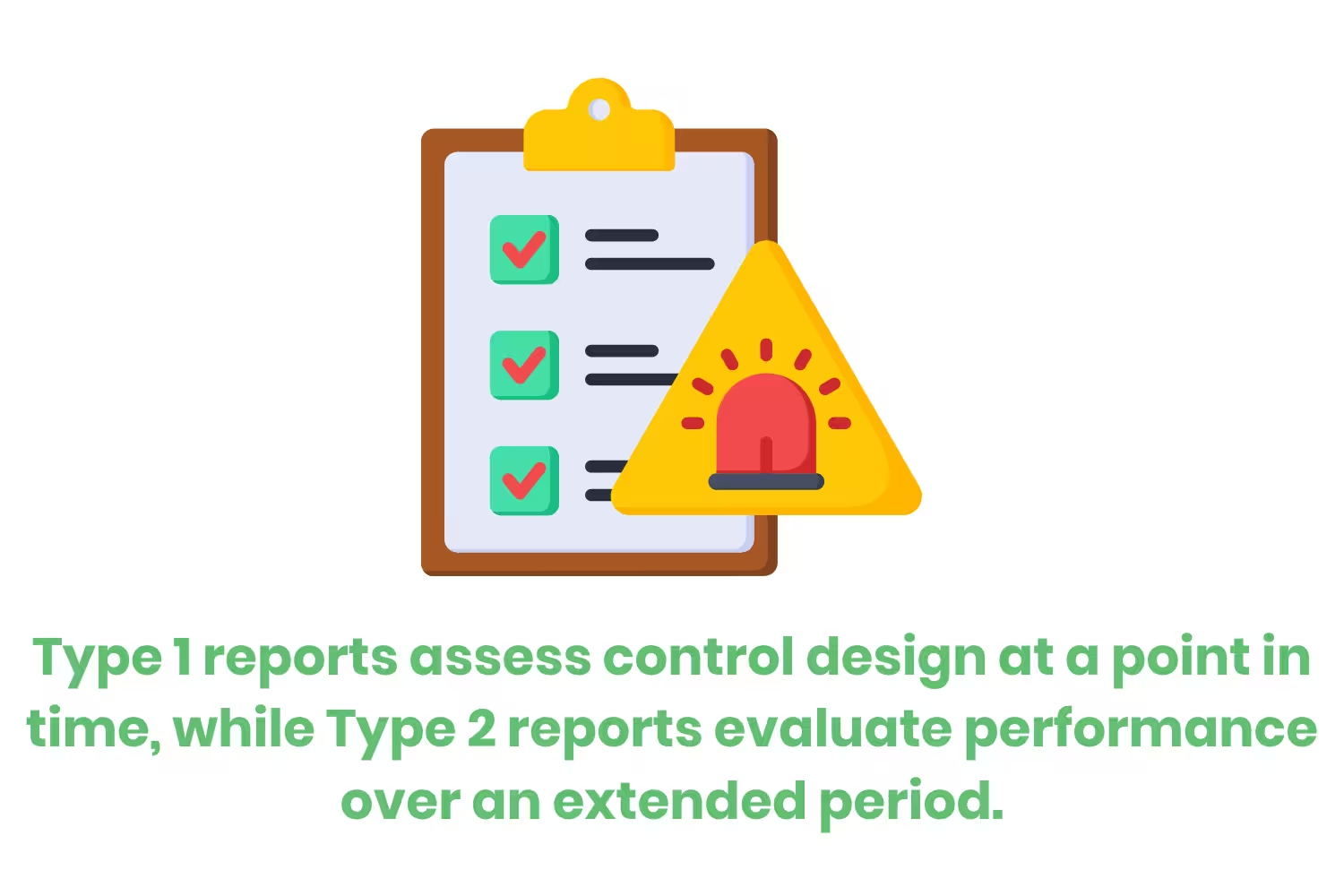
A Type 1 report evaluates the design of controls as of a specific date. The auditor assesses whether the control objectives are appropriately addressed and whether safeguards have been implemented.
We often see organizations pursue Type 1 reports when they are new to SOC reporting or responding to early customer requests. A Type 1 report also confirms that safeguards exist, but it does not assess the operating effectiveness of those controls over time.
Type 2 Reports: Performance Over Time
A Type 2 report evaluates both the design of controls and the effectiveness of controls over a defined review period, typically six to twelve months.
During a Type 2 examination, auditors assess whether processes were followed consistently and whether the organization’s controls supported reliable operations throughout the review window. This format provides assurance around sustained performance rather than a single point in time.
Type 2 reports are often required for enterprise customers, regulated industries, and environments where long-term reliability matters.
Choosing Between Type 1 and Type 2
The decision between Type 1 and Type 2 depends on maturity, customer expectations, and tolerance for risk.
We frequently see early-stage organizations begin with Type 1 as a readiness milestone. Organizations selling into enterprise Healthcare or FinTech environments are often required to move directly to Type 2, as customers expect assurance that safeguards perform consistently.
Over time, most organizations transition to Type 2 as expectations increase and customer demands for audit readiness grow.
Which SOC Report Should Your Organization Get?
Choosing the right SOC report depends on how your services affect customers and how risk flows through controls used within your organization. This decision should be made early, before contracts and audits are underway.
When a SOC 1 Report Is Appropriate
A SOC 1 report is commonly required when services impact clients’ financial reporting, transaction accuracy, or accounting systems. These reports evaluate key control objectives tied to financial accuracy and completeness.
In some cases, organizations pursue both SOC 1 and SOC 2 when services span financial processing and operational systems.
When a SOC 2 Report Is Required
A SOC 2 audit is typically required when customer data is stored or processed, systems support critical operations, or customers expect assurance around information security and availability.
SOC 2 is especially common for SaaS platforms, cloud service providers, Healthcare technology vendors, and FinTech organizations.
SOC 2 Compliance and Cybersecurity Expectations
SOC 2 compliance is based on the AICPA’s Trust Services Criteria, which include Security, Availability, Confidentiality, Processing Integrity, and Privacy.
A SOC 2 report gives insight into how an organization protects data, manages access, monitors systems, and responds to incidents. For many customers, the report serves as a key indicator of overall cybersecurity posture.
Because SOC 2 addresses modern operational and cybersecurity risk, it has become the standard assurance report for technology-driven organizations.
SOC 1 vs. SOC 2: Financial and Operational Risk
SOC 1 and SOC 2 differ in both scope and purpose.
SOC 1 focuses on financial reporting risk and evaluates financial controls that support accurate accounting. SOC 2 addresses operational risk through system security, availability, and data protection.
Each report looks at different risk domains, but both assess how well an organization manages risk on behalf of its customers.
Mapping SOC Reports to Other Compliance Efforts
SOC reports are frequently reused across broader compliance initiatives to reduce duplication.
SOC 2 aligns closely with ISO 27001, NIST, HIPAA, and other programs organizations compliance framework attest to during audits. Evidence from SOC 2 can often support multiple regulatory and customer requirements.
SOC 1 primarily supports SOX compliance, internal control, and internal audits tied to clients’ financial reporting.
Using SOC 1 and SOC 2 Together
Some organizations pursue both reports to address financial and operational risk separately. This approach is common in regulated environments where customers expect assurance around both data security and customers’ financial accuracy.
Together, the reports provide a more complete view of how AICPA’s system and organization controls are applied across departments.
Improving Audit Readiness with Automation
Many organizations use a compliance automation platform to centralize evidence, track performance, and maintain visibility into audit readiness. Automation helps reduce preparation time while improving consistency across reporting cycles.
Conclusion
Understanding the difference between SOC 1 and SOC 2 helps service organizations manage risk more effectively. A SOC 1 report evaluates financial controls tied to clients’ financial reporting, while a SOC 2 audit assesses operational and cybersecurity risk across systems and data.
In our experience, selecting the right report early reduces audit friction, shortens sales cycles, and builds customer trust. Knowing how each report is designed and what assurance it provides allows organizations to meet expectations with confidence.
Emphasize your product's unique features or benefits to differentiate it from competitors
In nec dictum adipiscing pharetra enim etiam scelerisque dolor purus ipsum egestas cursus vulputate arcu egestas ut eu sed mollis consectetur mattis pharetra curabitur et maecenas in mattis fames consectetur ipsum quis risus mauris aliquam ornare nisl purus at ipsum nulla accumsan consectetur vestibulum suspendisse aliquam condimentum scelerisque lacinia pellentesque vestibulum condimentum turpis ligula pharetra dictum sapien facilisis sapien at sagittis et cursus congue.
- Pharetra curabitur et maecenas in mattis fames consectetur ipsum quis risus.
- Justo urna nisi auctor consequat consectetur dolor lectus blandit.
- Eget egestas volutpat lacinia vestibulum vitae mattis hendrerit.
- Ornare elit odio tellus orci bibendum dictum id sem congue enim amet diam.
Incorporate statistics or specific numbers to highlight the effectiveness or popularity of your offering
Convallis pellentesque ullamcorper sapien sed tristique fermentum proin amet quam tincidunt feugiat vitae neque quisque odio ut pellentesque ac mauris eget lectus. Pretium arcu turpis lacus sapien sit at eu sapien duis magna nunc nibh nam non ut nibh ultrices ultrices elementum egestas enim nisl sed cursus pellentesque sit dignissim enim euismod sit et convallis sed pelis viverra quam at nisl sit pharetra enim nisl nec vestibulum posuere in volutpat sed blandit neque risus.
Use time-sensitive language to encourage immediate action, such as "Limited Time Offer
Feugiat vitae neque quisque odio ut pellentesque ac mauris eget lectus. Pretium arcu turpis lacus sapien sit at eu sapien duis magna nunc nibh nam non ut nibh ultrices ultrices elementum egestas enim nisl sed cursus pellentesque sit dignissim enim euismod sit et convallis sed pelis viverra quam at nisl sit pharetra enim nisl nec vestibulum posuere in volutpat sed blandit neque risus.
- Pharetra curabitur et maecenas in mattis fames consectetur ipsum quis risus.
- Justo urna nisi auctor consequat consectetur dolor lectus blandit.
- Eget egestas volutpat lacinia vestibulum vitae mattis hendrerit.
- Ornare elit odio tellus orci bibendum dictum id sem congue enim amet diam.
Address customer pain points directly by showing how your product solves their problems
Feugiat vitae neque quisque odio ut pellentesque ac mauris eget lectus. Pretium arcu turpis lacus sapien sit at eu sapien duis magna nunc nibh nam non ut nibh ultrices ultrices elementum egestas enim nisl sed cursus pellentesque sit dignissim enim euismod sit et convallis sed pelis viverra quam at nisl sit pharetra enim nisl nec vestibulum posuere in volutpat sed blandit neque risus.
Vel etiam vel amet aenean eget in habitasse nunc duis tellus sem turpis risus aliquam ac volutpat tellus eu faucibus ullamcorper.
Tailor titles to your ideal customer segment using phrases like "Designed for Busy Professionals
Sed pretium id nibh id sit felis vitae volutpat volutpat adipiscing at sodales neque lectus mi phasellus commodo at elit suspendisse ornare faucibus lectus purus viverra in nec aliquet commodo et sed sed nisi tempor mi pellentesque arcu viverra pretium duis enim vulputate dignissim etiam ultrices vitae neque urna proin nibh diam turpis augue lacus.