
[ANSWERED] What is a Fee for Service in Dental?
Fee-for-service models exist across industries, but today we’re specifically brushing up on the dental industry.

Between 50 and 80% of adults in the United States have some degree of dental anxiety, ranging from mild to severe.
In other words, going to any type of doctor’s office or appointment can be quite intimidating. In dental care, this is especially true.
To make matters worse, more than 20% of adults do not see a dentist regularly and 9 to 15% avoid dental care altogether.
There’s already some fear associated with going to the dentist. Bills and fees don’t make this experience any better.
For dental practices, I’m sure the goal for most is to give your patients the most convenient and pain-free experience possible…physically and financially.
This is why there can be a lot of pressure associated with how you want to run your business financially. It’s a big decision to make. You want things to run smoothly on both sides while also making sure you’re receiving profit for your efforts.
The point of this blog is NOT to persuade you into using a fee-for-service plan. The sole purpose of this blog is simply to inform and hopefully educate you a bit more on what it is.
Fee-for-service models exist across industries, but today we’re specifically brushing up on the dental industry.
Every dental practice is different. Certain methods might work well for some, while others may not.
Dental Industry Overview
Here is a little bit of information about the dental industry in general for us to know before we get to the root of what a fee-for-service is in dental.
82% of all dental policies in the United States exist as preferred provider organizations.
A preferred provider organization, PPO, is when healthcare providers partner alongside insurance providers.
It’s seen as a benefit for all 3 parties: the healthcare providers, the insurance companies, and the patients. Naturally, it’s only a benefit to the patient if they’re using the covered insurance.
Since there’s a relationship between the healthcare providers and the insurance providers, essentially they’re working together. Patients using that insurance receive services for a lower cost. Patients not using that provider can still receive services, but will likely pay a bit more because they aren’t covered.
However, there’s a shift in the healthcare industry right now for value-based care.
In 2021, 60% of healthcare payments were tied to value and quality-based care while 40% were from fee-for-service models.
The incentive for value-based care is a focus on quality outcomes and not so much on the number of services offered.
In the healthcare industry, there’s an ongoing trend of constantly increasing costs. A general lack of supplies is one of the biggest reasons for this trend.
Naturally, patients DO NOT want to pay for unnecessary fees and services, which can sometimes happen with fee-for-service practices. We will get to this in just a moment.
When the quality isn’t equal to the amount on the bills, the resulting relationship between patients and payers starts to dissolve.
So, let’s talk about what a fee-for-service is.
Fee-for-Service Explained
We’re here to uncover the fee-for-service controversy. In regard to what a fee-for-service is, think about quantity over quality. Let me explain this further.
A fee-for-service is a service charge that’s given to a patient or client at the time of their service.
The price is dependent on what services or offerings the patient receives and isn’t predetermined. This means that healthcare providers receive payment per visit, test, and or procedure…or we could just say for everything that they do during the visit.
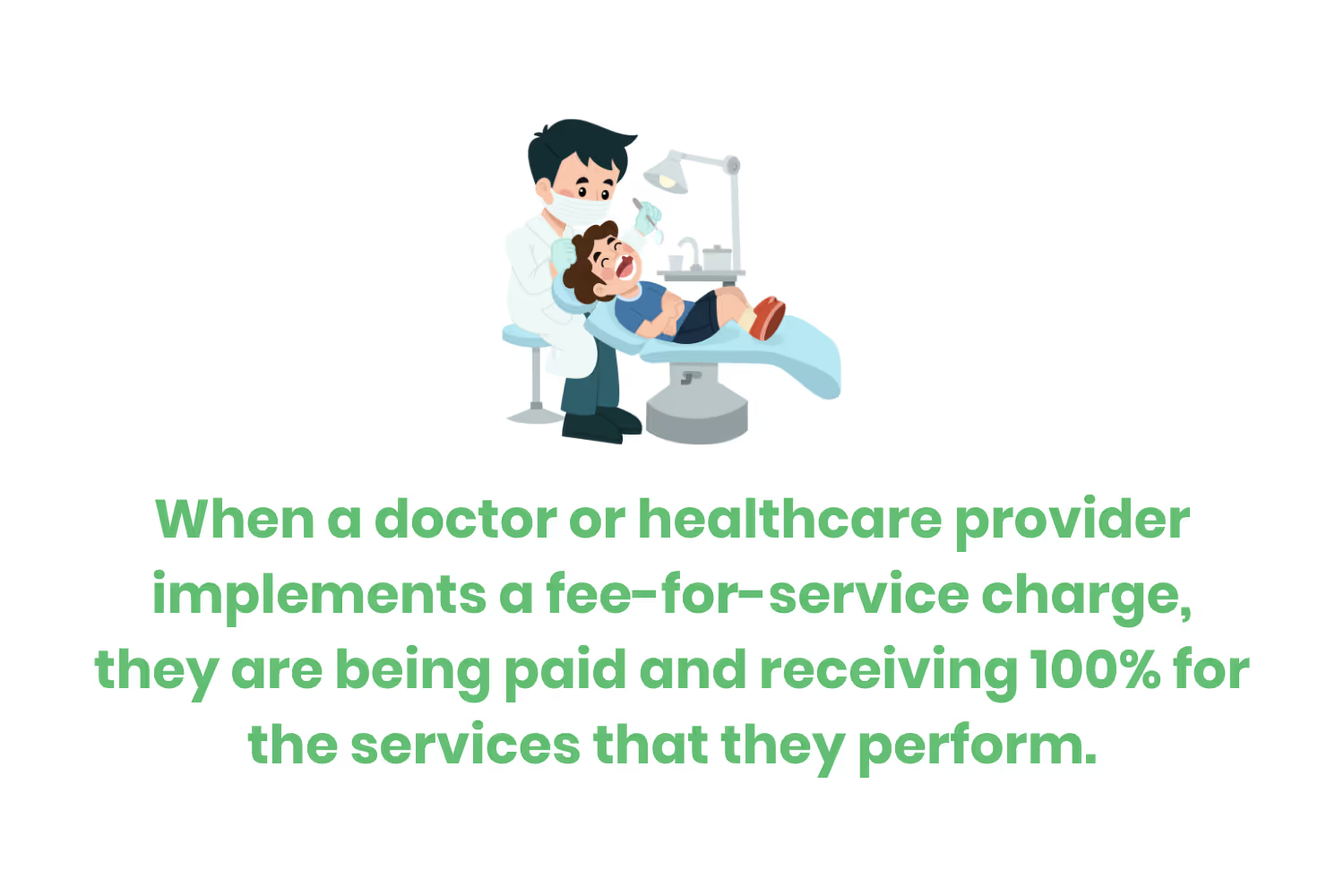
Healthcare.gov gives quite the simple definition of a fee-for-service charge. When a doctor or healthcare provider implements a fee-for-service charge, they are being paid and receiving 100% for the services that they perform.
Services aren’t bundled up together. Each service is a separate charge, giving healthcare practices the incentive to provide more treatments.
Another option here is to give patients a statement with an estimated cost of what the service outcome will be. You can send an estimated copay at the time of the service. After insurance has paid their portion, patients will receive a statement if there’s any amount still due.
Fees for service charges are apparent across industries. For each service a dentist provides, patients will pay a certain amount while their insurance plan will pay the remainder subject to their deductible and annual maximum.
The percentage paid out-of-pocket will vary based on the service received.
Some common dental offerings include…
- Teeth cleaning
- Teeth whitening
- Extractions
- Veneers
- Fillings
- Crowns
- Root canals
- Braces or Invisalign
Say that your dental practice offers most, if not all, of the services listed above. If you were to implement a fee for the service charging system, then a client receiving a teeth cleaning service as well as getting x-rays done would essentially pay for both of the services separately. A bundled cost of these services wouldn’t occur…leading to a lower bill.
Two services may not seem like a lot but as they begin to stack up or you’re getting multiple services done at once, this can stack up pretty quickly.
Using the fee-for-service method can lead to higher revenue for dental practices because you are being reimbursed for every service they offer.
If you’re a fee-for-service provider, then this means that you’re an out-of-network practice. Out-of-network practices are just that. They are out of the network which means that they aren’t included in many network plans that insurance providers offer. This results in fewer patients finding you through insurance plans, but more time allocation toward current patients!
Pros of Fee-for-Service in Dental
The biggest pro of moving toward a fee-for-service payment process is that you’ll receive the full amount of profit. The patient pays for the service at the time they receive it.
Another plus is that there’s more control in your hands as to what services you offer and their price points. With a fee-for-service model there’s less cooperation between the healthcare practice and healthcare providers.
As a fee-for-service dental practice, less of your clientele is likely to find you through insurance plans. This means that there’s a stronger focus in your practice toward current clientele. You have the opportunity to create stronger bonds and relationships between your recurring clients.
Depending on your practice, this may seem like the best or preferable option. As I mentioned before it all depends on each practice and what works best.
Cons of Fee-for-Service in Dental
In an ideal world, the fee for the service method would be great. But, nothing’s perfect.
Some see the fee-for-service method as more service options for patients, while others see it as unnecessary service offerings that healthcare practices are putting out to generate more revenue.
The incentives for fee-for-service are more of a benefit for the practice rather than the patients. This is fine and dandy until customers aren’t receiving the utmost quality of care. It’s not seen as a value-based method.
When unnecessary services exist and the quality of them isn’t sufficient, less business may be the result.
A bit more time gets allocated toward billing and claim processing with the fee-for-service method as well. This requires more resource allocation toward making sure your billing and claim processing works sufficiently. This can cause higher costs and lower efficiency within your practice.
There’s also the potential that providers will deny your request for payment on some of the services you’re offering which means that you have to compensate for what wasn’t paid for. Ultimately this is more money out of your pocket.
As we said earlier, an easy way to think about fee-for-service is quantity over quality. Since there’s a sense of incentive for providers to perform more services, fee-for-services can result in higher healthcare costs.
Going off of that, there’s also less of an incentive for dental practices to coordinate with other providers. The risk of this is also higher healthcare costs which can deter patients from your practice.
Conclusion
For many people in the United States, there’s already a sort of negative stigma around having to go to your annual or semi-annual dental appointment.
Service fees and payments don’t make the experience much better.
This can put a lot of pressure on dental practitioners and professionals with how they want to structure their business.
You want something that’s convenient and works well for you and your patients. Most of the information is subjective. Some may view the pros I listed as cons and vice versa.
For example, you can see a loss of patients as a con…or a pro because you have a smaller clientele that you can build relationships with.
If you read this blog and like the idea of taking more of a control approach and how you structure your offerings and services, then the fee-for-service method might be something you explore!
If not, that’s okay as there are all other sorts of methods you can use. The general shift in healthcare is more toward quality and value-based care. As healthcare costs increase, the general public is not going to want to spend more money than necessary for unnecessary added services.
It’s all good information to take into consideration. Looking at your clientele, offers, and relationships with insurance providers are all great steps into discovering what works best for your dental practice.
Emphasize your product's unique features or benefits to differentiate it from competitors
In nec dictum adipiscing pharetra enim etiam scelerisque dolor purus ipsum egestas cursus vulputate arcu egestas ut eu sed mollis consectetur mattis pharetra curabitur et maecenas in mattis fames consectetur ipsum quis risus mauris aliquam ornare nisl purus at ipsum nulla accumsan consectetur vestibulum suspendisse aliquam condimentum scelerisque lacinia pellentesque vestibulum condimentum turpis ligula pharetra dictum sapien facilisis sapien at sagittis et cursus congue.
- Pharetra curabitur et maecenas in mattis fames consectetur ipsum quis risus.
- Justo urna nisi auctor consequat consectetur dolor lectus blandit.
- Eget egestas volutpat lacinia vestibulum vitae mattis hendrerit.
- Ornare elit odio tellus orci bibendum dictum id sem congue enim amet diam.
Incorporate statistics or specific numbers to highlight the effectiveness or popularity of your offering
Convallis pellentesque ullamcorper sapien sed tristique fermentum proin amet quam tincidunt feugiat vitae neque quisque odio ut pellentesque ac mauris eget lectus. Pretium arcu turpis lacus sapien sit at eu sapien duis magna nunc nibh nam non ut nibh ultrices ultrices elementum egestas enim nisl sed cursus pellentesque sit dignissim enim euismod sit et convallis sed pelis viverra quam at nisl sit pharetra enim nisl nec vestibulum posuere in volutpat sed blandit neque risus.
Use time-sensitive language to encourage immediate action, such as "Limited Time Offer
Feugiat vitae neque quisque odio ut pellentesque ac mauris eget lectus. Pretium arcu turpis lacus sapien sit at eu sapien duis magna nunc nibh nam non ut nibh ultrices ultrices elementum egestas enim nisl sed cursus pellentesque sit dignissim enim euismod sit et convallis sed pelis viverra quam at nisl sit pharetra enim nisl nec vestibulum posuere in volutpat sed blandit neque risus.
- Pharetra curabitur et maecenas in mattis fames consectetur ipsum quis risus.
- Justo urna nisi auctor consequat consectetur dolor lectus blandit.
- Eget egestas volutpat lacinia vestibulum vitae mattis hendrerit.
- Ornare elit odio tellus orci bibendum dictum id sem congue enim amet diam.
Address customer pain points directly by showing how your product solves their problems
Feugiat vitae neque quisque odio ut pellentesque ac mauris eget lectus. Pretium arcu turpis lacus sapien sit at eu sapien duis magna nunc nibh nam non ut nibh ultrices ultrices elementum egestas enim nisl sed cursus pellentesque sit dignissim enim euismod sit et convallis sed pelis viverra quam at nisl sit pharetra enim nisl nec vestibulum posuere in volutpat sed blandit neque risus.
Vel etiam vel amet aenean eget in habitasse nunc duis tellus sem turpis risus aliquam ac volutpat tellus eu faucibus ullamcorper.
Tailor titles to your ideal customer segment using phrases like "Designed for Busy Professionals
Sed pretium id nibh id sit felis vitae volutpat volutpat adipiscing at sodales neque lectus mi phasellus commodo at elit suspendisse ornare faucibus lectus purus viverra in nec aliquet commodo et sed sed nisi tempor mi pellentesque arcu viverra pretium duis enim vulputate dignissim etiam ultrices vitae neque urna proin nibh diam turpis augue lacus.