
60+ Employee Burnout Statistics that Every Manager Should Know
People are overworked. To understand more about this occupational phenomenon, here are over 60 employee burnout statistics.

The feeling of burnout has to do with being mentally exhausted or stressed. People may use this when discussing any area of their life, but the World Health Organization (WHO) describes it only as relating to the workplace.
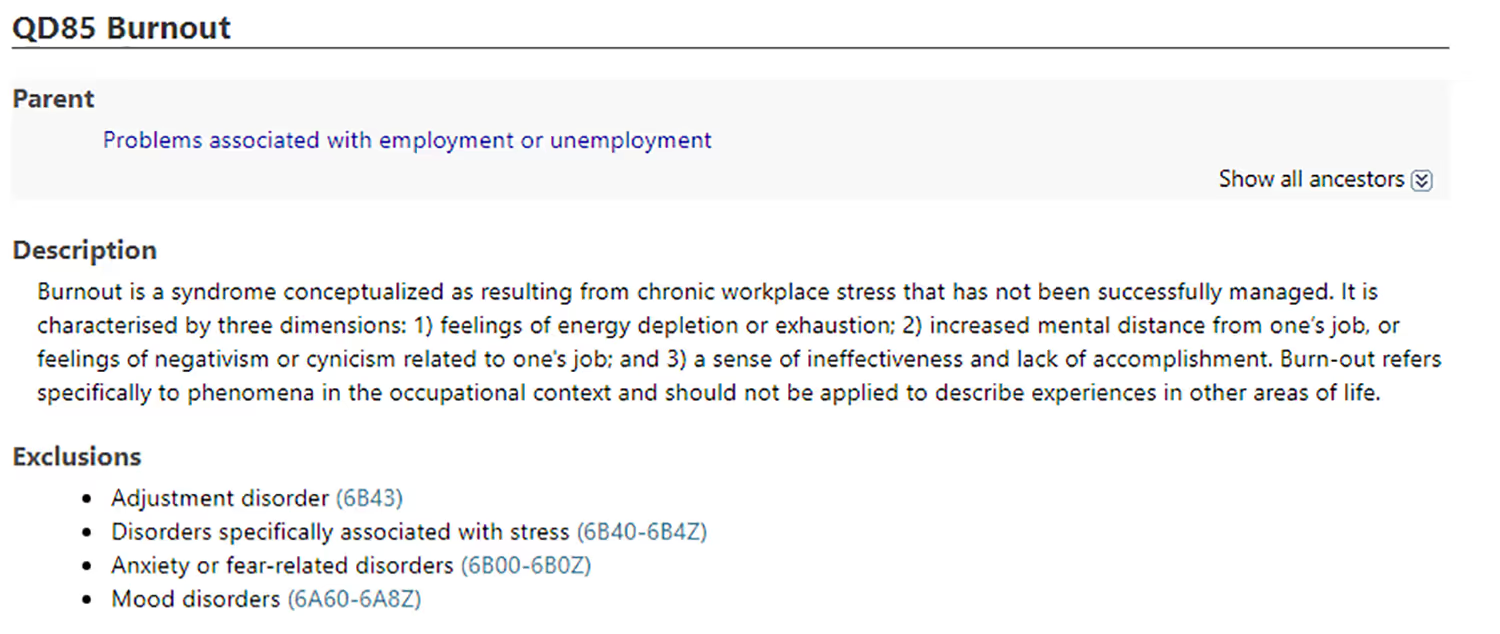
In its 11th Revision of the International Classification of Diseases (ICD-11), the WHO redefined burnout. It includes it as an occupational phenomenon rather than a medical condition, so it isn’t applicable to describe other areas of life.
The new description included in ICD-11 is…
So why does it specifically relate to one’s job?
Workplace stress is such a common problem it’s causing high rates of mental exhaustion. It’s so prevalent that it deserves its own definition within ICD-11. Maybe this is because of the major consequences that it has for companies.
But just how common is it, and why? More importantly, how do you recognize it?
To understand more about this occupational phenomenon, here are over 60 employee burnout statistics.
Number of People Impacted
Stress in someone’s job is so common that it leads to a majority of people becoming burned out at some point during their career. Many people are unlucky enough to experience it more often.
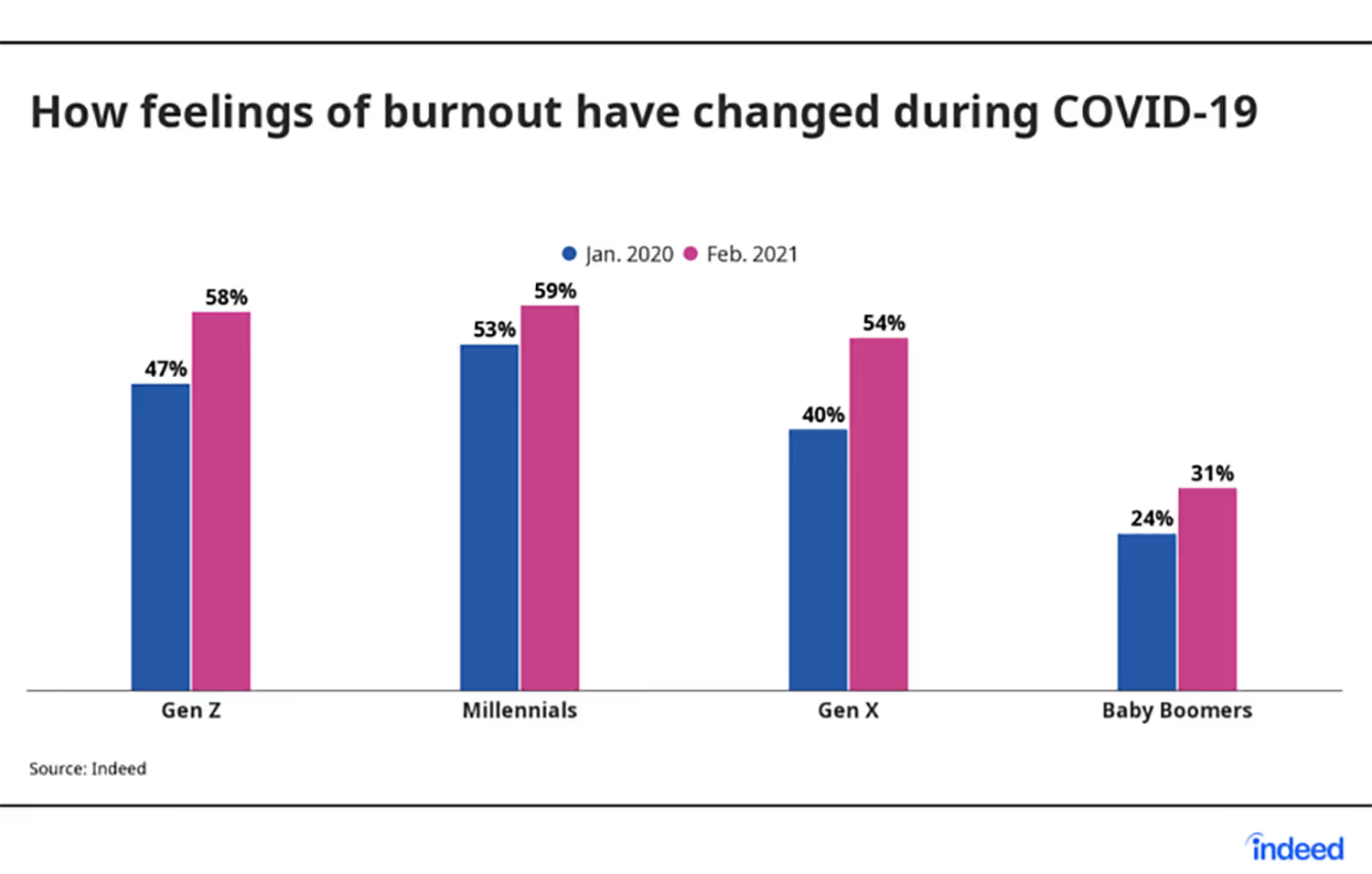
The problem has also only increased since the COVID-19 pandemic, and it’s a bigger concern for certain generations.
- Employee stress is already one of the top sources of stress for Americans as 61% of people say that work is a factor in their stress. (Michigan State University)
- Different generations experience burnout at different rates. One survey found that 84% of millennials experience burnout at their current job, compared to 77% of total respondents. (Deloitte)
- A recent Indeed report found that 52% of all workers feel burned out, and 67% say that it worsened during the COVID-19 pandemic. (Indeed)
- Another survey found that 77% of people experienced burnout at their current job, and over half experienced it more than once. (Deloitte)
- 64% of professionals who are passionate about their jobs say that they experience frequent stress. (Deloitte)
- 23% of people feel workplace burnout often. (meQulibrium)
Causes of Burnout
Workplace stress can result from many reasons, but some are more common than others. Some causes lead to more frequent cases, especially if work begins to interfere with personal life.
People work extra hours outside of their regular schedules.
- 39% of workers check emails outside of regular work hours every day. (Indeed)
Employees work too many hours.
- Retail and fast-food workers often work overtime or a part-time job to make enough money to make ends meet. (IVY EXEC)
- A survey for lawyers found that respondents worked an average of 53 hours per week. (Bloomberg Law)
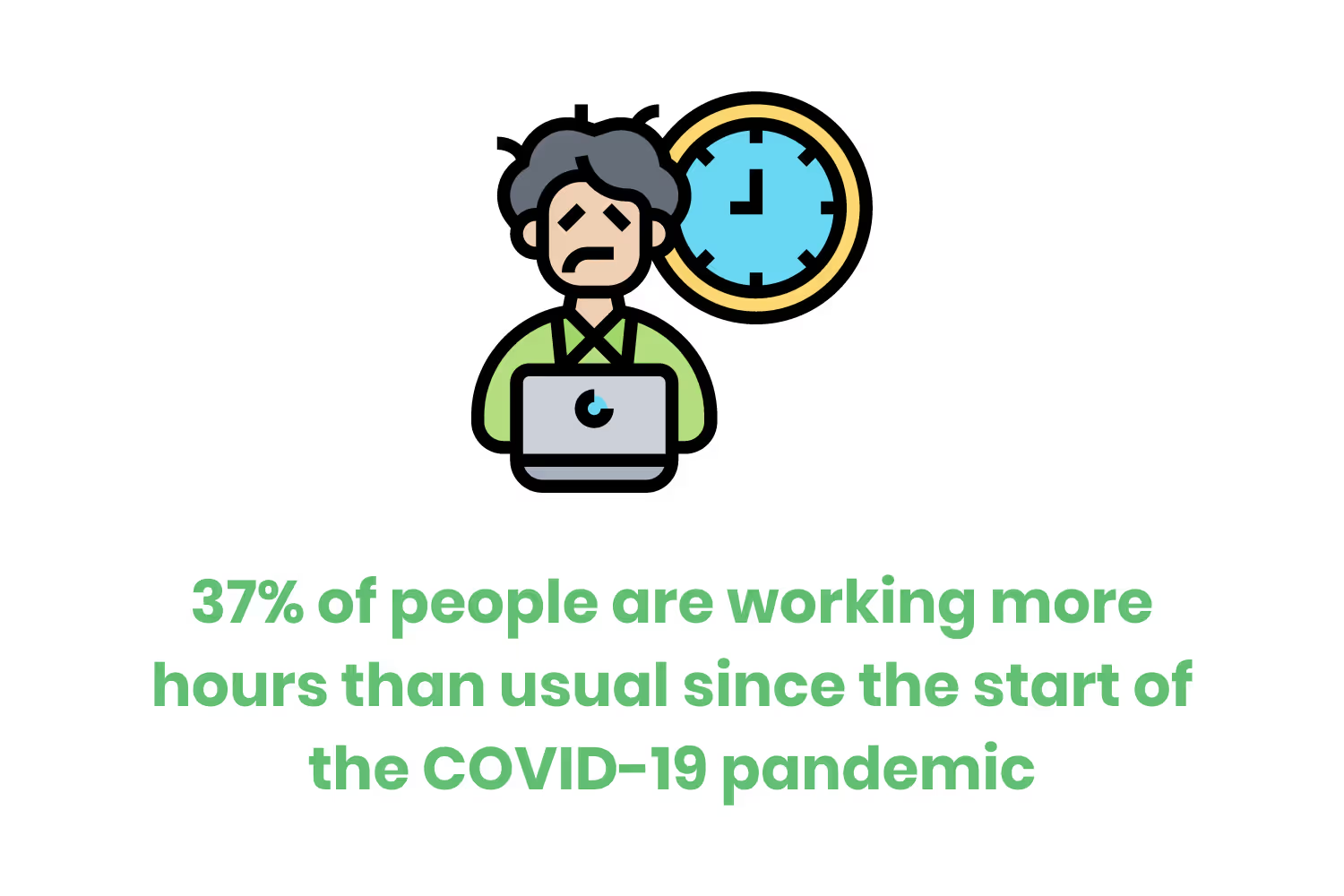
- A FlexJobs and Mental Health America survey found that 37% of people were working more hours than usual since the start of the COVID-19 pandemic. (FlexJobs)
Workers don’t use all of their vacation time.
- A quarter of employees say they never or rarely take all of their vacation time. (Deloitte)
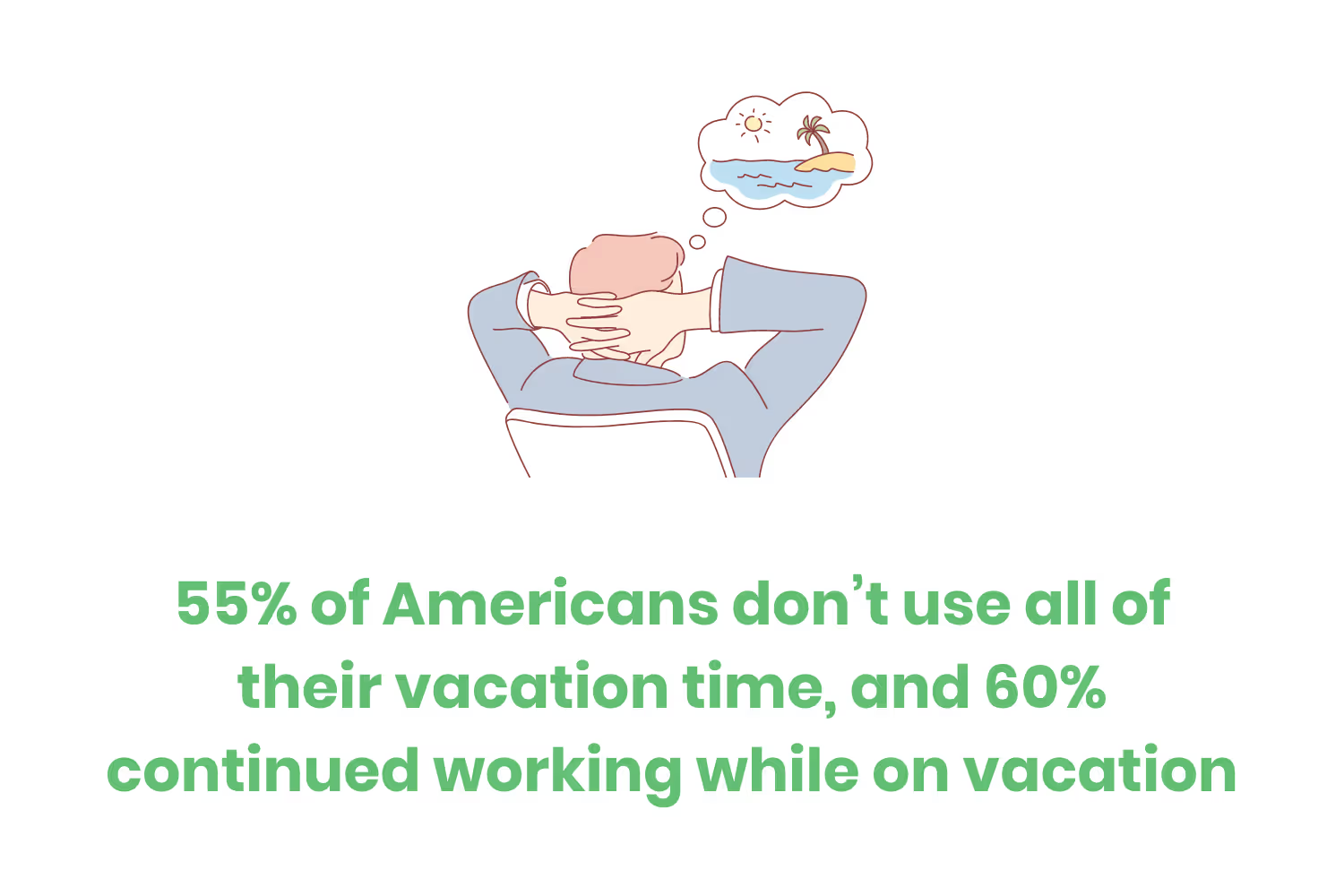
- 55% of Americans don’t use all of their vacation time. This forfeited $61.4 million in benefits. (Norwich University)
- 23% of US workers don’t use all of their vacation time because they have too much work. 60% continued working while on vacation. This is because 25% get contacted by a colleague for work-related reasons and 20% get contacted by their boss while on vacation. (Norwich University)
For unemployed people, there are high rates of stress as well. Burnout can also pertain to these individuals.
- 47% of unemployed people reported high levels of stress. (FlexJobs)
Having an imbalance of personal and professional life can cause burnout. People feel overwhelmed trying to balance the two, and they won’t feel refreshed coming into the job if they can’t focus enough on their personal life.
- For example, around 43% of doctors are happy with their work-life integration. (Mayo Clinic)
- Unfair treatment at work makes people 2.3 times more likely to experience high levels of burnout. (Gallup)
Consequences of Burnout
High rates of burnout impact employees, the company, and the entire United States economy. It leads to more job turnover, industry costs, and health problems. These all have damaging outcomes at the individual and corporate levels.
Job stress costs US companies more than $300 billion per year. (Michigan State University) These costs are due to:
- Accidents
- Absenteeism
- Decreased productivity
- Employee turnover
- Workers’ compensation
- Direct medical, legal, and insurance costs
When workers experience burnout, especially high levels of it, they’ll likely have poorer job performance.
- 91% of survey respondents said that an unmanageable amount of stress or frustration negatively impacts their quality of work. (Deloitte)
- There is an estimated $1 trillion loss in productivity per year due to depression and anxiety. (WHO)
- This loss of productivity equates to around 550 million workdays. (The University of California)

With more people suffering from workplace stress, there are higher healthcare costs.
- Burnout contributes to around $190 billion in healthcare-related costs. (The University of California)
Burnout negatively impacts relationships with others.
- 83% of people say that burnout negatively impacts their personal relationships. (Deloitte)
With more people facing workplace stress, more people are leaving their jobs or taking time off.
- 42% of all survey respondents left a job due to burnout, with 50% of millennials leaving a job because of it. (Deloitte)
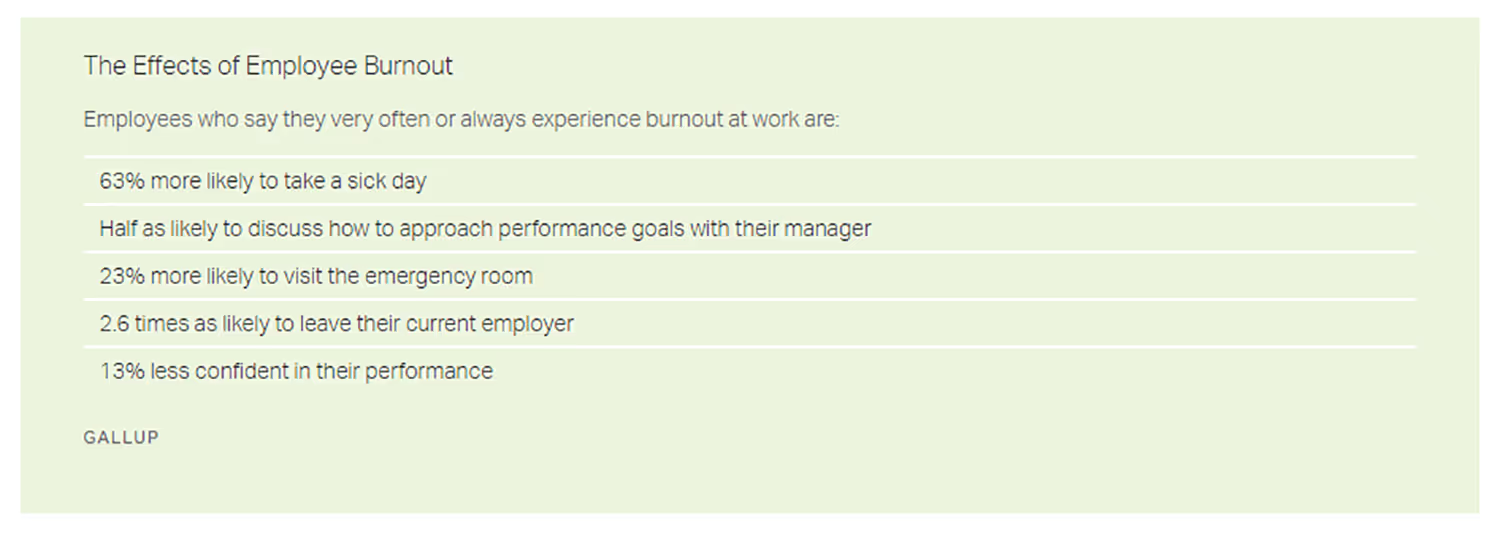
- People with burnout are 2.6 times as likely to actively seek a different job, 63% more likely to use sick time, and 23% more likely to visit the emergency room. (Gallup)
In the most serious cases, this condition can eventually lead to fatalities.
- Workplace stress results in around 120,000 deaths per year. (Harvard Business Review)
Rates Across Industries
Every industry experiences varying rates of this occupational phenomenon. Because different jobs are more physically and emotionally demanding, people in those fields can experience higher levels of stress.
- As of 2019, up to 54% of healthcare workers experienced emotional exhaustion that qualifies as burnout. This percentage increased to 71% of physicians in 2020. (NIHCM)
- 75% of social workers experience burnout at least once in their career, making it one of the most common fields for workplace stress. (IVY EXEC)
- 51% of people with design jobs face burnout. (IVY EXEC)
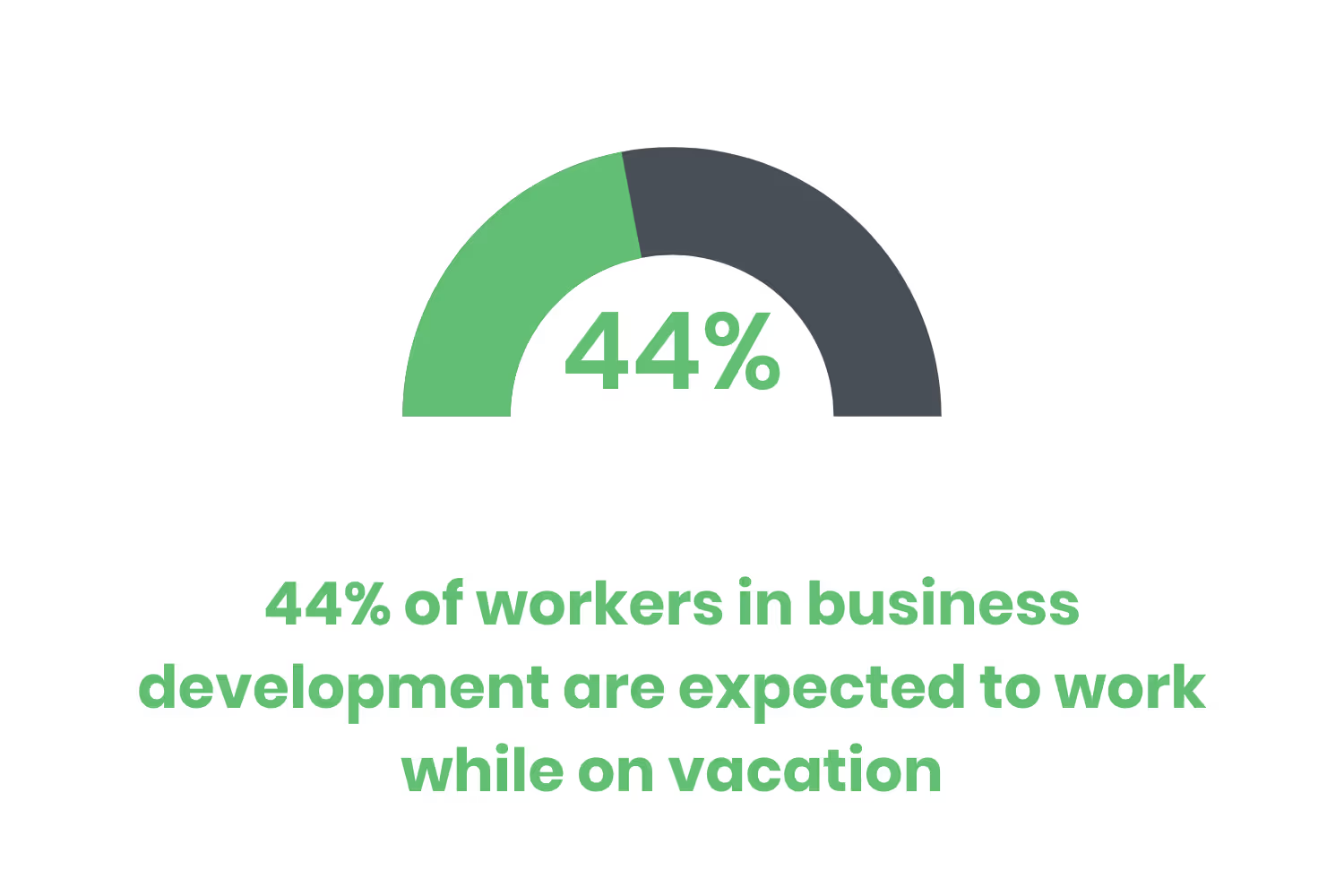
- Those who work in business development and sales experience increased stress due to the nature of their jobs. For instance, 44% of those in business development have to work while on vacation, so they don’t get true breaks from work. 75% of people in sales work off-site and travel for work. (IVY EXEC)
- 58% of frontline retail workers plan to leave their jobs due to burnout. (RetailWire)
- Between 5% and 30% of teachers show distinct signs of burnout. (ERIC)
- Lawyers reported experiencing burnout 50% of the time in quarter one of 2021. (Bloomberg Law)
Lack of Response from Managers
- Around 70% of workers say that their employers aren’t doing enough to prevent or ease burnout. 21% say that their company doesn’t offer programs or initiatives to help. (Deloitte)
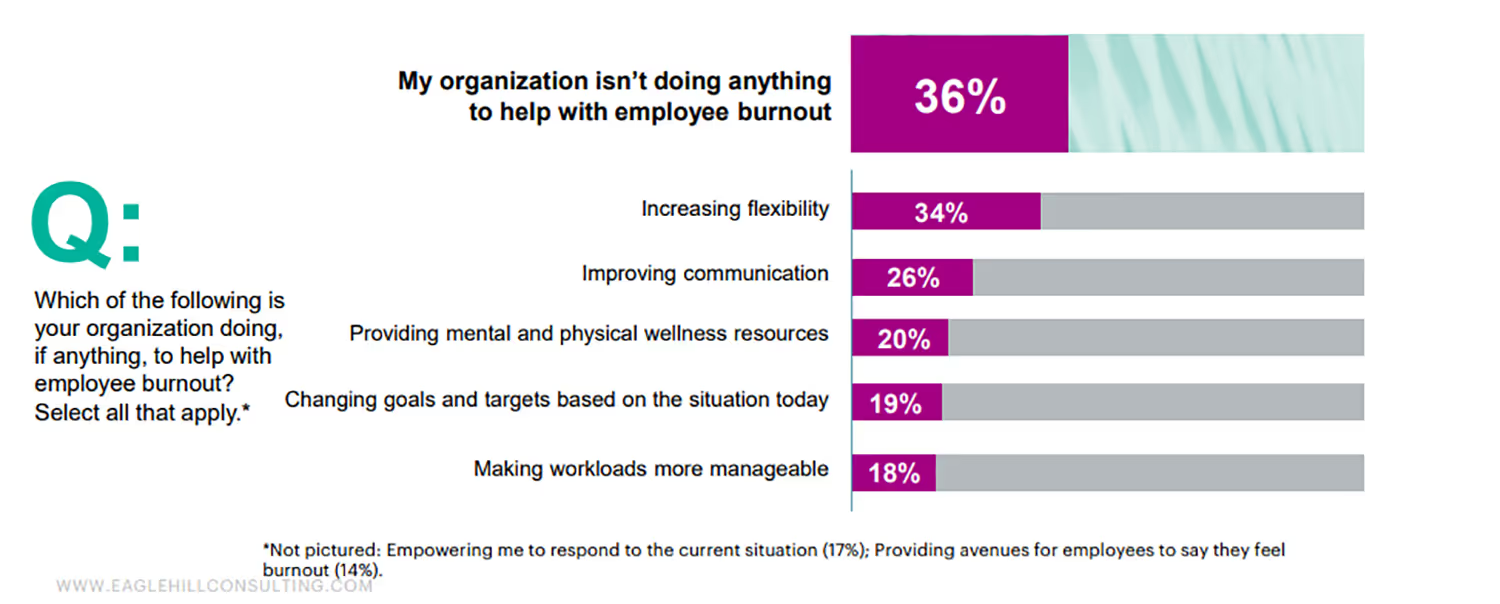
- 36% say that their organization isn’t doing anything to help with the problem. (Eagle Hill)
- Only 21% of people could have open and productive conversations with their Human Resources departments about solutions to burnout. (FlexJobs)
- 56% said that HR didn’t encourage conversations about the condition. (FlexJobs)
Solutions
Most workers don’t have the emotional support they need at work to manage stress. But they still believe there are ways that employers can help decrease workplace stress and improve mental health.
Workplace Flexibility
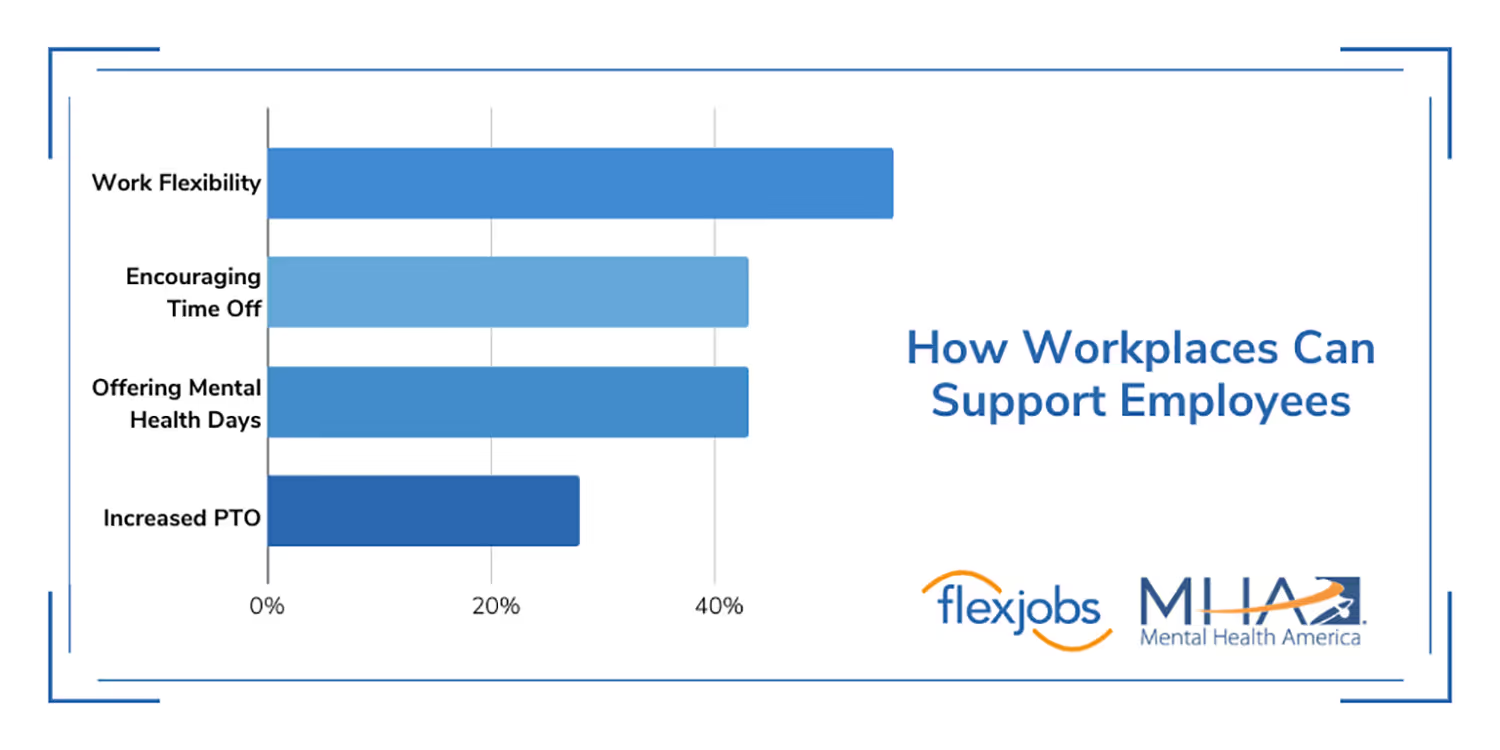
- For 56% of people, flexibility was overwhelmingly listed as the primary way that their company could support them. (FlexJobs)
- Many employers recognize that flexibility is important, as one survey found that it was their most popular solution. 34% of employees said that their organization was increasing flexibility to try to solve the problem. (Eagle Hill)
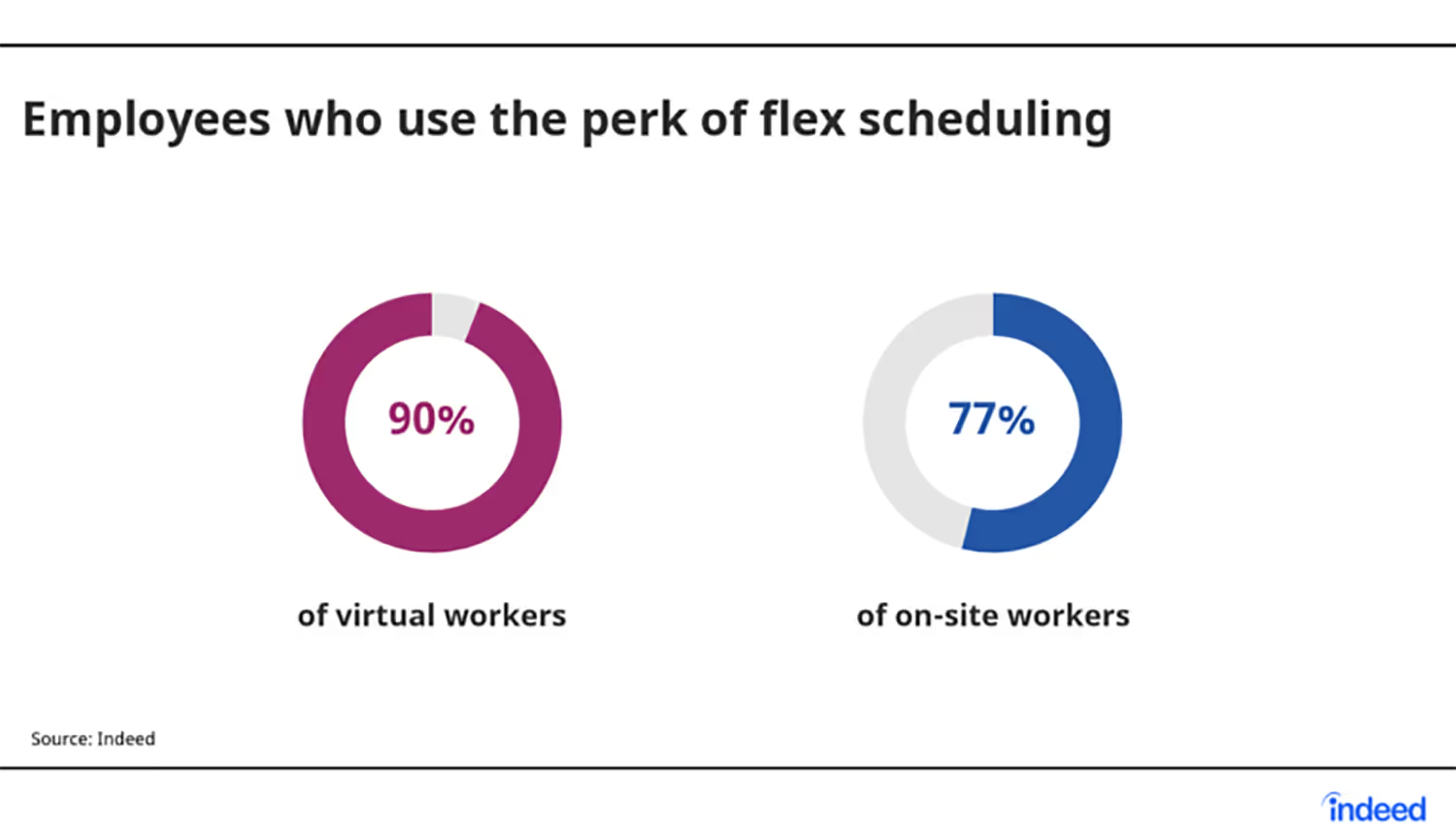
- Flex scheduling that resulted from the COVID-19 pandemic was “somewhat effective.” This was according to 82% of virtual workers and 70% of on-site workers. 90% of virtual and 77% of on-site employees took advantage of this flex scheduling benefit. (Indeed)
Paid Time Off
- 36% of employees say that more paid time off would reduce burnout. (Indeed)
- Using vacation time can increase job satisfaction and productivity, benefiting employees and companies. Around 80% would take more time off work if their employers supported and encouraged them to do so. (Norwich University)
Mental Health Days
- 84% of managers reported that their employees had increased productivity after a break. (Total Brain)

Support from Managers
- Employees with strong support from their managers are 70% less likely to feel burned out regularly. (Gallup)
Conclusion
Burnout relates specifically to occupations when described in ICD-11, and it’s important to understand why. Work is one of the main stressors for people across the country, and it impacts a majority of adults.
While different industries have varying rates of this condition, the costs of burnout are significant. Employees suffer at an individual level, affecting their work-life balance and personal relationships.
And there are costs for companies and the economy, too. They suffer financially since workers become unproductive, take time off, or switch jobs when their stress gets so bad. It doesn’t help that many employers don’t take initiative to solve this problem.
Managers must find solutions to ease this workplace stress for employees. That way, they can remain productive and have higher job satisfaction. Eventually, this will mean fewer negative costs for the company.
Emphasize your product's unique features or benefits to differentiate it from competitors
In nec dictum adipiscing pharetra enim etiam scelerisque dolor purus ipsum egestas cursus vulputate arcu egestas ut eu sed mollis consectetur mattis pharetra curabitur et maecenas in mattis fames consectetur ipsum quis risus mauris aliquam ornare nisl purus at ipsum nulla accumsan consectetur vestibulum suspendisse aliquam condimentum scelerisque lacinia pellentesque vestibulum condimentum turpis ligula pharetra dictum sapien facilisis sapien at sagittis et cursus congue.
- Pharetra curabitur et maecenas in mattis fames consectetur ipsum quis risus.
- Justo urna nisi auctor consequat consectetur dolor lectus blandit.
- Eget egestas volutpat lacinia vestibulum vitae mattis hendrerit.
- Ornare elit odio tellus orci bibendum dictum id sem congue enim amet diam.
Incorporate statistics or specific numbers to highlight the effectiveness or popularity of your offering
Convallis pellentesque ullamcorper sapien sed tristique fermentum proin amet quam tincidunt feugiat vitae neque quisque odio ut pellentesque ac mauris eget lectus. Pretium arcu turpis lacus sapien sit at eu sapien duis magna nunc nibh nam non ut nibh ultrices ultrices elementum egestas enim nisl sed cursus pellentesque sit dignissim enim euismod sit et convallis sed pelis viverra quam at nisl sit pharetra enim nisl nec vestibulum posuere in volutpat sed blandit neque risus.
Use time-sensitive language to encourage immediate action, such as "Limited Time Offer
Feugiat vitae neque quisque odio ut pellentesque ac mauris eget lectus. Pretium arcu turpis lacus sapien sit at eu sapien duis magna nunc nibh nam non ut nibh ultrices ultrices elementum egestas enim nisl sed cursus pellentesque sit dignissim enim euismod sit et convallis sed pelis viverra quam at nisl sit pharetra enim nisl nec vestibulum posuere in volutpat sed blandit neque risus.
- Pharetra curabitur et maecenas in mattis fames consectetur ipsum quis risus.
- Justo urna nisi auctor consequat consectetur dolor lectus blandit.
- Eget egestas volutpat lacinia vestibulum vitae mattis hendrerit.
- Ornare elit odio tellus orci bibendum dictum id sem congue enim amet diam.
Address customer pain points directly by showing how your product solves their problems
Feugiat vitae neque quisque odio ut pellentesque ac mauris eget lectus. Pretium arcu turpis lacus sapien sit at eu sapien duis magna nunc nibh nam non ut nibh ultrices ultrices elementum egestas enim nisl sed cursus pellentesque sit dignissim enim euismod sit et convallis sed pelis viverra quam at nisl sit pharetra enim nisl nec vestibulum posuere in volutpat sed blandit neque risus.
Vel etiam vel amet aenean eget in habitasse nunc duis tellus sem turpis risus aliquam ac volutpat tellus eu faucibus ullamcorper.
Tailor titles to your ideal customer segment using phrases like "Designed for Busy Professionals
Sed pretium id nibh id sit felis vitae volutpat volutpat adipiscing at sodales neque lectus mi phasellus commodo at elit suspendisse ornare faucibus lectus purus viverra in nec aliquet commodo et sed sed nisi tempor mi pellentesque arcu viverra pretium duis enim vulputate dignissim etiam ultrices vitae neque urna proin nibh diam turpis augue lacus.