
Exclusion List Medicaid: An Ultimate Guide
Let’s get into the specifics of the Medicaid exclusion list and how it keeps the program’s integrity intact.

On December 9, 2022, Serenity Home Healthcare Services agreed to pay the Office of Inspector General (OIG) $146,952. This settlement agreement addresses accusations that the healthcare system employed an individual on the List of Excluded Individuals/Entities (LEIE).
I know, I know - I just threw a bunch of terms at you, which you may or may not know. In case you don’t, the OIG is a government entity that protects Department of Health & Human Services (HHS) programs. Namely, from waste, fraud, and abuse. These programs include Medicare, Medicaid, and many more. The OIG works closely with the U.S. Department of Health and Human Services. To learn more about the OIG, check out this ultimate OIG guide.
The LEIE is a database, maintained by the OIG, that names entities and individuals excluded from participating in federally funded healthcare programs. Anyone who hires or employs a person or organization from this list is subject to civil monetary penalties (CMP). Two of the most well-known health programs are Medicaid and Medicare. The OIG’s largest area of oversight in 2023 belonged to these two programs at 77%.
This is because Medicare and Medicaid are crucial systems that provide coverage to millions of Americans. They ensure that those who need medical services have access. No matter their economic standing. So the program stays secure. Today let’s get into the specifics of the Medicaid exclusion list and how it keeps the program’s integrity intact.
What is Medicaid?
Medicaid is an important state and federal program within the American healthcare system. It allows individuals and families the opportunity to sign up for healthcare coverage, even with low income.
Some people get this and Medicare confused, but these are not the same thing. For reference, Medicare covers individuals who are 65 or older, as well as those under 65 but with a disability.
This program also covers Americans, regardless of their income. Note that these two programs also differ in the way they go about cost-sharing.

What is the Medicaid Exclusion List?
I already went over what the LEIE is, but for the sake of thoroughness, let’s go over it again. This time, specific to Medicaid.
The Medicaid exclusion list is essentially what it sounds like. Emphasis on “exclusion” and “list”... and “Medicaid”.
It’s a list of individuals and entities who cannot participate in the Medicaid program. This list is also referred to as the “OIG Exclusion List”, just for further clarification.
Having different names for the same thing can get confusing after all.
Reasons for an Exclusion
There are a few reasons why a provider might end up on this list.
They include:
- Conviction of Medicaid fraud.
- Patient abuse and/or patient neglect.
- Any felony convictions of financial misconduct such as fraud or theft.
- Any felony convictions related to the unlawful:
- Manufacturing of controlled substances.
- Distribution of controlled substances.
- Prescription of controlled substances.
- Dispensing of controlled substances.
Medicaid Exclusion List Information
The exclusion list itself consists of information such as the Individual’s or organization’s address, date of birth, and job description.
Other information included in the list are as follows:
- The National Provider Number.
- The individual’s Unique Physician Identification Number.
- Date of exclusion and the reason for it.
You can find the Medicaid exclusion list in two different formats. Either through the Online Searchable Database or the Downloadable Database.
Types of Medicaid Exclusions
There are two different types of exclusion frameworks. The Medicare and Medicaid Patient and Program Protection Act of 1987 names these as mandatory exclusions and permission exclusions. These are not limited to just Medicare and Medicaid. They eventually spread to all federally funded healthcare programs.
Mandatory exclusions in Medicaid last for a minimum of 5 years. They also make up a little more than half of all exclusions.
Based on criminal convictions of the following:
- Federal and state healthcare: delivery of service convictions.
- Minimum of 5 years exclusion.
- Patient neglect or abuse.
- Minimum of 5 years exclusion.
- Felony fraud of healthcare programs (other than Medicare or Medicaid).
- Minimum of 5 years exclusion.
- The unlawful manufacturing, distribution, prescription, or dispensing of a controlled substance.
- Minimum of 5 years exclusion.
- Second mandatory exclusion offense.
- Minimum 10 years.
- Third mandatory exclusion offense.
- Permanent exclusion.
Permission exclusions in Medicaid, save for a few exceptions, exist for 3 years. Individuals and organizations have 30 days to appeal against it.
The wide range of conduct for which this exclusion can cover can include:
- Suspension and revocation of a healthcare license. Or the surrender of a license.
- The exclusion period is the same as the time stated by the licensing authority.
- Healthcare fraud misdemeanor convictions.
- 3 year exclusion baseline.
- Non-health care program fraud.
- 3 year exclusion baseline.
- Obstruction during an audit or an investigation.
- 3 year exclusion baseline.
- Any misdemeanor convictions in regards to a controlled substance.
- 3 year exclusion baseline.
- Providing substandard or unnecessary services.
- 1-year exclusion minimum.
- Submitting fraudulent or false claims.
- Minimum exclusion of 1-year.
- Unlawful kickback arrangements.
- No minimum exclusion time.
- This next exclusion applies to any owner, officer, or managing employee: controlling a sanctioned entity.
- The minimum period is the same length as the entity's exclusion.
State Medicaid Exclusions
The impact of exclusions when it comes to state and federal Medicaid is simple.
If a business does not comply with stated regulations, and hires an excluded entity or individual, it will not receive funding for the following services or products:
- Billing and accounting services as well as administrative and management services.
- Human resources.
- Information and technology services.
- Transportation services.
- Volunteer work.
Practicing regular exclusion screenings in regard to your Medicaid compliance plan is imperative. A must if you want to keep your workload streamlined and your revenue plan flowing. Not to mention, avoid hefty fines and an overall exclusion from your program. Let’s take a look at some tips on how to approach this screening process both by state regulations and federally.
Screening for Medicaid Exclusions
Any healthcare providers or programs that participate in Medicaid must be sure to screen both employees and third-party contractors. Simply knowing who you are working with can help you avoid trouble with the OIG. Ignorance is definitely not always bliss.
Employing an excluded individual could result in the following:
- Fines.
- Program/practitioner exclusion.
- Rejected claims.
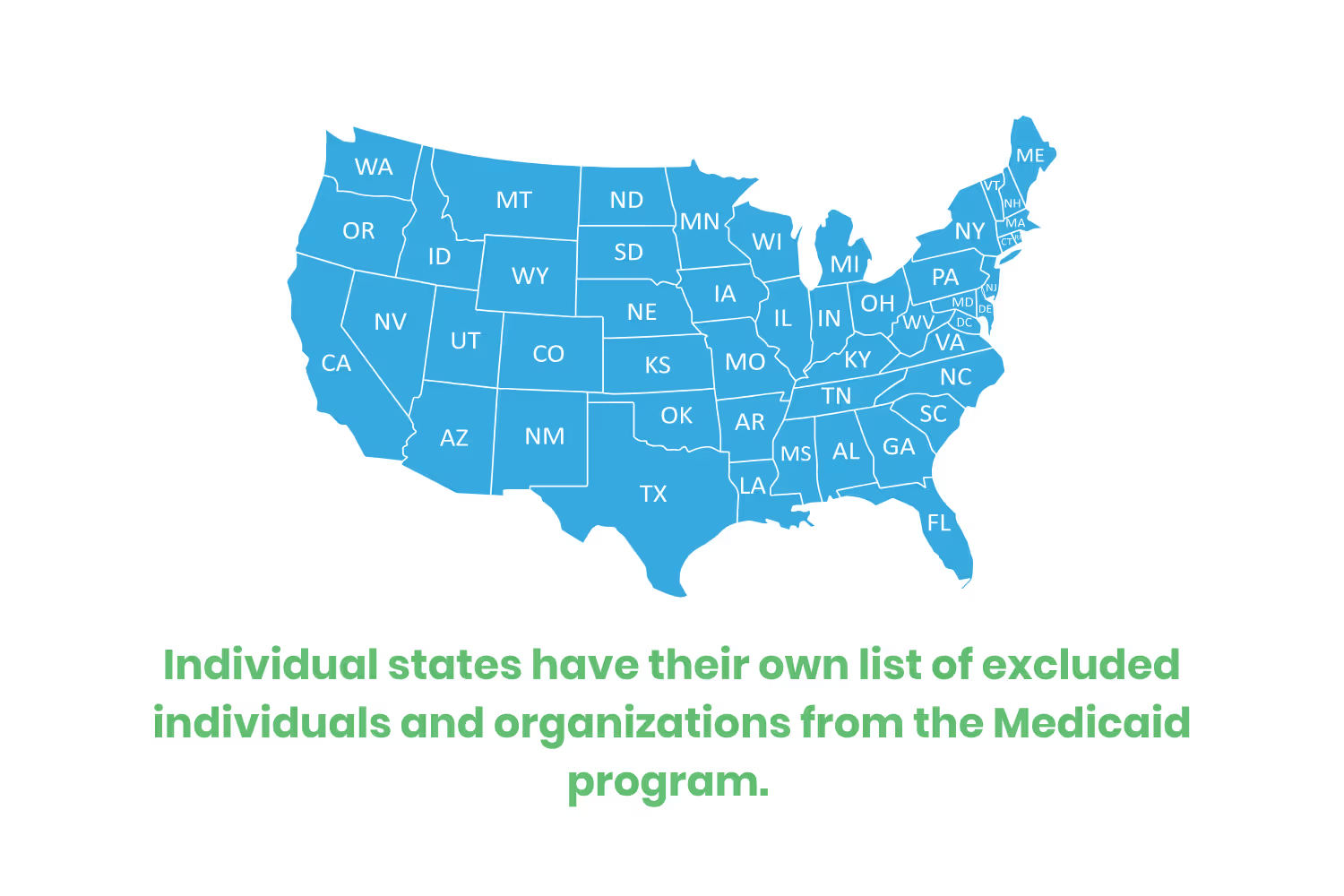
Individual states have their own list of excluded individuals and organizations from the Medicaid program. Different from the LEIE federal list, state lists may contain different types of data. This can make manual screening more challenging. Of course, all states must comply with OIG regulations. However, some states may include their own exclusions, in addition to the federal level.
Conclusion
While there are ongoing discussions about ways to streamline the Medicaid exclusion list program, it is widely understood in every state that compliance with these regulations is important. It is a vital tool for maintaining the integrity of the program and protecting against fraud and abuse. This ensures that beneficiaries receive the appropriate care from their providers.
In order to make sure you stay compliant with these standards and the ever-changing LEIE list, consider the following:
- Check the LEIE monthly. The OIG updates the list, so establish a process within your company to ensure you don’t miss any changes.
- Don’t skip screening contracted entities and individuals!
- Also, make sure to screen volunteers, trainees, and even board members. If they contribute to providing services that get billed to a healthcare program, they need screening.
- Check the state-level lists to cover all of your bases! The excluded individual may not be in the OIG’s LEIE list yet.
Emphasize your product's unique features or benefits to differentiate it from competitors
In nec dictum adipiscing pharetra enim etiam scelerisque dolor purus ipsum egestas cursus vulputate arcu egestas ut eu sed mollis consectetur mattis pharetra curabitur et maecenas in mattis fames consectetur ipsum quis risus mauris aliquam ornare nisl purus at ipsum nulla accumsan consectetur vestibulum suspendisse aliquam condimentum scelerisque lacinia pellentesque vestibulum condimentum turpis ligula pharetra dictum sapien facilisis sapien at sagittis et cursus congue.
- Pharetra curabitur et maecenas in mattis fames consectetur ipsum quis risus.
- Justo urna nisi auctor consequat consectetur dolor lectus blandit.
- Eget egestas volutpat lacinia vestibulum vitae mattis hendrerit.
- Ornare elit odio tellus orci bibendum dictum id sem congue enim amet diam.
Incorporate statistics or specific numbers to highlight the effectiveness or popularity of your offering
Convallis pellentesque ullamcorper sapien sed tristique fermentum proin amet quam tincidunt feugiat vitae neque quisque odio ut pellentesque ac mauris eget lectus. Pretium arcu turpis lacus sapien sit at eu sapien duis magna nunc nibh nam non ut nibh ultrices ultrices elementum egestas enim nisl sed cursus pellentesque sit dignissim enim euismod sit et convallis sed pelis viverra quam at nisl sit pharetra enim nisl nec vestibulum posuere in volutpat sed blandit neque risus.
Use time-sensitive language to encourage immediate action, such as "Limited Time Offer
Feugiat vitae neque quisque odio ut pellentesque ac mauris eget lectus. Pretium arcu turpis lacus sapien sit at eu sapien duis magna nunc nibh nam non ut nibh ultrices ultrices elementum egestas enim nisl sed cursus pellentesque sit dignissim enim euismod sit et convallis sed pelis viverra quam at nisl sit pharetra enim nisl nec vestibulum posuere in volutpat sed blandit neque risus.
- Pharetra curabitur et maecenas in mattis fames consectetur ipsum quis risus.
- Justo urna nisi auctor consequat consectetur dolor lectus blandit.
- Eget egestas volutpat lacinia vestibulum vitae mattis hendrerit.
- Ornare elit odio tellus orci bibendum dictum id sem congue enim amet diam.
Address customer pain points directly by showing how your product solves their problems
Feugiat vitae neque quisque odio ut pellentesque ac mauris eget lectus. Pretium arcu turpis lacus sapien sit at eu sapien duis magna nunc nibh nam non ut nibh ultrices ultrices elementum egestas enim nisl sed cursus pellentesque sit dignissim enim euismod sit et convallis sed pelis viverra quam at nisl sit pharetra enim nisl nec vestibulum posuere in volutpat sed blandit neque risus.
Vel etiam vel amet aenean eget in habitasse nunc duis tellus sem turpis risus aliquam ac volutpat tellus eu faucibus ullamcorper.
Tailor titles to your ideal customer segment using phrases like "Designed for Busy Professionals
Sed pretium id nibh id sit felis vitae volutpat volutpat adipiscing at sodales neque lectus mi phasellus commodo at elit suspendisse ornare faucibus lectus purus viverra in nec aliquet commodo et sed sed nisi tempor mi pellentesque arcu viverra pretium duis enim vulputate dignissim etiam ultrices vitae neque urna proin nibh diam turpis augue lacus.