

Long-Term Care Revenue Cycle Management (RCM): An Ultimate Guide
For long-term care organizations, especially skilled nursing facilities, revenue pressure builds fast. Extended stays, shifting payer rules, and small documentation gaps can impact weeks of reimbursement. As margins tighten, long-term care revenue cycle management has moved from the back office into daily operational decision-making.

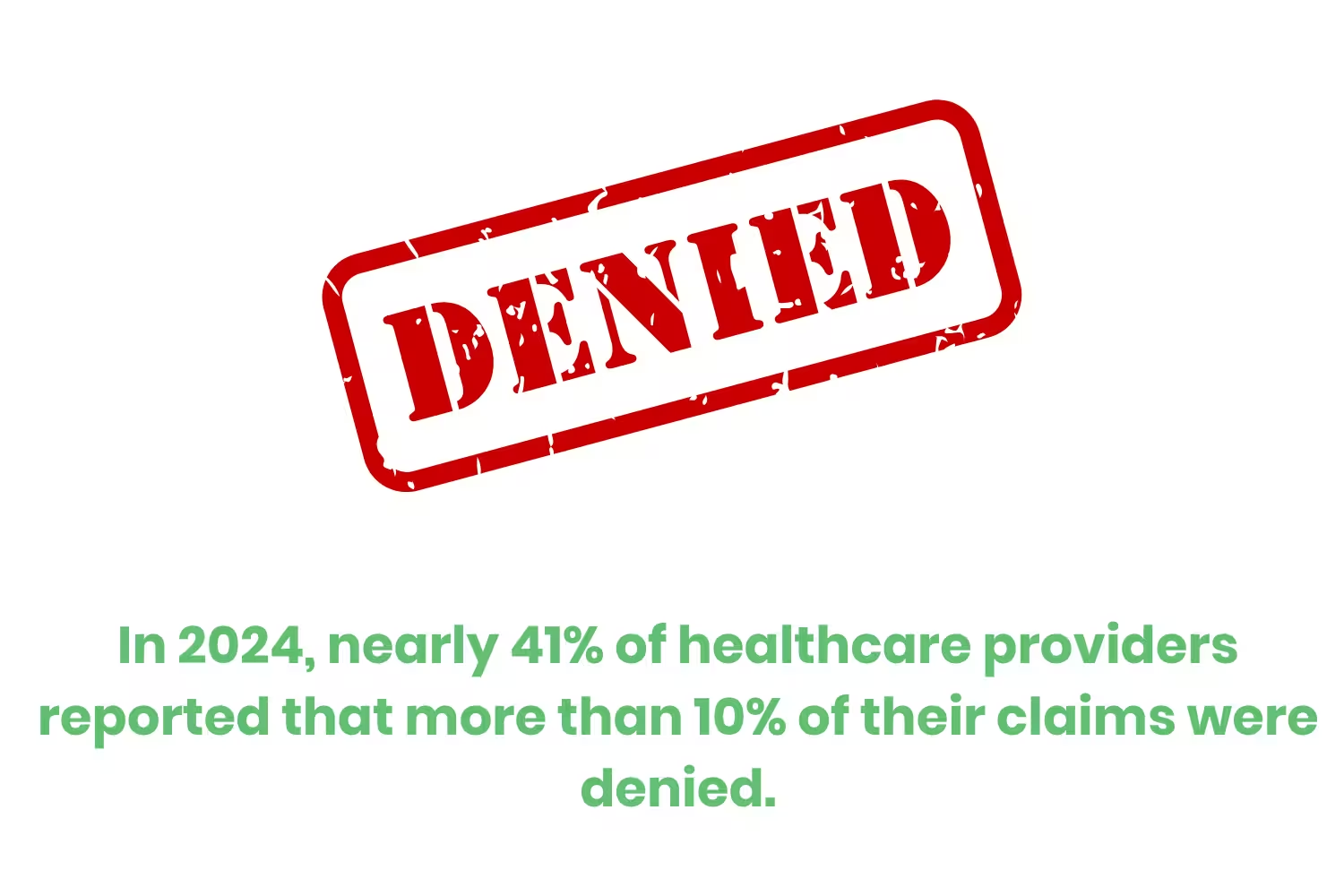
In 2024, nearly 41% of healthcare providers reported that more than 10% of their claims were denied, according to industry revenue cycle data. For organizations that depend on consistent reimbursement, this level of disruption shows up quietly at first. Payments arrive later than expected. Accounts receivable grow. Your staff will be spending more time tracking claims than supporting operations.
For long-term care organizations, and especially skilled nursing facilities, this pressure builds quickly. Services extend over months, payer rules shift mid-stay, and a single documentation issue can affect weeks of reimbursement. That is why long term care revenue cycle management has moved out of the background and into daily operational decision-making.
What is revenue cycle management and why does it matter for long-term care?
At its core, revenue cycle management in healthcare is how a healthcare provider turns care delivery into collected revenue. It covers everything from verifying coverage before admission to claim submission and receiving final payment after services are rendered. In long-term care, that cycle is longer, more fragmented, and far less forgiving than in most acute care settings.
For skilled nursing facilities, revenue cycle performance directly affects staffing, census management, and the ability to maintain consistent patient care. These organizations deliver a wide range of services, including skilled nursing, therapy, medication administration, behavioral health support, and hospice care. Each service carries its own documentation and billing requirements.
When care revenue cycle management works as intended, leadership has predictable cash flow, stable financial health, and the ability to reinvest in quality care. When it does not, even strong clinical performance can be undermined by billing backlogs, denied claims, and growing uncertainty around reimbursement.
How does medical billing work in long-term care and home health settings?
The billing process in long-term care follows the same broad structure as healthcare revenue cycle management across the industry, but the day-to-day reality looks different once length of stay and payer changes are factored in.
Billing begins with intake and insurance verification. Eligibility is confirmed at admission, then revisited frequently. This step is especially critical in skilled nursing facilities, where residents may move from Medicare to Medicaid or private insurance policies during a single stay. Missed changes often result in retroactive denials that delay or prevent successful claim submission.
As care is delivered, each encounter is documented and translated into billing codes through medical coding. Over time, a single resident may receive dozens of services rendered. Each one must meet payer requirements for timely and accurate reimbursement. If documentation does not fully support the services provided, claims can stall before or after claim submission, be denied outright, or be paid at a lower rate than expected.
Role of electronic health records and electronic health in streamlining medical billing
In practice, efficient billing depends heavily on how well electronic systems are connected. When electronic health records integrate with billing platforms, documentation flows directly into the revenue cycle and supports cleaner, faster claim submission. That reduces rework, lowers error rates, and speeds submitting claims.
In skilled nursing facilities, where documentation volume is high and staff turnover can be a challenge, integrated systems help maintain consistency. They also support compliant workflows, improve operational efficiency, and shorten the time between care delivery and reimbursement.
Common codes and documentation needs for care services and medical services
Accurate coding starts with strong documentation, supported by detailed care plans, nursing notes, therapy records, and physician orders that establish medical necessity.
This is where many facilities feel strain. Clinical teams are focused on resident needs. Billing teams are focused on reimbursement and timely claim submission. When those groups are not aligned, documentation gaps appear, patient billing becomes inconsistent, and revenue is left on the table.
What challenges do care facilities face in revenue cycle management?
Long-term care organizations, including skilled nursing facilities, deal with a mix of operational and payer-driven challenges that make revenue cycle management in healthcare particularly difficult to manage.
Top challenges in revenue cycle management: billing errors, denials, and payer complexities
Claim denials are a constant presence. Most stem from familiar issues: missing authorizations, insufficient documentation, or incorrect billing codes that surface during or after claim submission. Medicaid eligibility changes add another layer of risk, often affecting reimbursement retroactively.
Each payer applies different documentation standards and timelines .For facilities already managing audits, surveys, and staffing shortages, keeping up with changing rules becomes increasingly difficult. The long-term impact is slower payment collection, unpredictable reimbursement, and mounting cash flow pressure.
How staffing, management processes, and software affect the RCM process
Many skilled nursing facilities operate with lean administrative teams. When billing staff are stretched thin, errors compound. Claims go out late. Claim submission is rushed or delayed. Follow-up slips. Denial backlogs grow.
I have worked with facilities where one billing specialist managed hundreds of residents. The problem was not a lack of knowledge. It was capacity. Without standardized workflows, automation, and clear ownership, even the most experienced teams will struggle to keep up with complex healthcare practices.
Impact of value-based care and payer policies on care billing and reimbursement
As value-based care expands, long-term care reimbursement is becoming more closely connected to the strength of clinical documentation, performance measures, and measurable health outcomes.
For skilled nursing facilities, this means billing must support both service volume and outcome reporting. Documentation gaps that once slowed claim submission now risk reduced reimbursement altogether.
How can long-term care providers optimize and leverage RCM services?
For most long-term care organizations, revenue cycle improvement starts with identifying where money is being delayed, denied, or written off. Fixing those issues usually requires changes well before claim submission reaches a payer.
Strategies to optimize the revenue cycle: automation, management software, and workflow changes
Facilities with more stable reimbursement tend to focus on early-stage controls. Eligibility checks are automated. Authorizations are tracked centrally. Documentation standards are reinforced across teams to support clean claim submission.
When workflows are aligned, organizations will save time, reduce rework, and improve operational efficiency. Clean claims move through claims processing faster, which stabilizes reimbursement and supports long-term planning.
How do you resolve denials and reduce billing errors in long-term care?
In long-term care, claim denials are common, but they are rarely random. Most trace back to the same underlying issues that occur before or during claim submission.
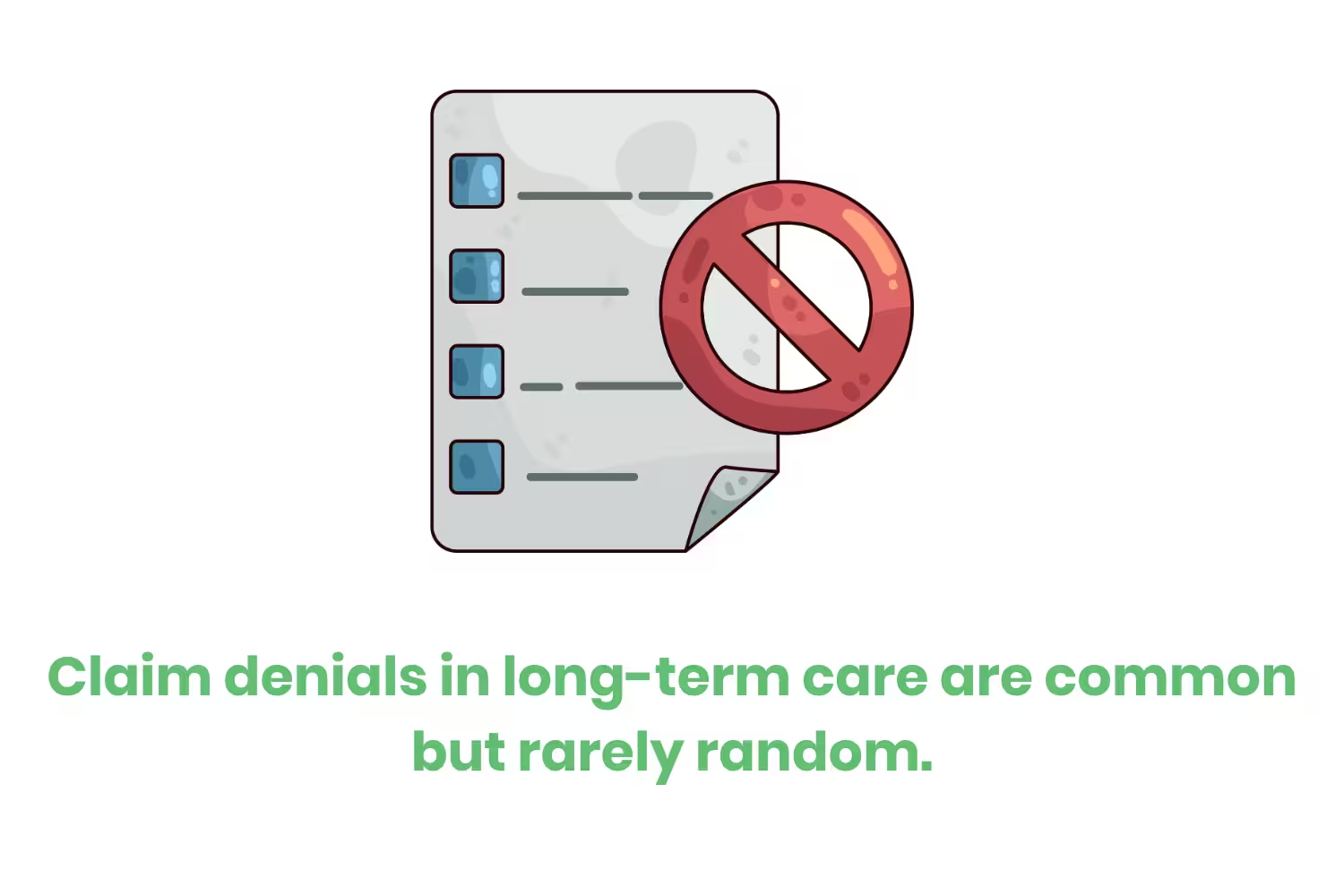
Common causes of denial and steps to resolve denied claims and reduce future denials
Common causes of denials include missing documentation, authorization lapses, and incorrect billing codes, which account for the majority of denials. Facilities that regularly review these denial trends are in a better position to correct root causes instead of repeatedly appealing the same issues.
Best practices for coding, documentation, and staff training to prevent billing errors
Facilities that consistently reduce billing errors focus on strengthening documentation and coding practices upfront, well before claim submission. Clinical and billing teams understand how their work intersects.
The use of ongoing education will help staff adapt to coding updates and payer policy changes. When the documentation is complete and the coding is precise, skilled nursing facilities will experience fewer denials, faster reimbursement, and more predictable healthcare payments.
Using denial management tools and appeals processes with insurance companies and payers
Denial management tools provide visibility into recurring issues across the claim submission and reimbursement lifecycle. Over time, this data supports faster appeals and more informed conversations with insurers.
When should a healthcare organization outsource revenue cycle management?
For many long-term care organizations, internal billing teams are asked to manage growing complexity with limited staff and limited visibility into payer trends.
Signs your long-term care facility should consider RCM outsourcing or management services
Organizations often evaluate outsourcing after repeated denials, expanding accounts receivable balances, or difficulty maintaining timely claim submission using internal resources alone. External partners can offer organizations scalable professional services, payer expertise, and analytics that skilled nursing facilities cannot support internally. For the organizations that are struggling to get paid, outsourcing can stabilize revenue while allowing internal teams to focus on patient care, quality care, and clinical priorities.
Conclusion
Long-term care organizations that are skilled nursing facilities are expected to deliver consistent care while navigating these strict reimbursement rules and changes. Without effective long term care revenue cycle management, even the strongest clinical performances will become financially unsustainable. Facilities that prioritize accurate billing, timely claim submission, proactive denial management, and aligned documentation workflows help protect financial stability.
Emphasize your product's unique features or benefits to differentiate it from competitors
In nec dictum adipiscing pharetra enim etiam scelerisque dolor purus ipsum egestas cursus vulputate arcu egestas ut eu sed mollis consectetur mattis pharetra curabitur et maecenas in mattis fames consectetur ipsum quis risus mauris aliquam ornare nisl purus at ipsum nulla accumsan consectetur vestibulum suspendisse aliquam condimentum scelerisque lacinia pellentesque vestibulum condimentum turpis ligula pharetra dictum sapien facilisis sapien at sagittis et cursus congue.
- Pharetra curabitur et maecenas in mattis fames consectetur ipsum quis risus.
- Justo urna nisi auctor consequat consectetur dolor lectus blandit.
- Eget egestas volutpat lacinia vestibulum vitae mattis hendrerit.
- Ornare elit odio tellus orci bibendum dictum id sem congue enim amet diam.
Incorporate statistics or specific numbers to highlight the effectiveness or popularity of your offering
Convallis pellentesque ullamcorper sapien sed tristique fermentum proin amet quam tincidunt feugiat vitae neque quisque odio ut pellentesque ac mauris eget lectus. Pretium arcu turpis lacus sapien sit at eu sapien duis magna nunc nibh nam non ut nibh ultrices ultrices elementum egestas enim nisl sed cursus pellentesque sit dignissim enim euismod sit et convallis sed pelis viverra quam at nisl sit pharetra enim nisl nec vestibulum posuere in volutpat sed blandit neque risus.
Use time-sensitive language to encourage immediate action, such as "Limited Time Offer
Feugiat vitae neque quisque odio ut pellentesque ac mauris eget lectus. Pretium arcu turpis lacus sapien sit at eu sapien duis magna nunc nibh nam non ut nibh ultrices ultrices elementum egestas enim nisl sed cursus pellentesque sit dignissim enim euismod sit et convallis sed pelis viverra quam at nisl sit pharetra enim nisl nec vestibulum posuere in volutpat sed blandit neque risus.
- Pharetra curabitur et maecenas in mattis fames consectetur ipsum quis risus.
- Justo urna nisi auctor consequat consectetur dolor lectus blandit.
- Eget egestas volutpat lacinia vestibulum vitae mattis hendrerit.
- Ornare elit odio tellus orci bibendum dictum id sem congue enim amet diam.
Address customer pain points directly by showing how your product solves their problems
Feugiat vitae neque quisque odio ut pellentesque ac mauris eget lectus. Pretium arcu turpis lacus sapien sit at eu sapien duis magna nunc nibh nam non ut nibh ultrices ultrices elementum egestas enim nisl sed cursus pellentesque sit dignissim enim euismod sit et convallis sed pelis viverra quam at nisl sit pharetra enim nisl nec vestibulum posuere in volutpat sed blandit neque risus.
Vel etiam vel amet aenean eget in habitasse nunc duis tellus sem turpis risus aliquam ac volutpat tellus eu faucibus ullamcorper.
Tailor titles to your ideal customer segment using phrases like "Designed for Busy Professionals
Sed pretium id nibh id sit felis vitae volutpat volutpat adipiscing at sodales neque lectus mi phasellus commodo at elit suspendisse ornare faucibus lectus purus viverra in nec aliquet commodo et sed sed nisi tempor mi pellentesque arcu viverra pretium duis enim vulputate dignissim etiam ultrices vitae neque urna proin nibh diam turpis augue lacus.

![[ANSWERED] What is DOT Compliance?](https://cdn.prod.website-files.com/67e2b8210878abcba6f91ae6/68ad186cfa8c2b86a0efe99b_WhatisDOTCompliance_524.avif)
![[ANSWERED] What is the NERC CIP?](https://cdn.prod.website-files.com/67e2b8210878abcba6f91ae6/68ad104f0a9b0bee576414f1_WhatisNERCCIP_324.avif)