
The History of OSHA: The Evolution of the Occupational Safety and Health Administration
In today’s blog, we will be diving into OSHA’s history, how it has evolved, some important training programs and even the future of compliance training!

Did you know that since OSHA’s establishment in 1970, its regulations have reduced workplace fatalities by 60%?
However, in 2023, nearly 6,000 workers still died due to job-related injuries. These striking statistics show the importance of workplace safety, it is also a good reminder that while a lot of progress has been made there is more work that needs to be done.
In today’s blog, we will be diving into OSHA’s history, how it has evolved, some important training programs and even the future of compliance training!
What is OSHA and Why Was it Established?
The Occupational Safety and Health Administration (OSHA) came to a head in 1970 when President Richard Nixon signed it into law. OSHA was there to ensure that employees across various industries have a safe and healthy work environment, free from recognized hazards that could lead to serious injuries or fatalities.
Before OSHA’s establishment, workplace injuries and deaths were alarmingly high. It was estimated that around 14,000 workers lost their lives annually, averaging about 38 deaths each day. One of the most infamous workplace disasters, The Triangle Shirtwast Factory fire of 1911, sparked public outrage and became a catalyst for labor movements advocating for stronger safety regulations. Over time, these labor movements pressured the government to take action, leading to the creation of OSHA.
Today, workplace fatalities have significantly decreased to around 6,000 per year, cutting the number of deaths by more than half. OSHA has played a crucial role in reducing the large number of workplace deaths over the years. OSHA has strict regulations that employers need to follow. To ensure that the employers are following these regulations, OSHA conducts random inspections of the workplace. They also conduct inspections if there have been any reports of unsafe practices, or if a workplace experiences a significant number of injuries or fatalities.
How Has OSHA Evolved Over the Years?
Ever since OSHA’s implementation in the 1970s, it has continued to evolve over the years.
Early Years: Establishing Safety Standards:
When it was first established, OSHA’s main focus was setting and enforcing safety standards for high-risk industries such as construction and manufacturing. These industries had some of the highest rates of workplace injuries and fatalities, making them the largest priority for safety regulations.
Key Milestones in the 1970s and 1980s
In the beginning decades, OSHA introduced strict regulations to help protect workers from hazardous materials like lead. Throughout the decade, there was a large development of strict enforcement strategies. These strategies help ensure that the employers are complying with OSHA’s standards, keeping employees safe.
Expansion in the 1990s and 2000s
As workplaces continued to evolve, updating for workplace safety was a necessity to keep workers safe. These updates went beyond traditional hazards; they focused on workplace violence and ergonomic risks. These new safety programs are to help improve the conditions of workplaces.
Modern-Day Challenges and Adaptations
As workplaces continue to evolve, OSHA is constantly facing modern challenges. The COVID-19 pandemic led to a rise in employees working from home. Even though the employees are still working from home, the employers are still required to provide a safe and healthy workplace for their employees.
What are the Key Components of OSHA Compliance Training?
Before an employee starts working they need to do training that is through OSHA, so let's talk about the key components of training.
Hazard Recognition and Prevention
Hazard Recognition is a training tool that helps inform employees on how to identify hazards. If employees can recognize the hazard it can help prevent accidents before they cause injuries or fatalities and
Risk Assessment
Risk Assessment goes a step further than Hazard Recognition, this training tool helps employees evaluate risks. The training also assesses the likelihood of a hazard causing harm, and if it does what the severity level is.
Protective Equipment
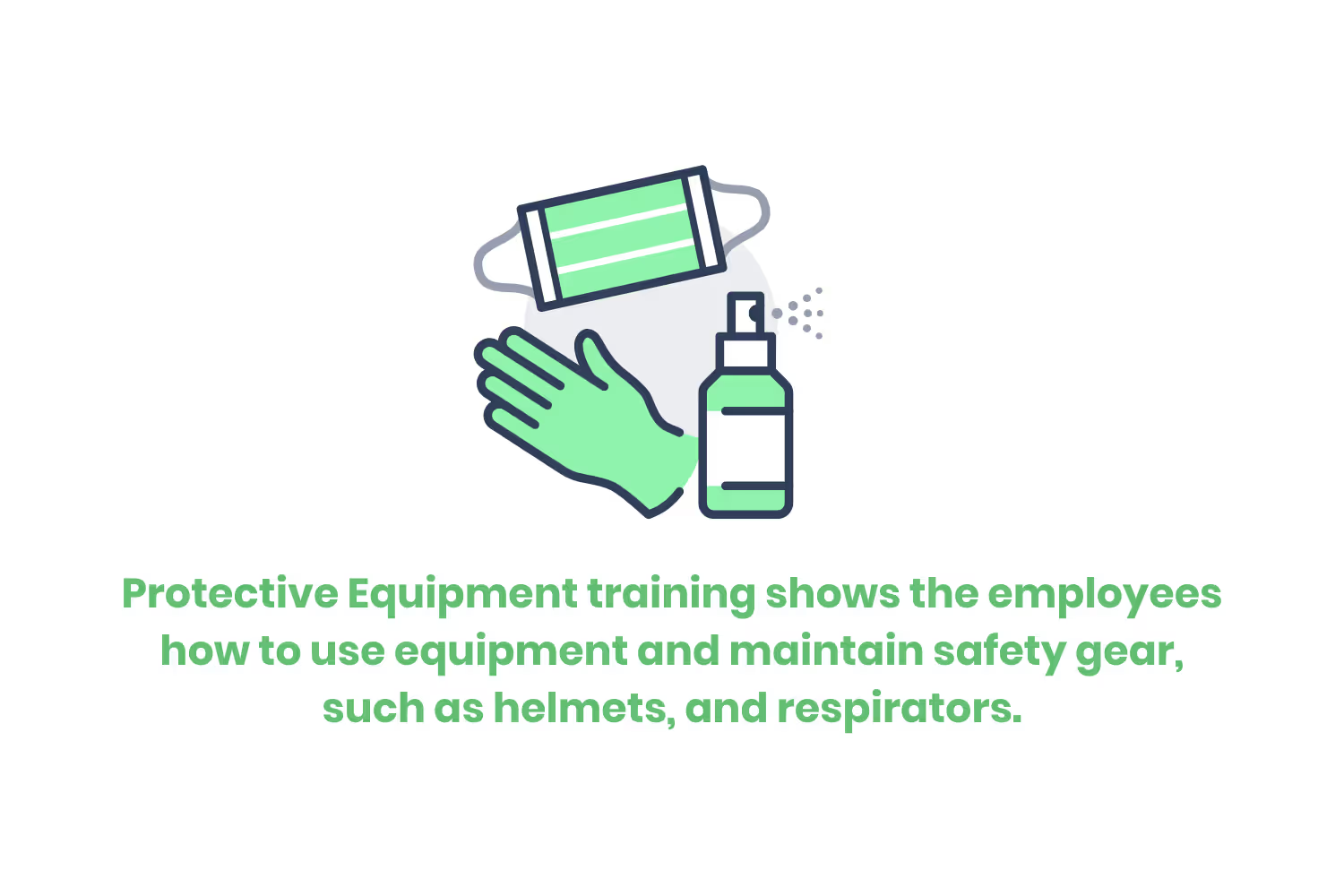
Protective Equipment training shows the employees how to use equipment and maintain safety gear, such as helmets, and respirators. Proper use of equipment significantly reduced workplace injuries and health hazards.
Emergency Action Plans
Emergency Action Plans are a necessity to prepare employees for unexpected workplace incidents, such as fires or medical emergencies. This training equips employees with the knowledge and skills to safely navigate these emergency situations.
Without these essential components of OSHA Compliance, the effectiveness of OSHA in ensuring safety would be significantly lowered.
How do Compliance Training Programs Impact Workplace Safety?
Now that you have a solid understanding of OSHA training and its purpose, you might be wondering, “Does this actually impact workplace safety?” The short answer is yes it absolutely does.
Let’s break down how it impacts workers’ safety.
Employee Awareness:
The use of compliance training programs helps raise awareness of hazards to employees. By raising awareness of potential hazards, it allows workers to be better prepared for potential hazards. It also allows employees to take preventative measures to avoid any accidents.
Proper Use of Equipment:
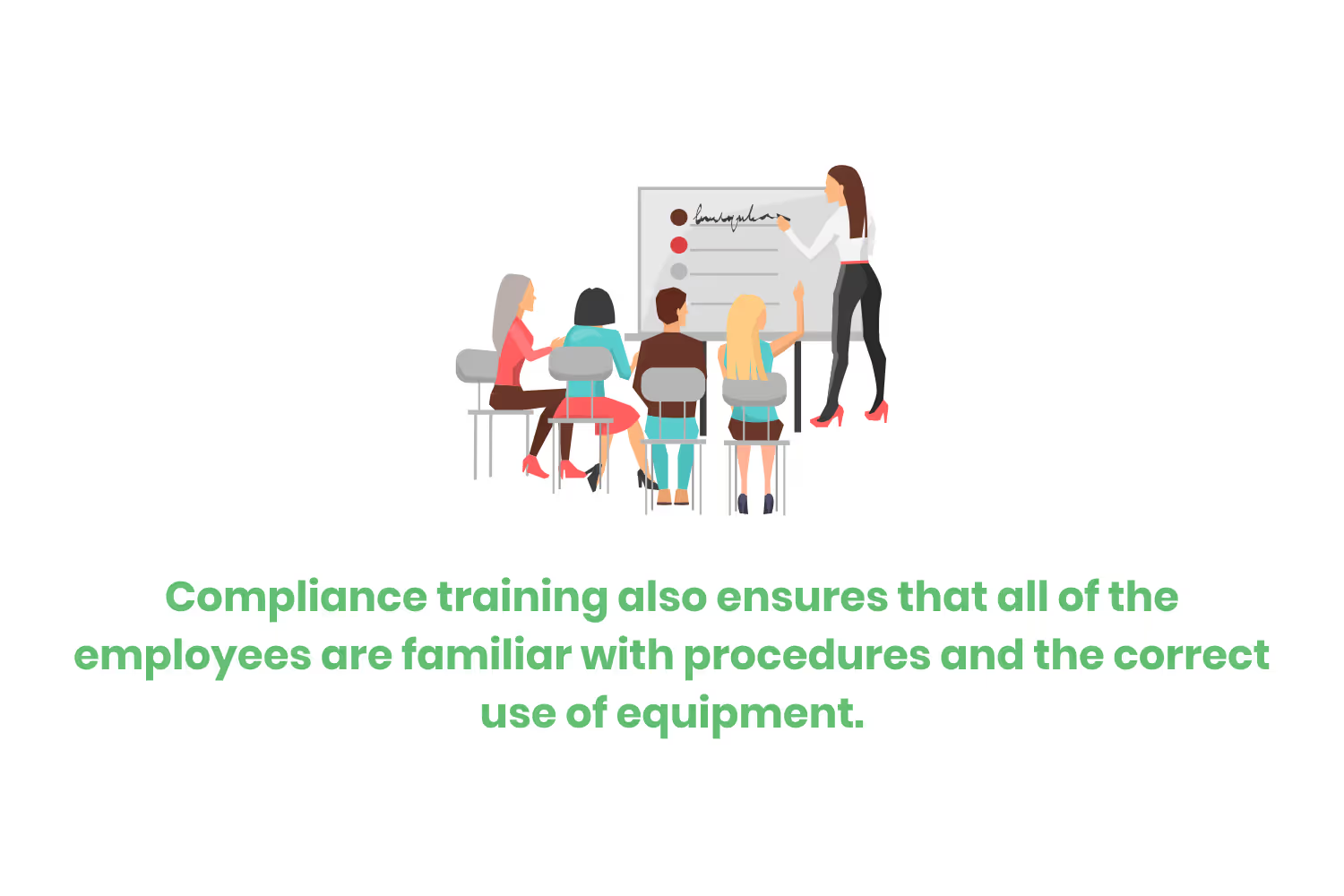
Compliance training also ensures that all of the employees are familiar with procedures and the correct use of equipment. Having this knowledge helps employees reduce any accidents that may happen if an employee is unfamiliar with the equipment.
Emergency Preparation:
Emergencies can happen at any time, so your employees must know how to respond to ensure everyone’s safety during such situations. That is why there is training to help prepare the employees for situations, such as fires, or chemical spills. Workers who are well-trained in emergency procedures can respond effectively, reducing the severity of the issues.
Compliance training programs play a critical role in enhancing workplace safety by focusing on employee awareness, proper use of equipment, and the ability to know what to do in an emergency.
What is the Future of OSHA and Compliance Training?
With technology continuing to evolve, OSHA’s training is destined to evolve with it. A good example of this would be VR or Virtual Reality, which could be a great way to help simulate real-world scenarios. It also allows employees to make decisions in a controlled environment, and if they make the wrong decision it's not serious.
Another way the evolution of technology can affect OSHA's training is AI or Artificial Intelligence. AI can go with VR to help simulate the most realistic scenarios, and it can tell the employees where they went wrong and what they could do better.
Conclusion
Compliance training programs are vital to maintaining a safe workplace environment. As OSHA continues to evolve in response to emerging trends and new challenges, it is clear that compliance training will continue to be a major part of workplace safety. As technology continues to evolve, OSHA will also evolve, incorporating tools like AI and VR to help enhance training effectiveness. Additionally, there will be a growing focus on mental health to ensure the worker’s overall well-being.
Emphasize your product's unique features or benefits to differentiate it from competitors
In nec dictum adipiscing pharetra enim etiam scelerisque dolor purus ipsum egestas cursus vulputate arcu egestas ut eu sed mollis consectetur mattis pharetra curabitur et maecenas in mattis fames consectetur ipsum quis risus mauris aliquam ornare nisl purus at ipsum nulla accumsan consectetur vestibulum suspendisse aliquam condimentum scelerisque lacinia pellentesque vestibulum condimentum turpis ligula pharetra dictum sapien facilisis sapien at sagittis et cursus congue.
- Pharetra curabitur et maecenas in mattis fames consectetur ipsum quis risus.
- Justo urna nisi auctor consequat consectetur dolor lectus blandit.
- Eget egestas volutpat lacinia vestibulum vitae mattis hendrerit.
- Ornare elit odio tellus orci bibendum dictum id sem congue enim amet diam.
Incorporate statistics or specific numbers to highlight the effectiveness or popularity of your offering
Convallis pellentesque ullamcorper sapien sed tristique fermentum proin amet quam tincidunt feugiat vitae neque quisque odio ut pellentesque ac mauris eget lectus. Pretium arcu turpis lacus sapien sit at eu sapien duis magna nunc nibh nam non ut nibh ultrices ultrices elementum egestas enim nisl sed cursus pellentesque sit dignissim enim euismod sit et convallis sed pelis viverra quam at nisl sit pharetra enim nisl nec vestibulum posuere in volutpat sed blandit neque risus.
Use time-sensitive language to encourage immediate action, such as "Limited Time Offer
Feugiat vitae neque quisque odio ut pellentesque ac mauris eget lectus. Pretium arcu turpis lacus sapien sit at eu sapien duis magna nunc nibh nam non ut nibh ultrices ultrices elementum egestas enim nisl sed cursus pellentesque sit dignissim enim euismod sit et convallis sed pelis viverra quam at nisl sit pharetra enim nisl nec vestibulum posuere in volutpat sed blandit neque risus.
- Pharetra curabitur et maecenas in mattis fames consectetur ipsum quis risus.
- Justo urna nisi auctor consequat consectetur dolor lectus blandit.
- Eget egestas volutpat lacinia vestibulum vitae mattis hendrerit.
- Ornare elit odio tellus orci bibendum dictum id sem congue enim amet diam.
Address customer pain points directly by showing how your product solves their problems
Feugiat vitae neque quisque odio ut pellentesque ac mauris eget lectus. Pretium arcu turpis lacus sapien sit at eu sapien duis magna nunc nibh nam non ut nibh ultrices ultrices elementum egestas enim nisl sed cursus pellentesque sit dignissim enim euismod sit et convallis sed pelis viverra quam at nisl sit pharetra enim nisl nec vestibulum posuere in volutpat sed blandit neque risus.
Vel etiam vel amet aenean eget in habitasse nunc duis tellus sem turpis risus aliquam ac volutpat tellus eu faucibus ullamcorper.
Tailor titles to your ideal customer segment using phrases like "Designed for Busy Professionals
Sed pretium id nibh id sit felis vitae volutpat volutpat adipiscing at sodales neque lectus mi phasellus commodo at elit suspendisse ornare faucibus lectus purus viverra in nec aliquet commodo et sed sed nisi tempor mi pellentesque arcu viverra pretium duis enim vulputate dignissim etiam ultrices vitae neque urna proin nibh diam turpis augue lacus.