
Technology For Mental Health: How it Inspires a Better Well-Being
As technological advances, so do options for healthcare. Let’s take a look at some of the leading technology for mental health and how they’re improving access to care and managing conditions.

Think about three people that you’re close to. Did you know that including yourself, statistically one of you will suffer from a psychological disorder during your lives?
Specifically, one in four people experience a mental disorder at some point.
Mental health disorders are among the leading causes of worldwide illness and disability. While treatments and resources are available, people often don’t receive them.
According to the same source, nearly two-thirds of all people with mental health disorders never seek help.
This can be for many reasons. People might not recognize they have a condition or avoid coming to terms with it. Negative stigma makes people nervous to seek help or they simply do not know where to find support. Not only that, but some barriers prevent people from accessing professional care. This makes it difficult to know how to track and manage their psyche, which can make things worse.
But as technological advances, so do options for healthcare. There are tools for each step of receiving mental healthcare and management. While some of these are more basic within websites, there are more advanced platforms designed for mental health treatment.
Let’s take a look at some of the leading technology for mental health and how they’re improving access to care and managing conditions.
Determine The Condition
The first step in mental health treatment is to have a screening. These examine the person’s emotional health. It helps determine if the individual is suffering from a mental disorder, and to what extent.
People might not want to see a specialist if they don’t know if they need to. It could be possible to handle their conditions with self-help resources. They could also be hesitant because they don’t know what help they need. There are over 200 classified mental illnesses, so it can be difficult for someone to know what kind of help they need.

But screenings can assess the condition, its severity, and connect individuals to treatments. It can be overwhelming to first talk to a doctor about the problems we experience, but a screening provides more clarity.
Now, because of technological advancements, we can conveniently take a screening right from our own home.
Mental Health America provides many resources, but its website features a variety of screenings. Launched in 2014, this collection of online tools helps people understand and learn more about their mental health.
The tools are free, confidential, anonymous, and scientifically validated. Most screens have a “positive” result, meaning the results show moderate to severe symptoms. This is why these tests are so important because a lot of people who take them end up needing treatment.
This is a basic option with screenings on the organization’s website. But there are even more advanced options. The Mental Health Tests mobile app includes a large list of tests for different conditions. It’s one of the quickest ways to determine if a user is experiencing symptoms from a specific condition.
Depression Test is a similar app but focuses specifically on one condition. Users can evaluate themselves and track treatment responses. The test uses questions from the Patient Healthcare Questionnaire-9.
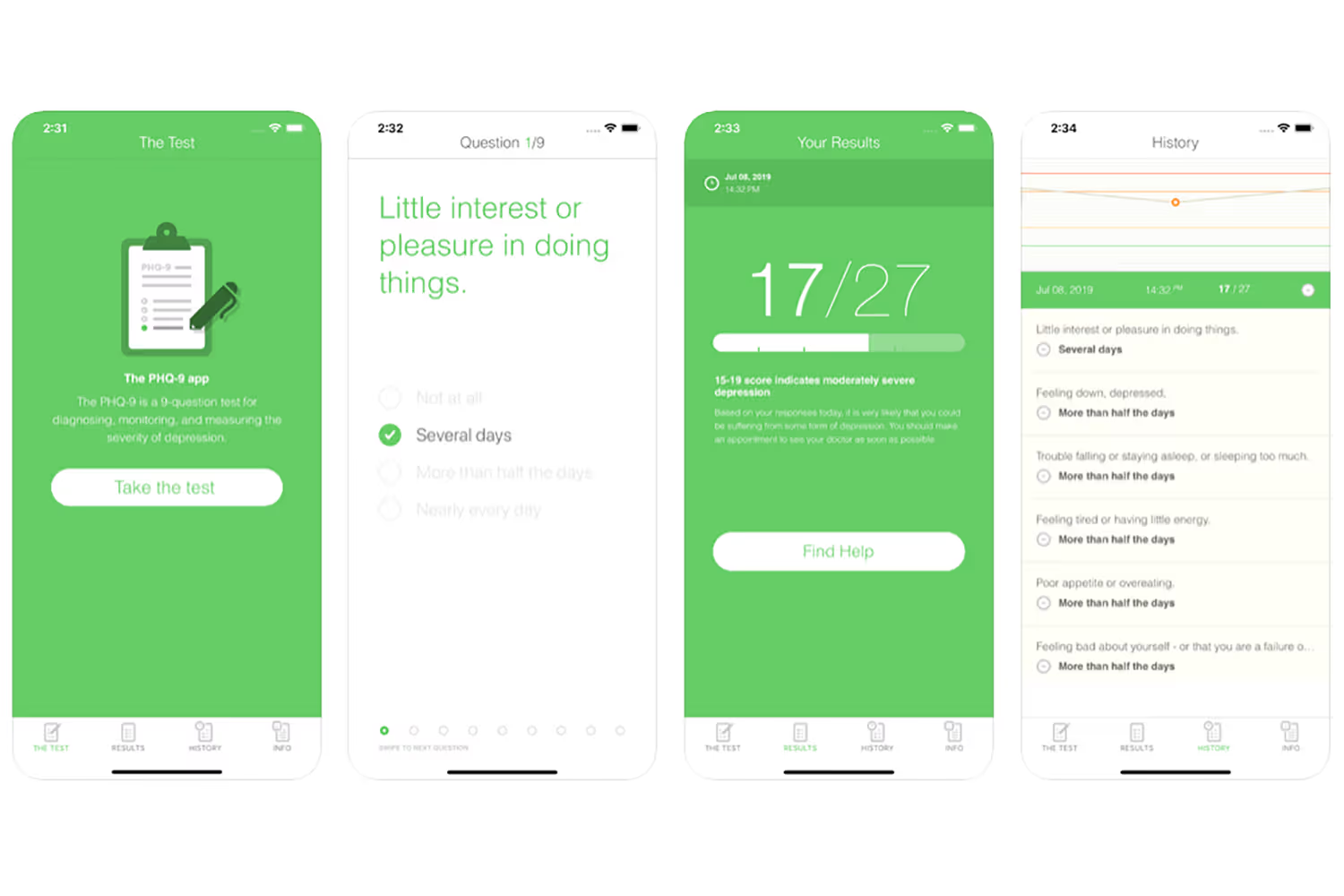
This is the most common mental health questionnaire used among professionals. Users screen for depression, gauge their severity, keep track of their mood and access resources from within the app. It’s possible to store the test results for tracking improvements over time.
Locate and Find Support
Once people suspect or determine that they have a mental health condition, seeking help is the next step. But this can be a difficult step to take. Many adults fear that others will think less of them if they receive treatment.
But getting some form of help is necessary for condition management. Luckily, there are mental health technologies for people to get support, even if they’re afraid of seeking formal treatment.
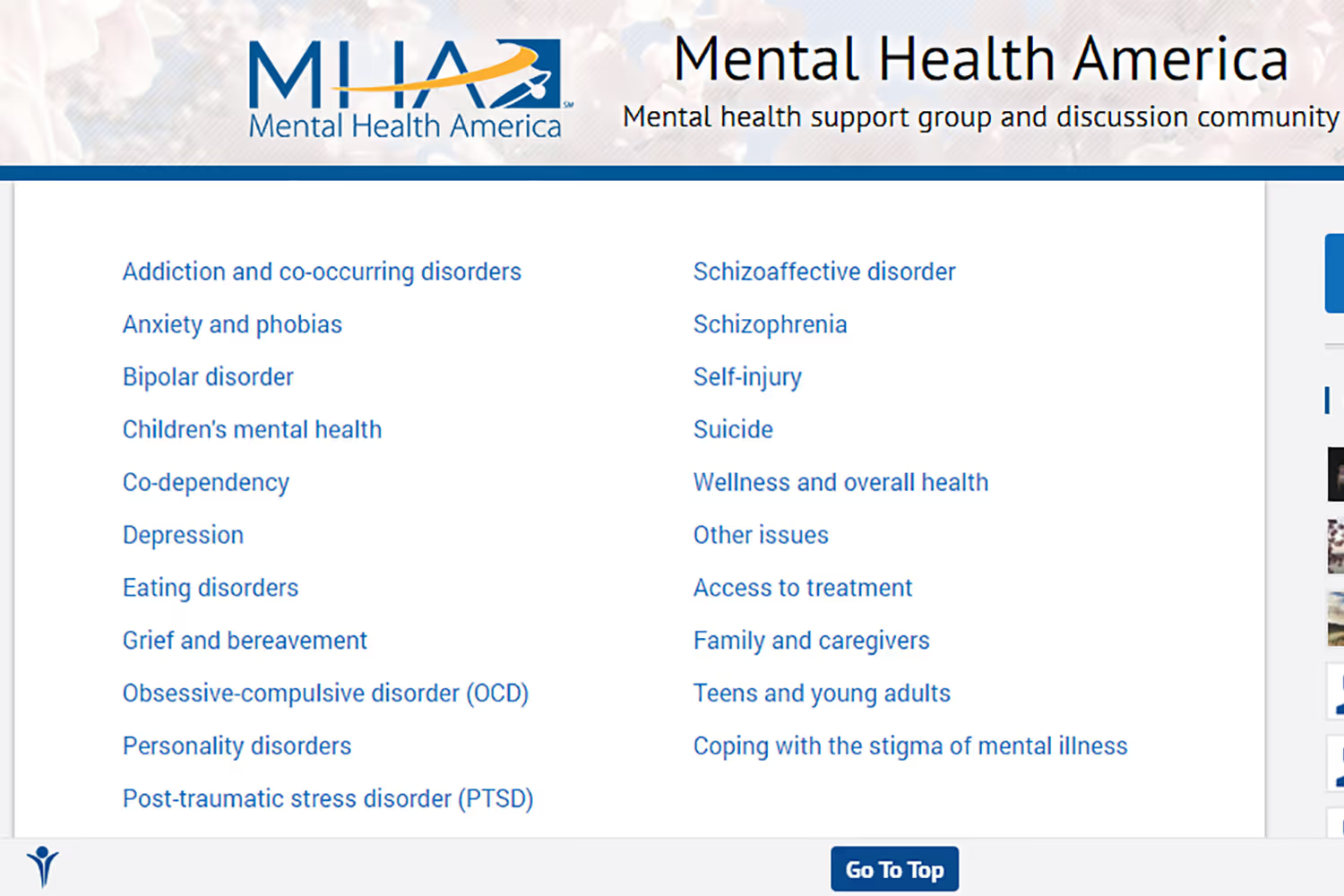
Mental Health America’s (MHA) website also provides options for this through its many support groups. People can connect with others experiencing the same condition to ask questions, get advice, or offer helpful tips. There are also specialized support group resources for those seeking more specific information.
There are many apps designed to support those struggling with their mental health. Some of these use artificial intelligence to act as an emotional therapist chatbot.
Wysa and Youper are two examples that have this functionality.
Wysa is downloadable for smart devices. With over one million users, the app supports those with depression, stress, anxiety, and a range of other wellness needs. Wysa is an artificially intelligent chatbot that reacts to emotions that a user expresses.
People can vent, practice cognitive behavioral therapy techniques, and use mindfulness exercises. Users can receive extra support through guidance from a real human coach who is a qualified mental health professional.
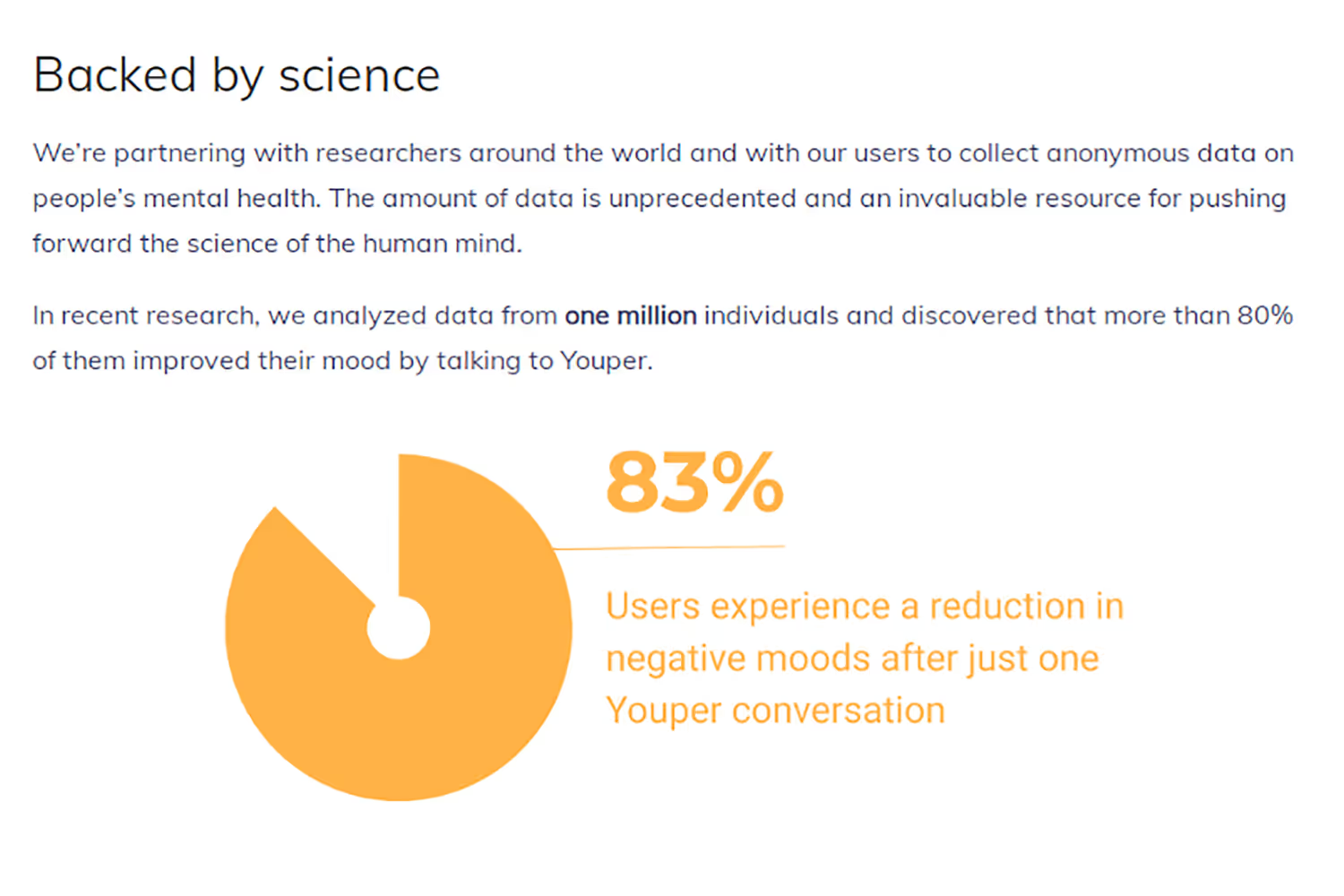
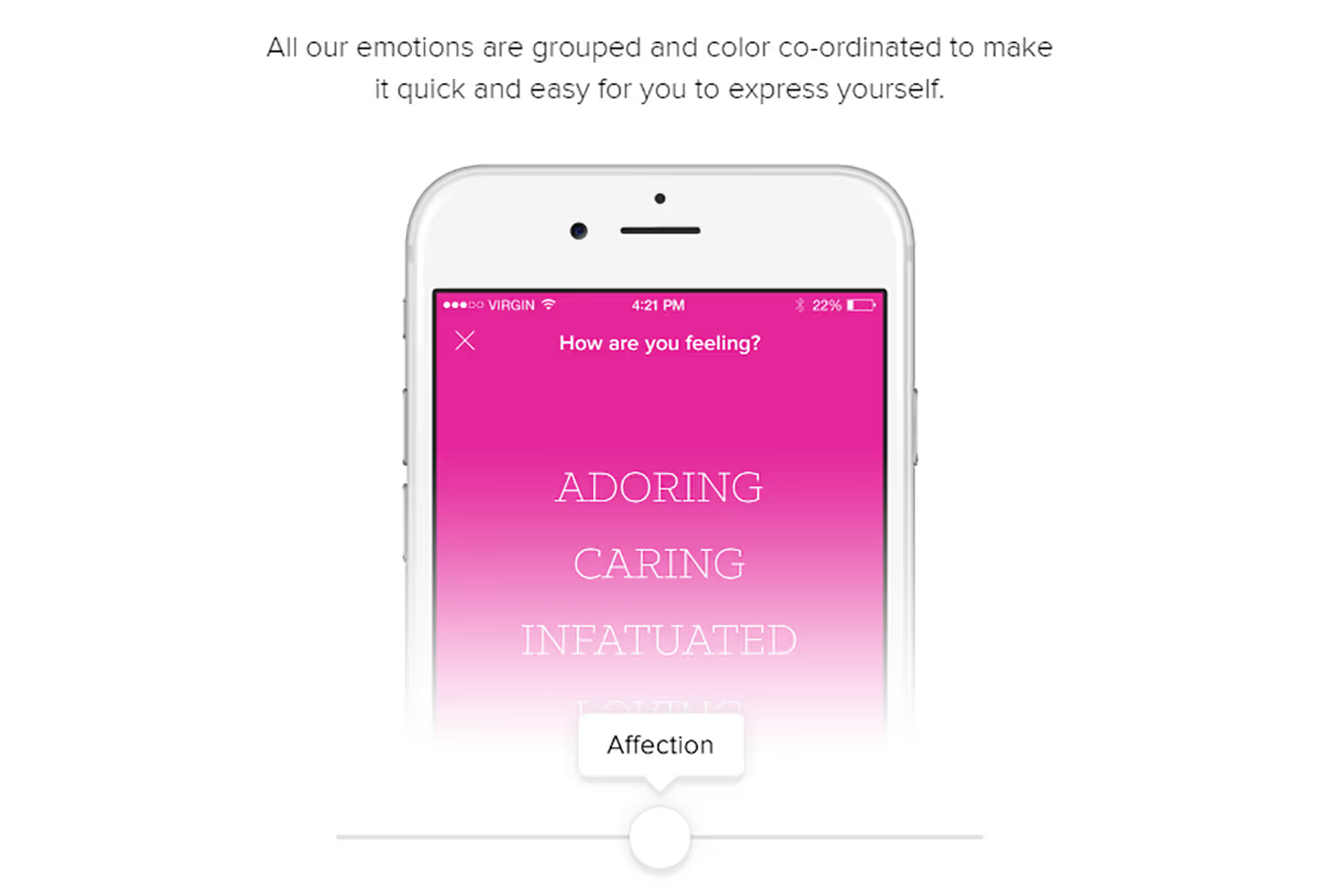
Youper is another “pocket therapist” with its AI capabilities. Over 80% of users improved their mood with only one conversation. While Youper can’t diagnose or treat, it supports people in caring for their emotional health. It can work alongside therapy or other treatments for users who already see a doctor or therapist. The app helps balance mindfulness and calms users so they can sleep better. It tracks mood and provides insights into a user’s personality.
For those who are more comfortable sharing their experiences, there are community-based platforms. The TalkLife app allows users to open up or remain anonymous about how they’re feeling. It’s a judgment-free zone with no bullying, so users can feel welcome and confident while posting. People can personally chat with others that they meet within the TalkLife community.
Vent is a tool with similar functionalities. Users express themselves on a broad range of emotions and can react to others’ posts using response buttons. Users can chat privately and join groups to stay connected with others who have similar interests and experiences.
All of these options help people understand that they aren’t alone and that there are ways to get help. These mental health technologies don’t only benefit people who are afraid to seek a professional. Those who see doctors can use tools as extra management options. They can share their own experience with others, seek advice, and find more resources.
Seeing a Doctor
When people feel ready to see a professional, there’s technology for that.
Less than half of US adults with a mental health illness receive care. This is due to a variety of reasons, but one is the shrinking number of psychologists and psychiatrists. It’s also difficult for those in rural areas to access care, not to mention that it can be expensive. This makes it a challenge for those who need help to get it.
But as telemedicine continues to grow in popularity, there’s easier access to health professionals. Virtual visits allow patients to receive help from anywhere. People can set up these appointments with their doctor who they already visit. But sometimes they need a starting point. There are digital resources available to people who have not yet seen a mental health professional or don’t know where to go.
BetterHelp provides online access to licensed, trained, and experienced counseling professionals including:
- Psychologists
- Marriage and family therapists
- Clinical social workers
- Board licensed professional counselors
Its mission is to make professional counseling more accessible, affordable, and convenient. The site’s large directory of professionals allows visitors to learn more about the counselor and read reviews.

Talkspace offers several mental health resources, the main one being Talkspace Psychiatry. Patients get specialized psychiatric treatment from a licensed prescriber trained in mental healthcare.
Once patients match with a prescriber within their state, they can schedule live video sessions. These sessions are for every step of the way from initial evaluation to ongoing prescription management. Talkspace has a digital app so users can access it from their device anywhere, at any time.
Tracking and Relieving Symptoms
Once a patient receives a diagnosis and seeks help, they may want to keep track of and find ways to relieve symptoms. There are some physical signs of conditions such as stress, anxiety, and depression. These can include disrupted sleep, sweating, trembling, and a higher heart rate. People can track metrics with smartwatches, but there are some mental health-specific devices.
Pip is a tool to measure stress levels and help manage it better. Because the fingertips are so sensitive to changing levels of stress, Pip is a device that reads metrics from the thumb. It comes with engaging apps integrated with My Pip.
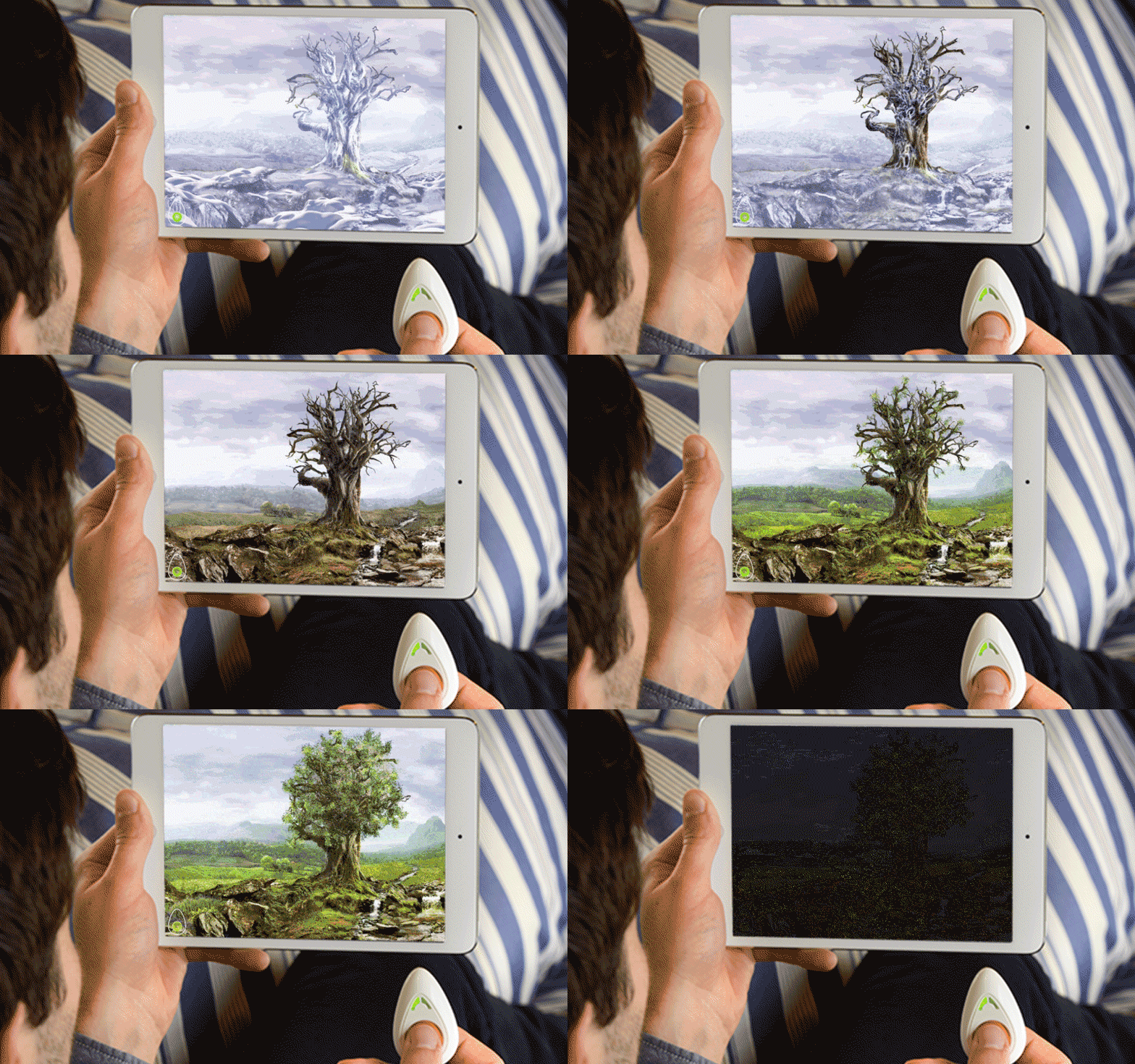
After choosing a compatible app, people connect Pip to their mobile device using Bluetooth. Users hold Pip between their thumb and index finger which detects levels of stress or relaxation.
This influences activities within the app, and the user progresses through the activity as they relax. The app responds to changing stress levels to give audio and visual feedback.
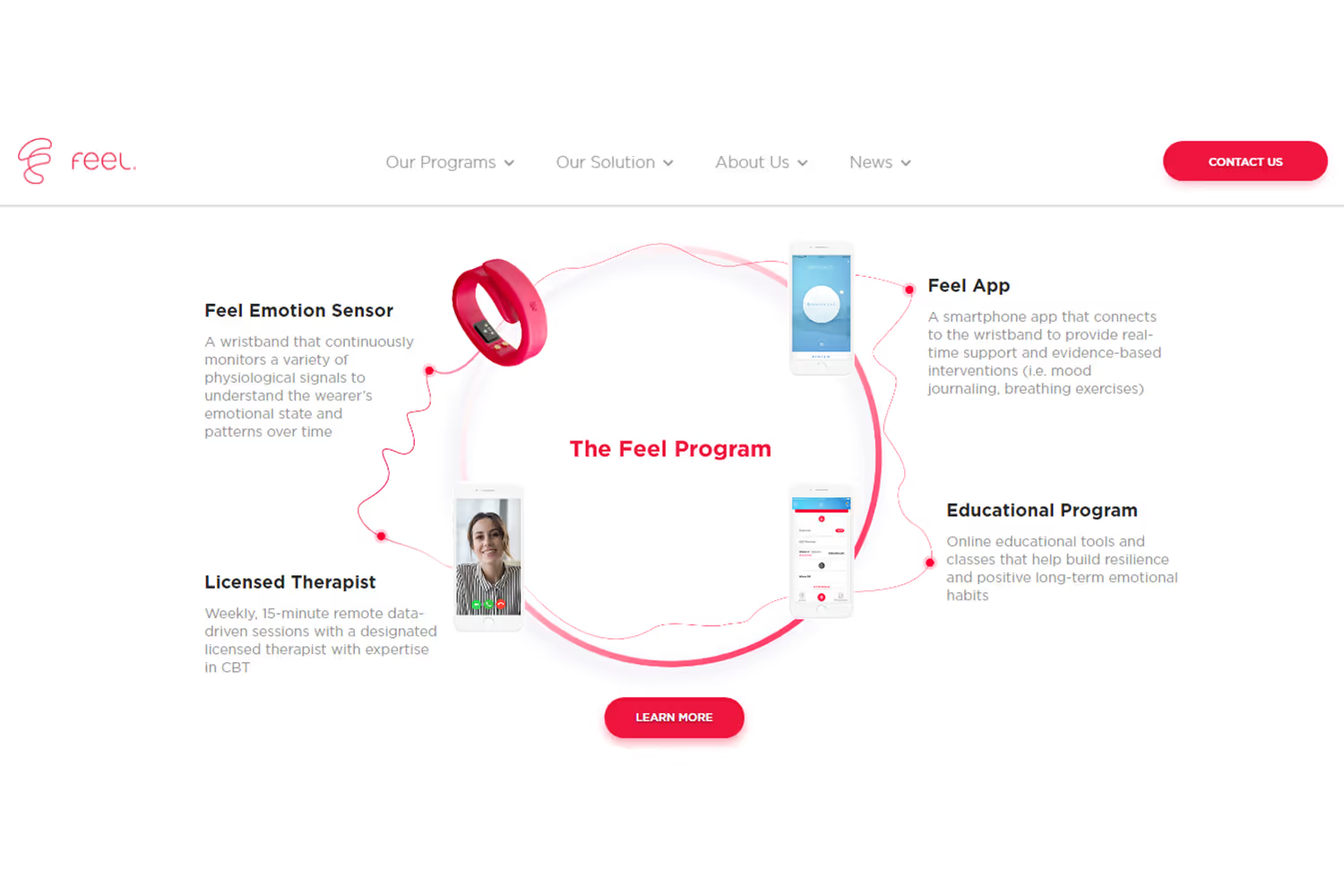
Feel is another emotion sensor worn as a wristband. It continuously monitors psychological signals while learning to recognize emotional patterns. Feel connects with a smartphone app to provide real-time support and interventions.
There’s access to a weekly telehealth session with a designated, licensed therapist. The therapists have expertise in cognitive behavioral therapy. Its online educational tools help users develop positive long-term emotional habits.
Aside from tracking emotional and stress patterns, some devices relieve symptoms. TouchPoints is a tool placed in pockets, socks, or on the wrist. Users select a setting: sleep, calm, or anger. The device transmits gentle micro-vibrations that activate the parasympathetic nervous system. It reduces the sensations of stress to restore calm.
How to Manage Conditions
Finally, there are mental health technologies that help manage conditions. Patients may receive support from an online community or chatbot, or professional care with telehealth. But even after doing these things, they may still want ways to manage their condition on their own.
Tracking and relieving symptoms with wearables is a good start, but not everyone prefers these options.
There are tools available to reduce negative feelings and restore mindfulness. Here’s a list of some of the many apps available…
- MoodKit
- MindShift CBT
- Self-help for Anxiety Management (SAM)
- CBT Thought Diary
- Happify: for Stress & Worry
- MoodTools - Depression Aid
- Headspace Meditation & Sleep
- Ten Percent Happier Meditation
- Moodpath: Depression & Anxiety
- Daylio Journal
- Sanvello: Anxiety & Depression
- Worry Kit
These apps have many functionalities for users to choose what fits best. Activities help users relax, sleep better, and recognize and manage negative thinking patterns.
Some include professional coaching and options to speak with a licensed clinician. While these apps can’t provide diagnosis or prescription options, they offer natural means of managing struggles.
Conclusion
Mental health disorders aren’t uncommon both within the United States and worldwide. Yet people still don’t receive the help that they need for their conditions. We constantly see new technology developments, many of which can help those with mental health illnesses.
No matter which stage of the mental health journey that people are in, there are tools they can use. They might need these for the first step toward receiving care or as extra support alongside professional treatment. Whatever it may be, technology for mental health exists and continues to improve.
Emphasize your product's unique features or benefits to differentiate it from competitors
In nec dictum adipiscing pharetra enim etiam scelerisque dolor purus ipsum egestas cursus vulputate arcu egestas ut eu sed mollis consectetur mattis pharetra curabitur et maecenas in mattis fames consectetur ipsum quis risus mauris aliquam ornare nisl purus at ipsum nulla accumsan consectetur vestibulum suspendisse aliquam condimentum scelerisque lacinia pellentesque vestibulum condimentum turpis ligula pharetra dictum sapien facilisis sapien at sagittis et cursus congue.
- Pharetra curabitur et maecenas in mattis fames consectetur ipsum quis risus.
- Justo urna nisi auctor consequat consectetur dolor lectus blandit.
- Eget egestas volutpat lacinia vestibulum vitae mattis hendrerit.
- Ornare elit odio tellus orci bibendum dictum id sem congue enim amet diam.
Incorporate statistics or specific numbers to highlight the effectiveness or popularity of your offering
Convallis pellentesque ullamcorper sapien sed tristique fermentum proin amet quam tincidunt feugiat vitae neque quisque odio ut pellentesque ac mauris eget lectus. Pretium arcu turpis lacus sapien sit at eu sapien duis magna nunc nibh nam non ut nibh ultrices ultrices elementum egestas enim nisl sed cursus pellentesque sit dignissim enim euismod sit et convallis sed pelis viverra quam at nisl sit pharetra enim nisl nec vestibulum posuere in volutpat sed blandit neque risus.
Use time-sensitive language to encourage immediate action, such as "Limited Time Offer
Feugiat vitae neque quisque odio ut pellentesque ac mauris eget lectus. Pretium arcu turpis lacus sapien sit at eu sapien duis magna nunc nibh nam non ut nibh ultrices ultrices elementum egestas enim nisl sed cursus pellentesque sit dignissim enim euismod sit et convallis sed pelis viverra quam at nisl sit pharetra enim nisl nec vestibulum posuere in volutpat sed blandit neque risus.
- Pharetra curabitur et maecenas in mattis fames consectetur ipsum quis risus.
- Justo urna nisi auctor consequat consectetur dolor lectus blandit.
- Eget egestas volutpat lacinia vestibulum vitae mattis hendrerit.
- Ornare elit odio tellus orci bibendum dictum id sem congue enim amet diam.
Address customer pain points directly by showing how your product solves their problems
Feugiat vitae neque quisque odio ut pellentesque ac mauris eget lectus. Pretium arcu turpis lacus sapien sit at eu sapien duis magna nunc nibh nam non ut nibh ultrices ultrices elementum egestas enim nisl sed cursus pellentesque sit dignissim enim euismod sit et convallis sed pelis viverra quam at nisl sit pharetra enim nisl nec vestibulum posuere in volutpat sed blandit neque risus.
Vel etiam vel amet aenean eget in habitasse nunc duis tellus sem turpis risus aliquam ac volutpat tellus eu faucibus ullamcorper.
Tailor titles to your ideal customer segment using phrases like "Designed for Busy Professionals
Sed pretium id nibh id sit felis vitae volutpat volutpat adipiscing at sodales neque lectus mi phasellus commodo at elit suspendisse ornare faucibus lectus purus viverra in nec aliquet commodo et sed sed nisi tempor mi pellentesque arcu viverra pretium duis enim vulputate dignissim etiam ultrices vitae neque urna proin nibh diam turpis augue lacus.