
CO 256 Denial Code: An Ultimate Guide
CO-256 is a commonly misunderstood denial code that can cause billing teams to rework claims that were never eligible, slowing cash flow and straining the revenue cycle.

Nearly 20% of medical claims are denied on first submission, and that percentage climbs even higher for claims involving managed care plans, authorization requirements, or coverage limitations. For billing teams already managing tight margins and growing administrative pressure, these denials can quickly disrupt cash flow and slow the entire revenue cycle.
One of the more confusing examples is the CO 256 denial code. This denial often leaves billing teams uncertain about whether a service should have been payable under the patient’s insurance coverage or if the issue stems from contractual or benefit limitations. Without clear insight into the root cause, teams may waste valuable time reworking claims that were never eligible for reimbursement in the first place.
Claim denials exist to help insurance companies enforce coverage policies, contractual rules, and payer-specific guidelines. When a provider submits a claim, the payer reviews the billed services, procedure and diagnosis codes, medical documentation, and applicable managed care contracts to determine whether the claim meets reimbursement requirements. If the service does not align with those rules, the claim is denied and assigned a specific denial code to explain why.

Understanding what a denial code actually means, especially CO-256, is essential for protecting cash flow across the healthcare revenue cycle and preventing unnecessary delays or out-of-pocket costs for patients.
Understanding the Reason Code for a CO 256 Denial
The CO 256 code, also referenced as denial code 256 is an adjustment reason code that is used with group code CO. The presence of code CO means the adjustment is a contractual obligation that must be written off by the healthcare provider and cannot be billed to the patient as out-of-pocket expenses.
When a claim is denied with code 256, it means that service is not payable based on contractual rules. In simple terms, this means that the insurance company determined the service does not meet payment criteria defined in the managed care contract or the contract between the healthcare provider and the payer.
This denial often applies when a specific service is not covered, payable and/or excluded under managed care.
What Are the Common Explanations for CO 256 Denials?
There are several scenarios that commonly result in co 256 denials, many of which stem from issues earlier in the billing and coding workflow.
Medical Necessity and Documentation Gaps
One of the most frequent causes of CO 256 denials is insufficient documentation supporting the medical necessity of the service. Even when care is clinically appropriate, missing or incomplete documentation in the medical records can lead to a denial.
This often occurs when providers fail to:
- Demonstrate the medical necessity
- Properly support the medical necessity of the service
- Align documentation with the billed procedure code
In these cases, payers may determine there’s a lack of medical necessity, causing the service to be classified as service not covered under contractual rules.
Managed Care and Contractual Restrictions
In managed care, reimbursement decisions are governed strictly per the contract. If a service is not part of the managed care benefit or not payable based on the terms, a payment denial may occur.
This often happens when organizations fail to contract or misunderstand exclusions outlined in the contract between the healthcare organization and the payer.
Network Status and Coverage Limitations
Claims may also be denied when services are rendered by an out-of-network provider. Even when a patient has active insurance coverage, services delivered outside the contracted network may not be reimbursed under the agreement between the healthcare provider and the insurance company.
In these situations, the claim may be denied with code 256.
Authorization and Pre-Authorization Issues
A denial may occur when required pre-authorization or prior authorization from the insurance was not obtained, expired, or did not align with the service provided. Even when approval exists, discrepancies between the authorization and the billed service can trigger this denial.
If authorization requirements are not followed, the payer may determine the service is not payable, resulting (yet again) in a denial.
Coding and Billing Errors
Operational challenges in healthcare billing frequently contribute to CO 256 denials.
Common billing errors include:
- Incorrect billing codes
- Invalid billing codes
- Incorrect place of service
- Incorrect revenue code
- Improper code used
These errors can cause the payer to determine the service does not align with contract rules.
How to Prevent CO 256 Denial Issues?
Preventing CO 256 denials requires proactive coordination across the entire revenue cycle.
Strengthen Billing and Coding Practices
Adhering to payer billing guidelines and improving billing practices helps ensure:
- The service provided aligns with contractual terms
- The correct procedure code and revenue code are used
- Documentation supports the billed service
Verify Coverage, Network Status, and Authorization
Before providing services, providers must verify:
- Insurance coverage
- Network participation
- Authorization and pre-authorization requirements tied to the insurance plan
Failure to verify these details increases the likelihood that the claim is denied.
Support Denial Management Programs
Effective denial management includes:
- Monitoring trends across CO 256 denials
- Training billing staff and billing and coding staff
- Leveraging expertise from billing professionals and medical billing services
How to Resolve CO 256 Denials
When organizations receive a CO 256 denial, a structured resolution strategy is essential.
Steps to Address CO 256 Denials
When a claim returns with a CO 256 adjustment, responding methodically is critical to prevent unnecessary write-offs and protect reimbursement. The following steps help billing teams accurately assess the denial and determine whether corrective action or an appeal is appropriate.
Key steps to address these denials include:
Step 1: Reviewing the denial code 256 and payer explanation
Start by closely reviewing the denial code 256 listed on the remittance advice, along with any accompanying payer explanation.
This information clarifies whether the denial stems from contractual limitations, coverage exclusions, or payment rules defined by the payer. Understanding how the payer applied the adjustment provides the foundation for all next steps.
Step 2: Identifying the denial reason
Next, clearly identify the denial reason associated with the claim. This may relate to medical necessity, coverage restrictions, authorization requirements, or contract terms.
Pinpointing the exact reason helps billing teams avoid assumptions and ensures that corrective actions are targeted and accurate.
Step 3: Confirming whether a remark code must be provided
Many CO 256 denials include supplemental messaging. Determine whether a remark code must be provided, as this additional information often explains why the payer determined the service was not payable.
Remark codes may reference benefit exclusions, authorization gaps, or documentation issues that were not immediately obvious from the denial code alone.
Step 4: Determining what lead to a denial
After reviewing all payer messaging, evaluate what leads to a denial.
This step requires collaboration between billing and clinical teams to assess whether the issue originated from documentation gaps, coding inaccuracies, authorization failures, or contractual exclusions.
Understanding the root cause is essential for preventing similar denials in the future.
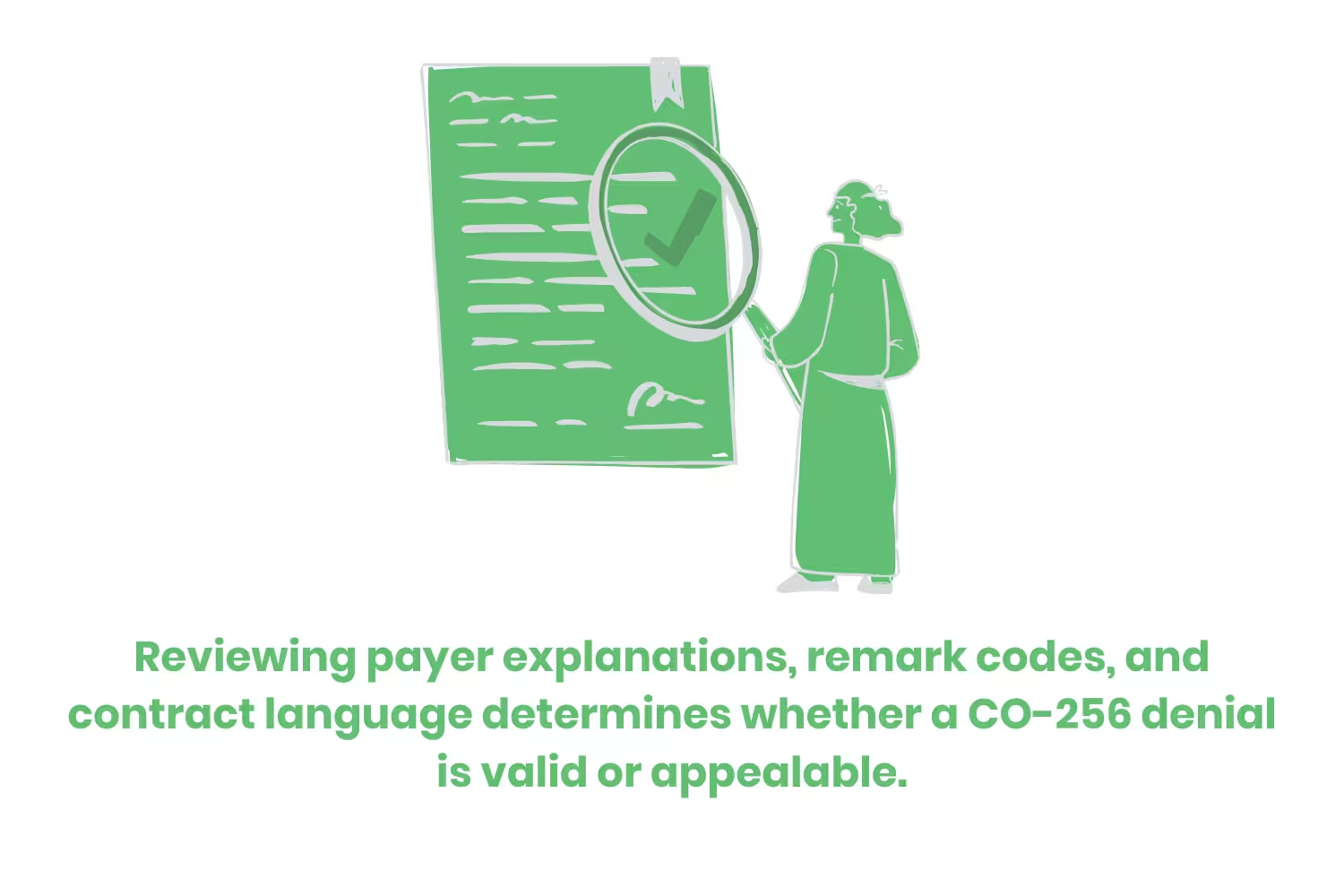
Step 5: Verifying whether the service was covered under the managed care contract
Finally, confirm whether the service was covered under the managed care contract. Review contract language to determine if the service is included, excluded, or subject to limitations.
If the service was excluded or not payable per contract terms, the denial may be valid. If coverage exists, the claim may warrant correction or appeal.
Appeals and Corrections
If billing teams believe the denial was applied incorrectly, an appeal may be appropriate.
Appeals should include:
- Updated medical records
- Contract language from the contract between the healthcare provider
- An explanation of why you believe payment should be allowed
- Any additional information or clarification needed to support the claim
If documentation and contract terms support reimbursement, the provider may argue the denial is unjustified and request reconsideration for services payable per managed care.
Conclusion
By improving documentation, correcting billing errors, verifying authorization, and aligning services with payer contracts, healthcare organizations can effectively address CO 256 denials and strengthen long-term financial performance.
Because this code is crucial for healthcare organizations operating in managed care environments, mastering its use is essential for compliant medical billing, optimized revenue cycle management, and sustainable reimbursement.
Emphasize your product's unique features or benefits to differentiate it from competitors
In nec dictum adipiscing pharetra enim etiam scelerisque dolor purus ipsum egestas cursus vulputate arcu egestas ut eu sed mollis consectetur mattis pharetra curabitur et maecenas in mattis fames consectetur ipsum quis risus mauris aliquam ornare nisl purus at ipsum nulla accumsan consectetur vestibulum suspendisse aliquam condimentum scelerisque lacinia pellentesque vestibulum condimentum turpis ligula pharetra dictum sapien facilisis sapien at sagittis et cursus congue.
- Pharetra curabitur et maecenas in mattis fames consectetur ipsum quis risus.
- Justo urna nisi auctor consequat consectetur dolor lectus blandit.
- Eget egestas volutpat lacinia vestibulum vitae mattis hendrerit.
- Ornare elit odio tellus orci bibendum dictum id sem congue enim amet diam.
Incorporate statistics or specific numbers to highlight the effectiveness or popularity of your offering
Convallis pellentesque ullamcorper sapien sed tristique fermentum proin amet quam tincidunt feugiat vitae neque quisque odio ut pellentesque ac mauris eget lectus. Pretium arcu turpis lacus sapien sit at eu sapien duis magna nunc nibh nam non ut nibh ultrices ultrices elementum egestas enim nisl sed cursus pellentesque sit dignissim enim euismod sit et convallis sed pelis viverra quam at nisl sit pharetra enim nisl nec vestibulum posuere in volutpat sed blandit neque risus.
Use time-sensitive language to encourage immediate action, such as "Limited Time Offer
Feugiat vitae neque quisque odio ut pellentesque ac mauris eget lectus. Pretium arcu turpis lacus sapien sit at eu sapien duis magna nunc nibh nam non ut nibh ultrices ultrices elementum egestas enim nisl sed cursus pellentesque sit dignissim enim euismod sit et convallis sed pelis viverra quam at nisl sit pharetra enim nisl nec vestibulum posuere in volutpat sed blandit neque risus.
- Pharetra curabitur et maecenas in mattis fames consectetur ipsum quis risus.
- Justo urna nisi auctor consequat consectetur dolor lectus blandit.
- Eget egestas volutpat lacinia vestibulum vitae mattis hendrerit.
- Ornare elit odio tellus orci bibendum dictum id sem congue enim amet diam.
Address customer pain points directly by showing how your product solves their problems
Feugiat vitae neque quisque odio ut pellentesque ac mauris eget lectus. Pretium arcu turpis lacus sapien sit at eu sapien duis magna nunc nibh nam non ut nibh ultrices ultrices elementum egestas enim nisl sed cursus pellentesque sit dignissim enim euismod sit et convallis sed pelis viverra quam at nisl sit pharetra enim nisl nec vestibulum posuere in volutpat sed blandit neque risus.
Vel etiam vel amet aenean eget in habitasse nunc duis tellus sem turpis risus aliquam ac volutpat tellus eu faucibus ullamcorper.
Tailor titles to your ideal customer segment using phrases like "Designed for Busy Professionals
Sed pretium id nibh id sit felis vitae volutpat volutpat adipiscing at sodales neque lectus mi phasellus commodo at elit suspendisse ornare faucibus lectus purus viverra in nec aliquet commodo et sed sed nisi tempor mi pellentesque arcu viverra pretium duis enim vulputate dignissim etiam ultrices vitae neque urna proin nibh diam turpis augue lacus.