
Mental Health Billing Programs: An Ultimate Guide
Behavioral health billing software helps mental health providers simplify claims, reduce billing errors, and improve reimbursement. Learn the key features, benefits, and considerations for choosing the right solution to streamline your revenue cycle and spend more time focused on patient care.
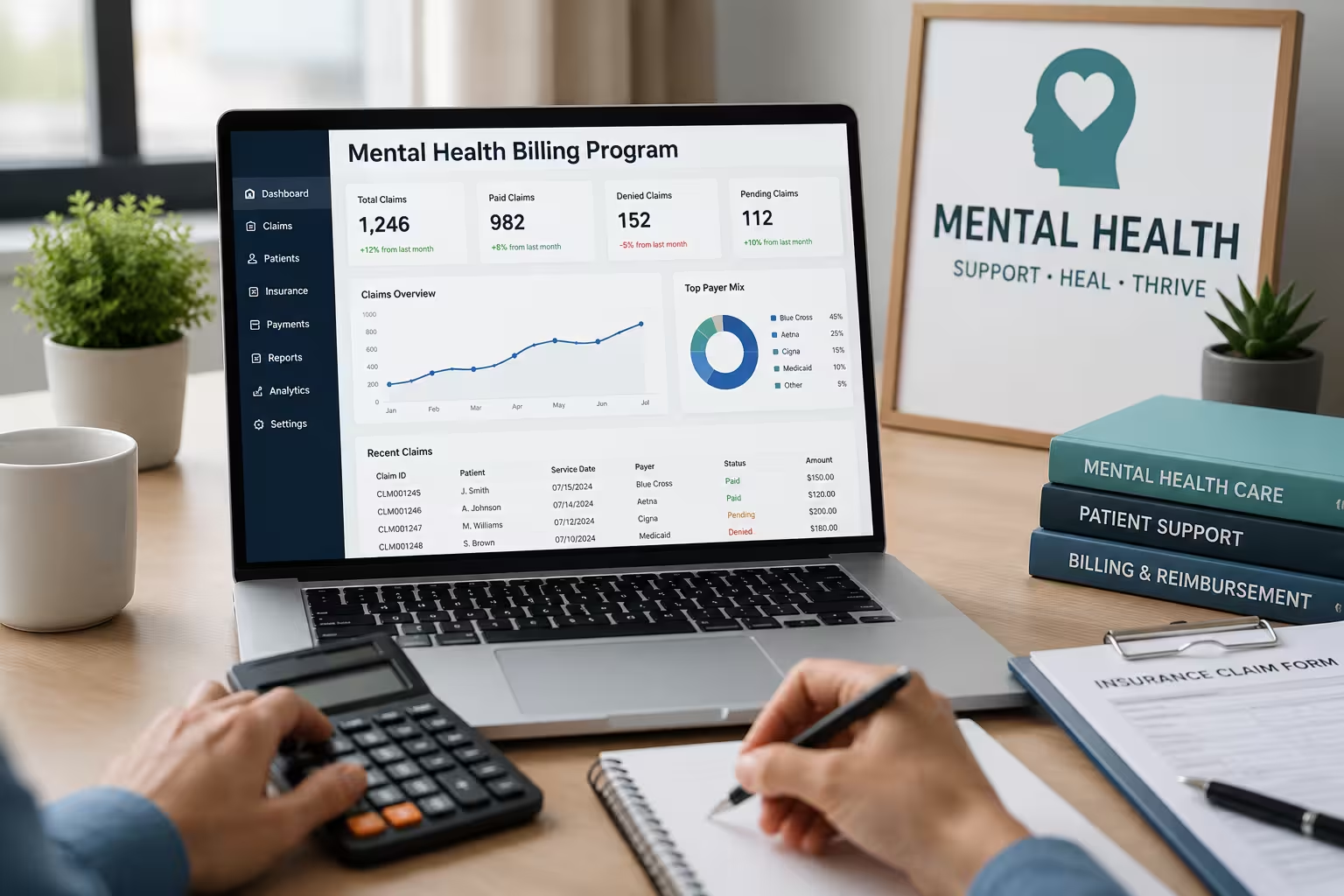
More than 1 in 5 U.S. adults experience mental illness each year. That's nearly 54 million people struggling on a yearly basis. Being able to access help is crucial when dealing with any mental disorder. Luckily, the discussion about mental health continues to evolve. The topic has become less taboo in society. Now help is more accessible than ever.
There are many options when discussing treatment. Whether that be through weekly therapy, inpatient, or outpatient programs. What you choose depends on the diagnosis and severity of symptoms.
With so many individuals needing help, organizations have their work cut out for them. The last thing they want to have to worry about are administrative burdens. Unfortunately, behavioral health organizations face unique challenges when it comes to medical billing. Often complicating the entire process.
Mental health providers wear many different hats and handle daily tasks such as:
- Billing recurring therapy sessions.
- Working on complex documentation requirements.
- Adhering to payer-specific rules.
- Keeping up with changing reimbursement policies.
Of course, this is not a complete list, but gives you an idea of the difficulties that come with the job. You might be a therapist, psychiatrist, or another mental health professional. Regardless of your title, you're looking at a decent amount of administrative work.
That's why maintaining an effective billing process is essential to your financial health. Keeping your doors open so you can keep seeing patients.
Behavioral health software can make a significant difference here. The right billing solution can help you simplify your daily work. So you can focus on what is important: patient care. In this guide, we'll explain the ins and outs of mental health billing software.
What Is Behavioral Health Billing Software?
Behavioral health billing software is technology that helps providers manage their practice. Specifically, in the mental health and psychiatric space. It handles things like insurance claims, patient payments, coding, and other administrative tasks.
These solutions must meet the needs of mental and behavioral health organizations. They might help provide insight on specific psychiatric codes. Or they could help better navigate patient eligibility and prior authorizations.
Many mental health services provide recurring services. These services need ongoing documentation, authorization tracking, and claim submission. This specialized software is able to help meet these requirements. This software often includes electronic health record (EHR) and practice management (PM) tools. Or at the very least, integrate with them.
Why Is Mental Health Billing So Complex?
Mental health billing is often pretty complex. Insurance companies like Medicare, Medicaid, and commercial health plans have their own requirements. Add a mental health diagnosis in the mix and things can get tricky. With these different regulations, you need a billing platform that can make sense of it all.
Health providers must document medical necessity for services. This can be a challenge with behavioral health coding. Making sure to accurately assign billing codes and CPT codes is vital.
Since therapy involves ongoing treatment, even small coding errors can be an issue. Leading to a delay in reimbursement or denial of claims. Without effective billing practices, these challenges create billing headaches.
Common Billing Errors That Lead to Claim Denials
Behavioral health billing and coding requires a high level of accuracy. This is pretty much true for any healthcare practice. They need to be able to document services correctly. They also need to properly assign codes and ensure services meet requirements.
This can be difficult, especially for those providers that run their own business. They end up not only being a therapist, but a billing professional as well. Complicating the entire process and opening themselves up for human error. Having to "do it all" can be tough.
Common behavioral health services that run into these problems include:
- Psychotherapy.
- Family therapy.
- Health and substance abuse treatment.
- Virtual behavioral health appointments.
Each service has its own codes used for billing and documentation standards. Because of these complexities, coding and billing mistakes aren't uncommon. Even the most experienced billing staff can make mistakes. Some common of these billing errors include:
- Incorrect CPT codes.
- Missing or incomplete documentation.
- Authorization errors.
- Eligibility verification issues.
- Duplicate claim submission.
- Failure to meet timely filing requirements.
- Coding errors that do not support medical necessity.
These mistakes can create significant revenue issues. Health providers must then spend extra time investigating, correcting information, and resubmitting claims.
Reducing billing errors is one of the primary goals of integrated billing software. Cleaner claims result in faster reimbursement and improved revenue cycle management (RCM).
How Does Behavioral Health Billing Software Streamline Revenue Cycle Management?
Behavioral health billing software helps organizations streamline RCM processes. By connecting documentation, coding, and billing, this software simplifies your day-to-day tasks. Offering you one streamlined workflow as opposed to many disjointed ones.
Practices no longer need to rely on disconnected and manual systems. Health providers can now better manage billing workflows. All while gaining greater visibility into financial performance. Let's look at how.
Automate Administrative Tasks
One of the biggest advantages is automation. Modern management software can automate tedious tasks. Such as eligibility checks, appointment reminders, payment posting, claim tracking, and sending statements.
Reducing repetitive administrative work allows your team to spend less time on paperwork. Freeing up time for higher priority tasks.
Software solutions also automate routine billing workflows. This helps practices maintain consistency and reduce the risk of human error.
Streamline Claim Submission
Claim submission is one of the most important steps in the entire billing process. Medical billing software helps create, validate, and submit claims electronically.
Many billing platforms also include claim scrubbing tools. This feature helps to identify coding errors before you submit claims. Allowing your team to correct problems early and improve clean claim rates. Helping you collect your reimbursement faster.
Reduce Billing Errors and Improve Reimbursement
The best billing software helps practices identify potential problems with claims. Even before they result in denials. Like I mentioned before with claim scrubbing. By connecting everything into one system, organizations can better reduce billing errors. Thus, improving claim accuracy.
Built-in validation tools can flag authorization problems and documentation gaps in real time. For growing organizations, reducing these errors can improve operational efficiency.
Better Patient Experience
Patients also enjoy a robust billing software. First, through better scheduling and payment options. Also, automated appointments help keep them on track throughout their treatment. Offering online access to items like forms and payment portals are also helpful. A better patient experience helps strengthen relationships and improve your client retention.
Essential Features to Look for in Behavioral Health Billing Software
Not all billing services offer the same capabilities. Some solutions focus on medical billing. Others combine billing and practice management, EHR, and RCM into a single platform. Understanding which billing features are most important to your organization is key.
It can help you find a solution that supports both operational efficiency and growth. Without breaking the bank of extra features you don't need. When evaluating a billing platform, focus on these essential capabilities:
- Integrated Behavioral Health EHR Workflow. Connecting clinical data to your financial system eliminates duplicate data entry. It also ensures documentation matches payer-specific rules and simplifies the entire process.
- Compliance. The best behavioral health billing software adheres to HIPAA standards. The Health Insurance Portability and Accountability Act ensures sensitive patient information stays safe. Ensure your billing software for behavioral health services follows these rules.
- Intuitive Practice Management Capabilities. Look for flexible scheduling features. This helps with organizing recurring appointments, coordinating calendars, and offering online scheduling capabilities. Deploy digital intake forms to capture insurance data upfront before you submit claims.
- Automation. An effective platform should do the heavy lifting for you. Focus on built-in claims tracking and other clearinghouse features. Automated denial management tools help you stay ahead of bottlenecks and AR issues.
- Modern Collection Features. Beyond dealing with payers, your software needs to support the modern patient experience. Ensure it includes automated patient statements and flexible payment plans. Along with secure online portals with built-in credit card processing.
Choosing A Software Solution For Your Mental Health Practice
Choosing the right software requires more than comparing prices or feature lists. The right software solution should prioritize behavioral health coding. It should simplify your to-do list and improve your financial performance. Look for a billing platform that also emphasizes behavioral health EHR functionality. It should integrate with your existing tools, combining one large single system.
The goal is not only to improve medical billing. It's to create a more efficient organization that supports better outcomes. Both for your patients and the long-term success of your health practice.
At Etactics, we understand how challenging behavioral health billing can be. For over 25 years, we've worked with healthcare organizations to simplify billing processes. Our goal is to help improve reimbursement while reducing administrative burdens.
We've seen firsthand how difficult it can be to keep up with changing rules. Whether you're dealing with payer requirements, coding rules, or claim management. We know the right technology should make life easier for providers, not create more work.
Your practice might be small, large, or somewhere in-between. Investing in the right platform is key for everyone. It will help you navigate all those complex billing requirements. By doing so, you can improve your processes. Allowing you to focus more time on delivering high-quality care.
Emphasize your product's unique features or benefits to differentiate it from competitors
In nec dictum adipiscing pharetra enim etiam scelerisque dolor purus ipsum egestas cursus vulputate arcu egestas ut eu sed mollis consectetur mattis pharetra curabitur et maecenas in mattis fames consectetur ipsum quis risus mauris aliquam ornare nisl purus at ipsum nulla accumsan consectetur vestibulum suspendisse aliquam condimentum scelerisque lacinia pellentesque vestibulum condimentum turpis ligula pharetra dictum sapien facilisis sapien at sagittis et cursus congue.
- Pharetra curabitur et maecenas in mattis fames consectetur ipsum quis risus.
- Justo urna nisi auctor consequat consectetur dolor lectus blandit.
- Eget egestas volutpat lacinia vestibulum vitae mattis hendrerit.
- Ornare elit odio tellus orci bibendum dictum id sem congue enim amet diam.
Incorporate statistics or specific numbers to highlight the effectiveness or popularity of your offering
Convallis pellentesque ullamcorper sapien sed tristique fermentum proin amet quam tincidunt feugiat vitae neque quisque odio ut pellentesque ac mauris eget lectus. Pretium arcu turpis lacus sapien sit at eu sapien duis magna nunc nibh nam non ut nibh ultrices ultrices elementum egestas enim nisl sed cursus pellentesque sit dignissim enim euismod sit et convallis sed pelis viverra quam at nisl sit pharetra enim nisl nec vestibulum posuere in volutpat sed blandit neque risus.
Use time-sensitive language to encourage immediate action, such as "Limited Time Offer
Feugiat vitae neque quisque odio ut pellentesque ac mauris eget lectus. Pretium arcu turpis lacus sapien sit at eu sapien duis magna nunc nibh nam non ut nibh ultrices ultrices elementum egestas enim nisl sed cursus pellentesque sit dignissim enim euismod sit et convallis sed pelis viverra quam at nisl sit pharetra enim nisl nec vestibulum posuere in volutpat sed blandit neque risus.
- Pharetra curabitur et maecenas in mattis fames consectetur ipsum quis risus.
- Justo urna nisi auctor consequat consectetur dolor lectus blandit.
- Eget egestas volutpat lacinia vestibulum vitae mattis hendrerit.
- Ornare elit odio tellus orci bibendum dictum id sem congue enim amet diam.
Address customer pain points directly by showing how your product solves their problems
Feugiat vitae neque quisque odio ut pellentesque ac mauris eget lectus. Pretium arcu turpis lacus sapien sit at eu sapien duis magna nunc nibh nam non ut nibh ultrices ultrices elementum egestas enim nisl sed cursus pellentesque sit dignissim enim euismod sit et convallis sed pelis viverra quam at nisl sit pharetra enim nisl nec vestibulum posuere in volutpat sed blandit neque risus.
Vel etiam vel amet aenean eget in habitasse nunc duis tellus sem turpis risus aliquam ac volutpat tellus eu faucibus ullamcorper.
Tailor titles to your ideal customer segment using phrases like "Designed for Busy Professionals
Sed pretium id nibh id sit felis vitae volutpat volutpat adipiscing at sodales neque lectus mi phasellus commodo at elit suspendisse ornare faucibus lectus purus viverra in nec aliquet commodo et sed sed nisi tempor mi pellentesque arcu viverra pretium duis enim vulputate dignissim etiam ultrices vitae neque urna proin nibh diam turpis augue lacus.