
Top Prior Authorization Software: Tips & Tricks Toward Automation
Discover how automated prior authorization software is transforming healthcare billing in 2026 — reducing costs, cutting administrative burden, and connecting the approval process directly to the revenue cycle.

According to the CAQH Index, healthcare professionals could save more than $20 billion by adopting automatic workflows. Automating the prior authorization (PA) process is one way organizations can achieve those savings.
A single manual prior authorization costs a healthcare organization an average of $10.97 to process. Submit that same request electronically, and the cost drops to $5.79. That's roughly half the cost. Multiply that gap across the total of prior authorizations a physician's office handles. It's easy to see why this has become one of the more expensive administrative burdens.
That gap is also the opportunity. Every manual PA request an organization automates saves money and time. It can also help patients get answers faster. That's why more billing teams are looking at prior auth software in 2026. They want to reduce administrative work and protect their bottom line.
Today, we are going to go over exactly what prior authorization is and how it works. As well as the ins and outs of PA requirements and how automation helps reduce not only time, but also human error.
What Is Prior Authorization?
Prior authorization is a rule that many payers use before they will pay for a service. A physician must ask the payer for approval before providing a service using this form. Such services might include treatments, tests, or medications. If you need a PA and the practice skips it, the payer can deny the claim later. Unfortunately, this can happen even when the patient needs the care.
This step touches almost every part of healthcare. A health system might need PA for an MRI. A pharmacy might need it for a specific medication. A small practice might need it just to schedule a procedure. In each case, the goal is the same. The payer wants to confirm that the care is medically necessary and covered.
Prior authorization started as a cost-control tool. In practice, it has become one of the most time-consuming parts of the healthcare workflow. For patients, it's one of the most disheartening barriers.
Why Prior Authorization Still Hurts Healthcare Organizations
Manual prior authorization is still the norm for many organizations. The numbers show why this is a problem. According to the American Medical Association, physicians complete an average of 39 prior authorizations per week. Their staff spend about 13 hours a week handling the paperwork. That's more than a full workday lost to phone calls, faxes, and payer portals every week.
The administrative burden doesn't stop at the issue of “timing”. Physicians say prior authorization delays care. A large share also report serious harm when treatment gets pushed back too long. On top of this, staff burnout is becoming more common. Many practices now have someone whose primary job is chasing down PA requests.
The lack of a structured process is a serious financial issue. Every delay pushes back claim submissions. That delay also pushes back payments. A pain point this widespread affects patient care, staff morale, and revenue all at once.
What Is Prior Authorization Software?
Prior authorization software is a technology that helps providers manage the entire process. You don't need to manually check payer rules, fill out forms, or fax paperwork. Staff can use the software to automate much of the process.
A good PA platform checks whether a service needs authorization. It gathers the required clinical information and submits the request electronically to the payer. Many tools also track the status of each PA request. Staff don't have to guess whether a payer has updated the request.
This category includes everything from simple eligibility checkers to full electronic prior authorization software that connects directly to the EHR. The goal is simple: reduce manual work, speed up approvals, and lower the risk of paperwork errors that can lead to denials.
How Automated Prior Authorization Software Works
Automated prior authorization software follows a fairly simple workflow. First, the system checks the payer's rules to confirm whether the service requires PA. Not every service needs authorization. This step alone can save staff from submitting unnecessary requests.
Next, the platform pulls the clinical information needed to support the request, often straight from the EHR. That information might include diagnosis codes, notes, or test results. The system packages the information and sends the authorization request to the payer electronically. Staff no longer have to rely on fax or phone calls for every request.
From there, the software tracks the payer's response in real time. Some approvals come back automatically. Others still require a human reviewer on the payer side. Staff can still see the status without repeatedly checking a payer portal. This type of PA automation can turn a process that once took days into one that often takes hours.
AI and Automation Are Changing Prior Authorizations in 2026
AI tools have moved from experimental to mainstream in prior authorization software in 2026. Sophisticated AI can read clinical notes and compare them with payer rules. It can also flag requests that may face problems before staff submit them. This helps physicians and staff catch issues early instead of waiting for a denial.
AI automation is also changing how payer systems review requests. Many payers now use AI to speed up decisions. That may help explain why more approvals happen in real time. However, this cuts both ways. Physicians have raised concerns that payers could use AI to increase denials instead of reducing PA volume. When choosing a prior authorization automation tool, look for transparency around how the AI makes decisions.
For healthcare providers, the biggest benefit of 2026 authorization workflows is the speed. A task that once required a staff member to spend time on hold with a payer can now happen through automated data exchange. That frees staff to focus on higher-value work.
Electronic Prior Authorization and EHR Integration
Electronic prior authorization, or ePA, replaces fax and phone-based requests with digital submissions that go directly to the payer. This matters most for medication prior authorization. Pharmacy staff and physicians often need quick answers so patients don't have to wait for their medication.
EHR integration makes ePA more useful day to day. When a PA platform integrates with the EHR, staff can start and track requests without logging into a separate payer portal for every payer. Integration also reduces data entry errors. Clinical information can pull directly from the patient's record instead of requiring staff to retype it.
The CMS Interoperability and Prior Authorization Final Rule requires many payers to build standardized electronic prior authorization systems. Starting in 2026, those payers must also send decisions on expedited requests within 72 hours. That's a meaningful shift toward interoperability and a more connected prior authorization process.
The Problem With Manual Prior Authorization Doesn't End With Approval
Getting a PA submission approved feels like the finish line, but it isn't. An approval only means the payer agreed that the service was appropriate. It doesn't guarantee that the claim gets submitted correctly, paid in full, or paid on time.
Many organizations still see denials on claims tied to services that had a valid PA on file. Coding errors or missing documentation elsewhere in the submission can still cause a denial.
This is where manual prior authorization workflows really start to cost money. If a health system treats PA as a standalone task, the approval can become disconnected from the actual claim submission. Staff then have to do separate manual work twice. They handle the authorization first and the claim later. Or vice versa.
The organizations that handle this best treat PA as the entry point to the revenue cycle. They don't treat it as a box to check and forget.
From Prior Authorization to Revenue Cycle
Prior authorization is one part of a much bigger financial process. Every approved PA should flow directly into claim submission. The organization should then track that claim all the way through payment. When you disconnect the steps, healthcare providers lose visibility into where revenue gets stuck.
An end-to-end prior authorization approach connects the dots. Instead of separate teams managing PA, claims, and denials with separate tools, everything ties back to the same data. This reduces administrative work across the organization. It also gives leadership a clearer view of approval rates, denial rates, and how quickly the organization gets paid.
This is also why many healthcare providers are rethinking their PA software in 2026. Integrating it with their clearinghouse services is best practice, as it is part of a larger revenue cycle strategy rather than a standalone task.
What to Look for in a Clearinghouse Platform
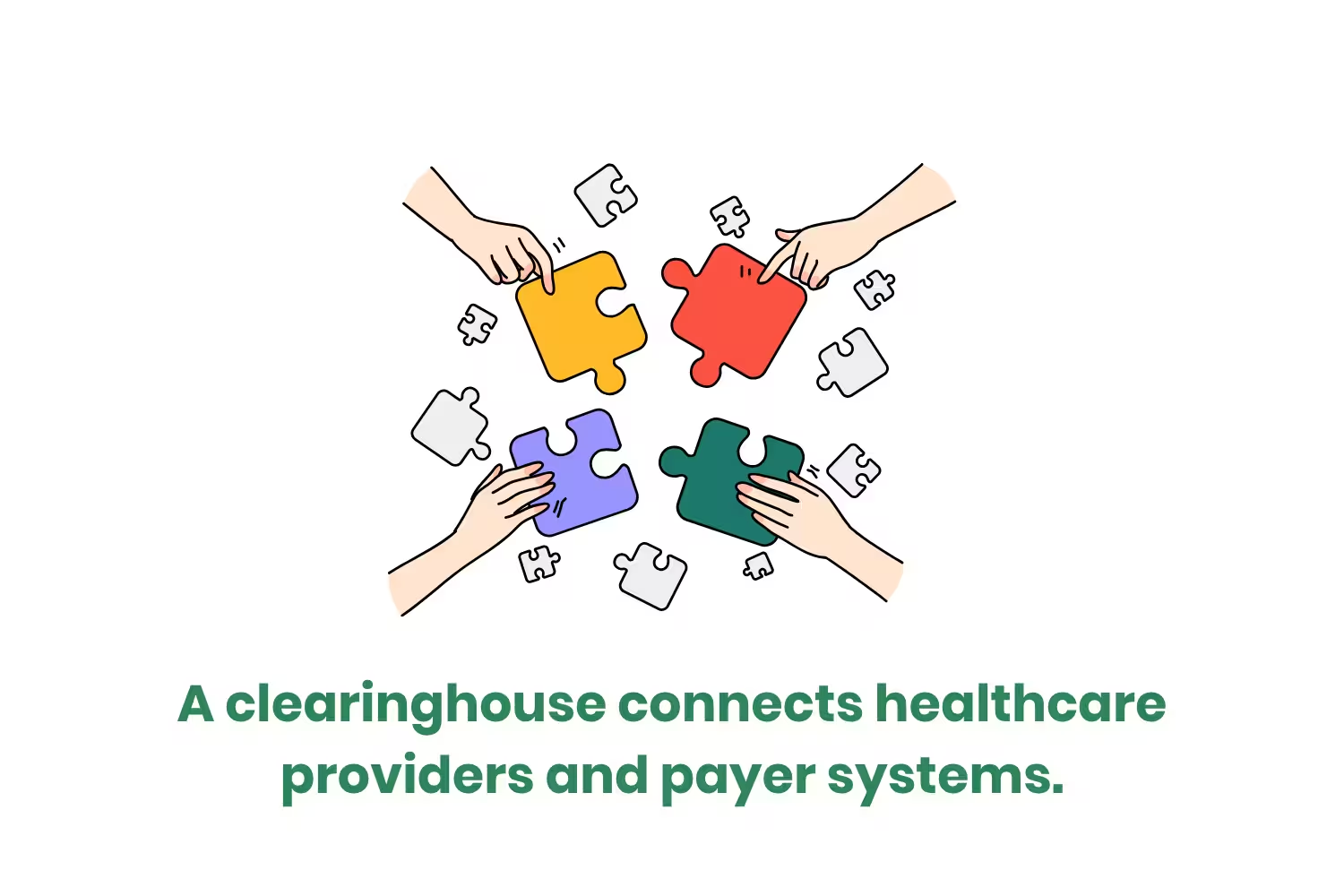
A clearinghouse connects healthcare providers and payer systems. It also plays a bigger role in the PA process than many organizations realize. When evaluating a prior authorization platform, look closely at the clearinghouse behind it. The clearinghouse determines how smoothly authorization, claim submission, and payment connect.
A few things worth checking:
- Payer connections. A strong clearinghouse should connect with a wide range of payer systems, not just a handful of major ones.
- EHR integration. Look for a platform that can pull PA data directly from the EHR. Staff shouldn't have to re-enter clinical information.
- Real-time tools. Real-time eligibility checks and claim status updates can reduce phone calls and guesswork.
- Transparency into denials. The platform should make it easy to see denial rates and the reasons behind them.
- Support beyond the software. A clearinghouse with knowledgeable, responsive support matters just as much as the technology. This becomes especially important when payer rules change.
The best automated prior authorization software doesn't operate in isolation. It works as part of a clearinghouse that also handles submission, denials, and reporting. PA is only the first step in getting paid.
Getting Authorization Is Only the Beginning
An approved prior authorization is a milestone, not the finish line. The real goal for any health system, physician practice, or billing team is getting paid accurately and on time. That depends on everything that happens after the approval. Including clean claim submission, fast denial resolution, and a simple way for patients to pay their share.
As prior authorization software becomes more automated and more connected to the EHR, healthcare providers have a real opportunity. They can reduce the time PA takes from staff and speed up the entire revenue cycle. But automation only helps when it connects the process from end to end.
Etactics helps organizations manage that full path. From IntelliClaim's clean claim submission to AppealsPlus's denial management and modern patient payment tools, Etactics connects the revenue cycle. If your organization is ready to move from authorization to payment without the manual work in between, we are ready to help.
Emphasize your product's unique features or benefits to differentiate it from competitors
In nec dictum adipiscing pharetra enim etiam scelerisque dolor purus ipsum egestas cursus vulputate arcu egestas ut eu sed mollis consectetur mattis pharetra curabitur et maecenas in mattis fames consectetur ipsum quis risus mauris aliquam ornare nisl purus at ipsum nulla accumsan consectetur vestibulum suspendisse aliquam condimentum scelerisque lacinia pellentesque vestibulum condimentum turpis ligula pharetra dictum sapien facilisis sapien at sagittis et cursus congue.
- Pharetra curabitur et maecenas in mattis fames consectetur ipsum quis risus.
- Justo urna nisi auctor consequat consectetur dolor lectus blandit.
- Eget egestas volutpat lacinia vestibulum vitae mattis hendrerit.
- Ornare elit odio tellus orci bibendum dictum id sem congue enim amet diam.
Incorporate statistics or specific numbers to highlight the effectiveness or popularity of your offering
Convallis pellentesque ullamcorper sapien sed tristique fermentum proin amet quam tincidunt feugiat vitae neque quisque odio ut pellentesque ac mauris eget lectus. Pretium arcu turpis lacus sapien sit at eu sapien duis magna nunc nibh nam non ut nibh ultrices ultrices elementum egestas enim nisl sed cursus pellentesque sit dignissim enim euismod sit et convallis sed pelis viverra quam at nisl sit pharetra enim nisl nec vestibulum posuere in volutpat sed blandit neque risus.
Use time-sensitive language to encourage immediate action, such as "Limited Time Offer
Feugiat vitae neque quisque odio ut pellentesque ac mauris eget lectus. Pretium arcu turpis lacus sapien sit at eu sapien duis magna nunc nibh nam non ut nibh ultrices ultrices elementum egestas enim nisl sed cursus pellentesque sit dignissim enim euismod sit et convallis sed pelis viverra quam at nisl sit pharetra enim nisl nec vestibulum posuere in volutpat sed blandit neque risus.
- Pharetra curabitur et maecenas in mattis fames consectetur ipsum quis risus.
- Justo urna nisi auctor consequat consectetur dolor lectus blandit.
- Eget egestas volutpat lacinia vestibulum vitae mattis hendrerit.
- Ornare elit odio tellus orci bibendum dictum id sem congue enim amet diam.
Address customer pain points directly by showing how your product solves their problems
Feugiat vitae neque quisque odio ut pellentesque ac mauris eget lectus. Pretium arcu turpis lacus sapien sit at eu sapien duis magna nunc nibh nam non ut nibh ultrices ultrices elementum egestas enim nisl sed cursus pellentesque sit dignissim enim euismod sit et convallis sed pelis viverra quam at nisl sit pharetra enim nisl nec vestibulum posuere in volutpat sed blandit neque risus.
Vel etiam vel amet aenean eget in habitasse nunc duis tellus sem turpis risus aliquam ac volutpat tellus eu faucibus ullamcorper.
Tailor titles to your ideal customer segment using phrases like "Designed for Busy Professionals
Sed pretium id nibh id sit felis vitae volutpat volutpat adipiscing at sodales neque lectus mi phasellus commodo at elit suspendisse ornare faucibus lectus purus viverra in nec aliquet commodo et sed sed nisi tempor mi pellentesque arcu viverra pretium duis enim vulputate dignissim etiam ultrices vitae neque urna proin nibh diam turpis augue lacus.