
Electronic Claim Submission: Benefits, Process & Best Practices
Discover how electronic claim submission works, why clearinghouses matter, and how digital claims help healthcare providers get paid faster.

In 2024, insurers denied approximately 85 million claims. Out of a total of 496 million claims submitted, that left an average in-network denial rate of 19%. Not ideal considering the average industry goal is to maintain a 5-10% denial rate. Higher denial rates mean more difficulty collecting on owed reimbursement. That's why getting paid on time starts before a payer sends reimbursement. It starts with submitting an accurate claim.
Today, most healthcare organizations use electronic claim submission instead of mailing paper claims. Electronic claims are faster, more accurate, and easier to track. They also help providers reduce administrative work and improve cash flow.
However, sending a claim electronically is only one part of the process. Many claims still need more documentation before a payer can process them. Because of this, providers often have to switch back to paper, fax, or separate payer portals.
Today we will look at how electronic claim submission works and why it is the industry standard. As well as the Centers for Medicare & Medicaid Services' (CMS) most recent update. The new electronic claim attachment Final Rule will change how we send information. Helping healthcare organizations remove manual steps in the claims process.
What Is Electronic Claim Submission in Healthcare?
Electronic claim submission in healthcare sends claims digitally from provider to insurance payer. Instead of printing and mailing paper claims, billing staff creates an electronic one. Using practice management systems, billing software, or electronic health records (EHR). The claim is then submitted using industry-standard formats.
Professional services usually use the CMS-1500 claim form. They send claims as an 837P transaction. Hospitals and other facilities submit institutional claims. Usually using the UB-04 form and an 837I transaction.
Most providers do not connect directly with every insurance company. Instead, they send claims through a clearinghouse.
A clearinghouse reviews claims for formatting issues. It also verifies that claims meet HIPAA standards for Electronic Data Interchange (EDI). After review, the clearinghouse sends the claim to the correct payer.
This extra step helps catch mistakes before the payer receives the claim. It can reduce rejected claims and prevent unnecessary delays.
Electronic claim submission has become the standard across healthcare. Medicare requires most providers to submit claims electronically. Many commercial insurers also encourage electronic submissions because they speed up processing. Thus, reducing manual work.
The goal is simple. Move accurate information from the provider to the payer as quickly as possible. This helps claims get processed, reviewed, and paid faster.
How Do You Submit Claims Electronically?
The exact process varies by payer. However, most claims submission workflows follow the same basic steps. Let's take a look at this general overview of the process now.
1. Document Patient Information
After a patient receives care, providers document the visit. Usually storing the information in their EHR or practice management system. Medical billers review the visit details. They then assign the correct medical code. These might include diagnosis codes, CPT codes, HCPCS codes, or modifiers.
Your billing staff will also gather insurance information needed to create the claim. Remember that accurate documentation is important. Even a small mistake can delay reimbursement or cause a denied claim.
2. Submit Claim Through a Clearinghouse
Once the claim is complete, make sure to send it to a clearinghouse. Long gone are the days of sending claims directly to the insurance company.
These clearinghouses check claims for missing information and formatting issues. They also run automated edits to confirm the document follows industry requirements.
If the claim has an error, you can catch it and correct it before reaching the payer. This helps providers submit cleaner claims the first time. Helping to reduce the wait time between service and payment.
After validation, the clearinghouse routes the claim to the correct insurance company.
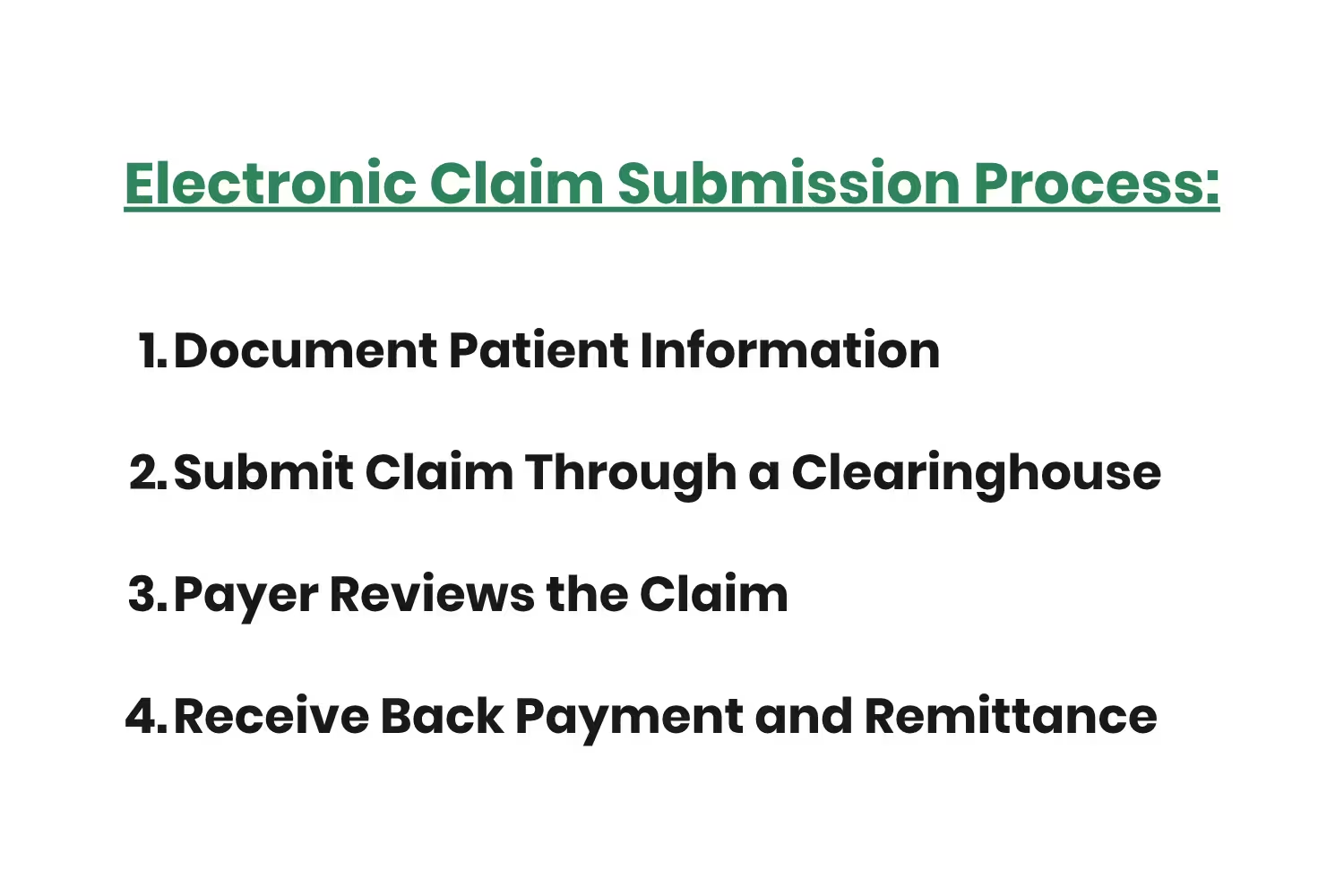
3. Payer Reviews The Claim
After receiving the claim, the payer performs more checks. They review patient eligibility, coverage information, coding accuracy, and policy requirements.
If everything is correct, the claim then moves into adjudication. During this step, the payer determines how much it will reimburse. This decided amount relies on the patient's benefits and contract.
If information is missing or they need more documentation, the payer may deny or reject the claim. At least until you fix the issue.
4. Receive Back Payment and Remittance
After approving the claim, payers send payment through an Electronic Funds Transfer (EFT).
Providers will also receive an Electronic Remittance Advice (ERA). This is also known as an 835 transaction. This document explains how the payer processed the claim. It shows payment amounts, adjustments, denials, and any remaining patient responsibility.
Receiving payment and remittance electronically helps billing teams post payments faster. It also helps them identify problems sooner and keep the revenue cycle moving.
Benefits of Electronic Claim Submission
Submitting claims electronically has become the standard for modern medical billing. It helps healthcare providers reduce manual work and receive claim payments faster.
Billing companies enjoy many benefits when it comes to this new process. The workflow exists to make the revenue cycle easier to manage. It streamlines everything, from creating a claim in billing software to receiving reimbursement. Let's look at how digitalizing this process can improve different aspects of business.
Faster Claim Payments
One of the biggest benefits of electronic claim submission is faster reimbursement.
For a paper claim you must print and mail it. When received, payers must manually enter it into their system. Each step adds time to the process.
An electronic claim reaches the payer much faster. You can also, as I said before, review them for common issues before sending them via a clearinghouse. This helps prevent delays caused by missing information or simple errors.
When providers submit claims electronically, they can shorten the reimbursement cycle. This helps improve cash flow and allows organizations to receive payments sooner.
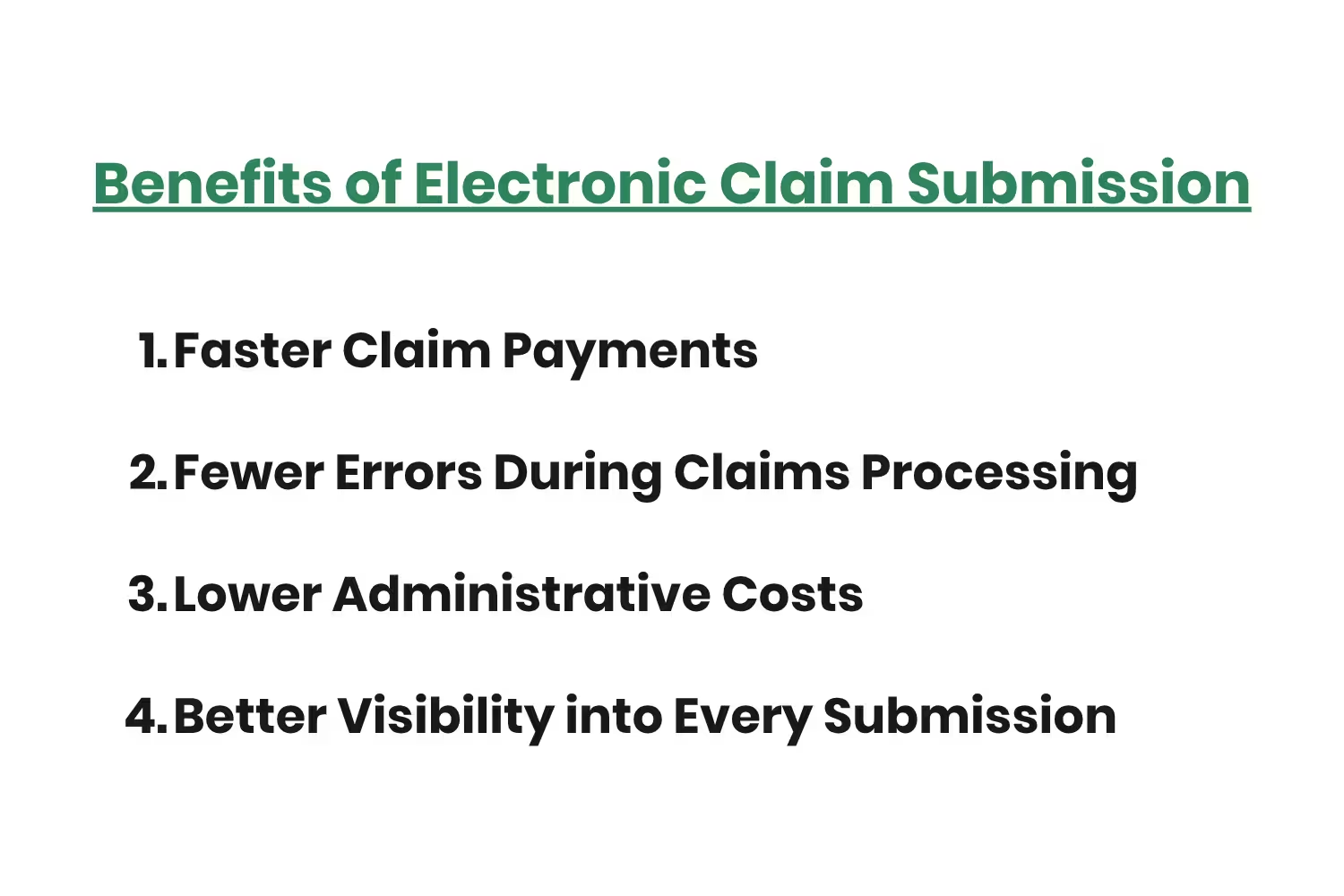
Fewer Errors During Claims Processing
Like I mentioned, one of the most valuable benefits is being able to catch mistakes early.
Many billing software platforms and clearinghouse systems review claims before sending them out. These checks can identify missing information, incorrect codes, and other problems.
For example, a system may identify an invalid code or missing patient information. Some systems also check required place of service codes and payer-specific requirements.
Finding these issues before submitting a claim helps providers avoid unnecessary resubmission. It also improves first-pass claim acceptance rates.
Cleaner claims mean fewer delays, less manual work, and faster reimbursement.
Lower Administrative Costs
Submitting healthcare claims electronically can also reduce administrative costs. A paper claim requires printing, envelopes, postage, and staff time. These costs can quickly add up for organizations that process large claim volumes. With electronic billing, you can submit claims in large batches. Many practices do this through a practice management system.
This means staff no longer need to prepare paperwork in the same way. No more organizing mailed claims or spending hours managing documents. Reducing these repetitive tasks allows billing teams to focus on more important work. This includes improving collections, resolving denials, and helping patients.
Better Visibility Into Every Submission
One of the biggest challenges with paper claims is the lack of visibility. After placing a claim in the mail, billing staff may not know its status until receiving a payment or denial. Online claim submission creates a digital record that you can easily track.
Providers can see when a claim reaches the clearinghouse, when the payer accepts it, and so on. This makes it easier to identify rejected claims and resolve issues quickly.
Instead of discovering problems weeks later, billing teams can respond sooner. This improves efficiency and helps maintain healthier accounts receivable.
The difference between paper and electronic claims is clear. Electronic submission has become the standard across Medicare, Medicaid, and commercial payers.
Why Some Claims Still Experience Delays
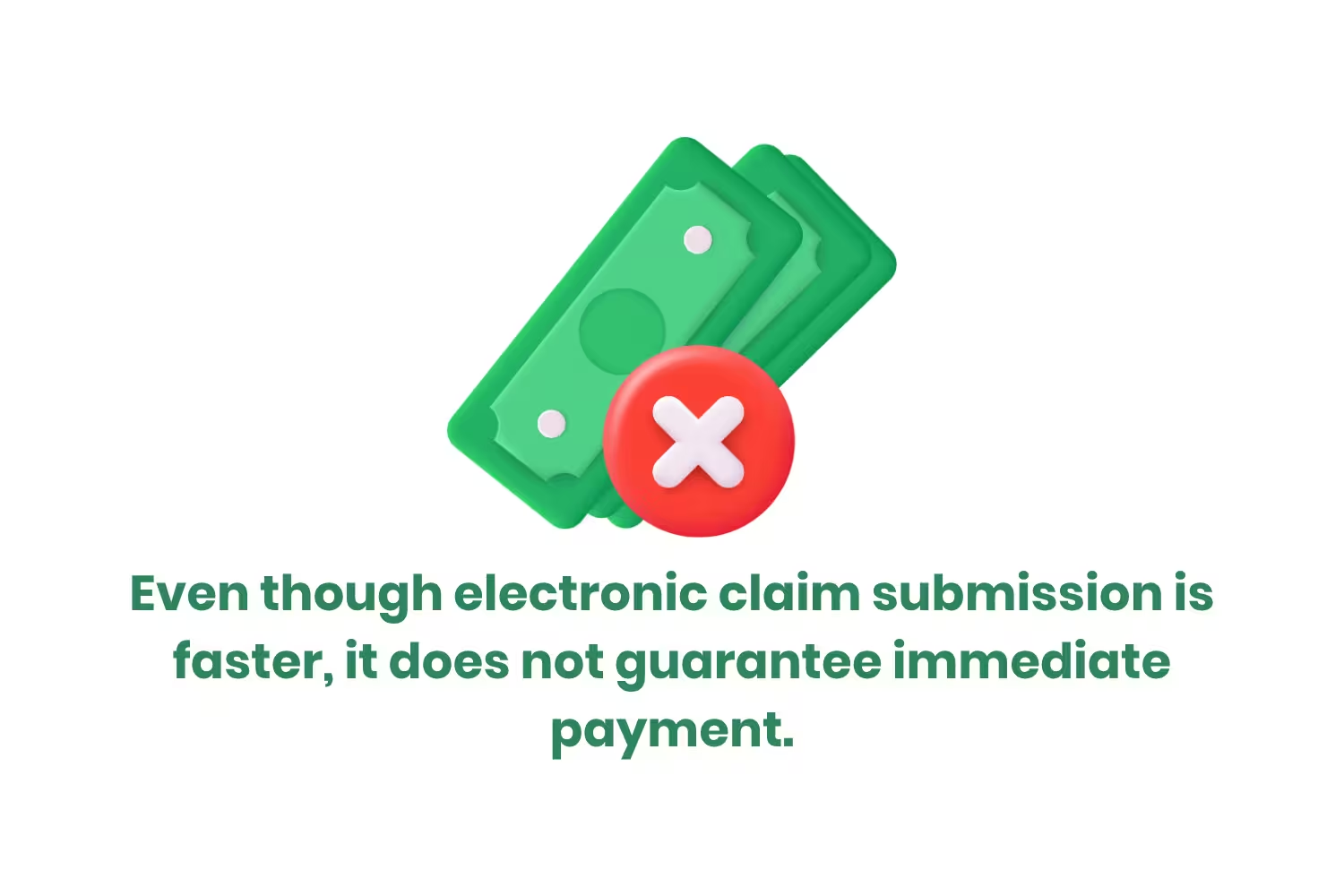
Even though electronic claim submission is faster, it does not guarantee immediate payment.
A claim can still get rejected if the payer does not have all the information needed.
Many payers need more documentation for certain services. This may include physician notes, referrals, prior authorizations, imaging reports, or another attachment.
This is common for services like surgeries, therapy, ambulances, and some outpatient procedures.
Coding can also impact claim processing. Certain codes or modifiers may need extra documentation before you receive a payment.
When documentation is missing, providers have to think on their feet. They may need to print records, fax paperwork, or upload files through a payer portal. This creates another manual step in an otherwise electronic process.
The claim may be accurate. But you can still face delayed reimbursement due to missing information.
Submitting Electronic Claim Attachments Helps Complete the Process
Electronic claim submission solved a major problem in healthcare billing. By replacing paper claims with digital transactions, it introduced an entirely new process. However, supporting documentation has often remained a separate process.
Historically, providers needed to fax or mail extra documentation. Recently, payers started accepting information through portals, but it was a disjointed system. They needed to use many different portals, depending on the payer and document.
This created extra work for billing teams. It also increased the chance that documentation did not match with the claim. Electronic claim attachments helped solve this problem.
They allow providers to send supporting documentation using a standardized and trackable process. Billing teams can now submit the claim and documentation together.
Electronic claim attachments can include, but are not limited to:
- Operative reports
- Medical records
- Therapy notes
- Certificates of medical necessity
- Imaging reports
- Referral documentation
- Prior authorizations
- Secondary insurance documentation
- Itemized invoices
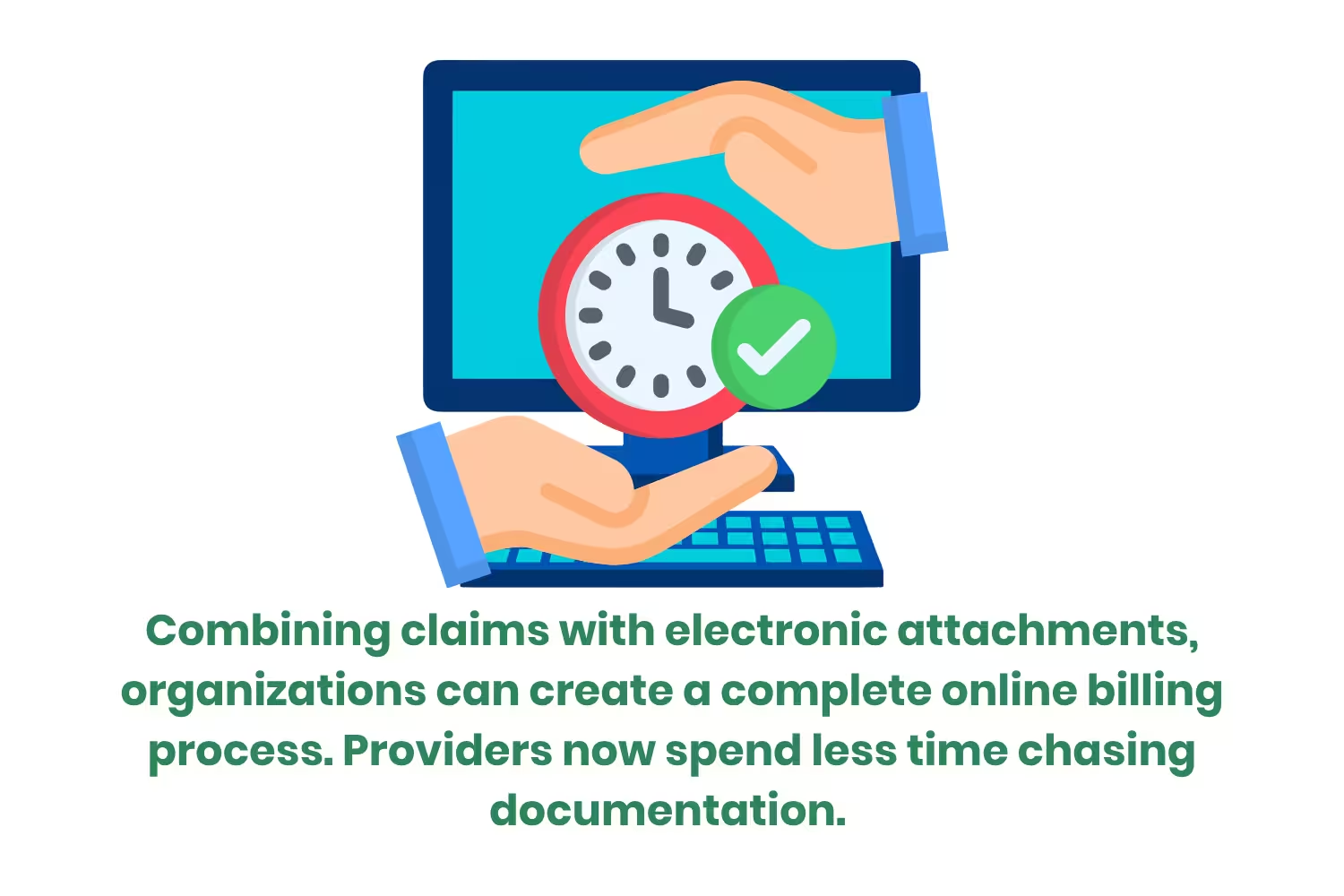
Combining claims with electronic attachments, organizations can create a complete online billing process. Providers now spend less time chasing documentation. Payers receive the information they need faster. Claims are less likely to face denials because of missing paperwork. Sending claim attachments digitally is the next step in improving the revenue cycle.
Need Help Filing Claims?
Recent claim submission updates have changed how healthcare organizations manage their billing process. The new electronic workflows improve speed, reduce costs, and provide better visibility.
However, many organizations still rely on outdated methods to send supporting documentation. These manual steps can slow payments and create more work for billing teams.
That's why businesses are combining new claim submission and claim attachment processes. Organizations are realizing this is how to create a more connected revenue cycle.
Claims and supporting documentation need to seamlessly move together from provider to payer. The new CMS Final Rule will see to that happening across the board, no matter the payer or specialty. This aims to reduce delays and allow billing teams to focus on higher-value tasks.
Healthcare processes will only continue to become more digitalized. Organizations that adopt modern claims workflows will be better positioned for success. Giving them a leg up against their competitors.
That's why many businesses are opting to use third-party revenue cycle management software. This not only offloads repetitive tasks, but also the burden of keeping up with payer changes. Whether it is general regulations, electronic attachment acceptance standards, or handling appeals.
Etactics helps you keep up with these changes. Improving efficiency, speeding up reimbursement, and strengthening your revenue cycle. Reach out today to speak to an expert and start your journey towards financial stability.
Emphasize your product's unique features or benefits to differentiate it from competitors
In nec dictum adipiscing pharetra enim etiam scelerisque dolor purus ipsum egestas cursus vulputate arcu egestas ut eu sed mollis consectetur mattis pharetra curabitur et maecenas in mattis fames consectetur ipsum quis risus mauris aliquam ornare nisl purus at ipsum nulla accumsan consectetur vestibulum suspendisse aliquam condimentum scelerisque lacinia pellentesque vestibulum condimentum turpis ligula pharetra dictum sapien facilisis sapien at sagittis et cursus congue.
- Pharetra curabitur et maecenas in mattis fames consectetur ipsum quis risus.
- Justo urna nisi auctor consequat consectetur dolor lectus blandit.
- Eget egestas volutpat lacinia vestibulum vitae mattis hendrerit.
- Ornare elit odio tellus orci bibendum dictum id sem congue enim amet diam.
Incorporate statistics or specific numbers to highlight the effectiveness or popularity of your offering
Convallis pellentesque ullamcorper sapien sed tristique fermentum proin amet quam tincidunt feugiat vitae neque quisque odio ut pellentesque ac mauris eget lectus. Pretium arcu turpis lacus sapien sit at eu sapien duis magna nunc nibh nam non ut nibh ultrices ultrices elementum egestas enim nisl sed cursus pellentesque sit dignissim enim euismod sit et convallis sed pelis viverra quam at nisl sit pharetra enim nisl nec vestibulum posuere in volutpat sed blandit neque risus.
Use time-sensitive language to encourage immediate action, such as "Limited Time Offer
Feugiat vitae neque quisque odio ut pellentesque ac mauris eget lectus. Pretium arcu turpis lacus sapien sit at eu sapien duis magna nunc nibh nam non ut nibh ultrices ultrices elementum egestas enim nisl sed cursus pellentesque sit dignissim enim euismod sit et convallis sed pelis viverra quam at nisl sit pharetra enim nisl nec vestibulum posuere in volutpat sed blandit neque risus.
- Pharetra curabitur et maecenas in mattis fames consectetur ipsum quis risus.
- Justo urna nisi auctor consequat consectetur dolor lectus blandit.
- Eget egestas volutpat lacinia vestibulum vitae mattis hendrerit.
- Ornare elit odio tellus orci bibendum dictum id sem congue enim amet diam.
Address customer pain points directly by showing how your product solves their problems
Feugiat vitae neque quisque odio ut pellentesque ac mauris eget lectus. Pretium arcu turpis lacus sapien sit at eu sapien duis magna nunc nibh nam non ut nibh ultrices ultrices elementum egestas enim nisl sed cursus pellentesque sit dignissim enim euismod sit et convallis sed pelis viverra quam at nisl sit pharetra enim nisl nec vestibulum posuere in volutpat sed blandit neque risus.
Vel etiam vel amet aenean eget in habitasse nunc duis tellus sem turpis risus aliquam ac volutpat tellus eu faucibus ullamcorper.
Tailor titles to your ideal customer segment using phrases like "Designed for Busy Professionals
Sed pretium id nibh id sit felis vitae volutpat volutpat adipiscing at sodales neque lectus mi phasellus commodo at elit suspendisse ornare faucibus lectus purus viverra in nec aliquet commodo et sed sed nisi tempor mi pellentesque arcu viverra pretium duis enim vulputate dignissim etiam ultrices vitae neque urna proin nibh diam turpis augue lacus.

![[ANSWERED] What is a Long-Term Care (LTC) Pharmacy](https://cdn.prod.website-files.com/67e2b8210878abcba6f91ae6/68d687806a075a1cf64659b0_WhatisLongTermCarePharmacy_925.avif)